


There was a time when engineers walked into Intel's Silicon Valley headquarters with immense pride. Under CEO Andy Grove from 1987 to 1998, Intel became the dominant chipmaker in the computer market, stemming from its philosophy, "Only the delusional survive."
Despite stepping down as CEO, Grove remained President of Intel until 2005. After his tenure, Intel gradually lost its competitive edge due to its failure to capitalize on smartphone and AI trends.
With its chip production slowing down, Intel has become one of the largest recipients of government investment since the 2008 financial crisis. On August 22, President Donald Trump announced the acquisition of a 10% stake in Intel, worth approximately $8.9 billion .
According to the New York Times , Intel's journey from a tech icon to one of accepting government bailouts demonstrates the inherent limitations of the tech industry. Even the most powerful companies can lose their foothold. When talented leaders depart, many companies struggle to keep up with trends, fail, and ultimately decline.
The first successes
Many tech companies are operating on the "graveyards" of past giants. Apple's headquarters are located on land that once belonged to Hewlett-Packard, Google operates in the former Silicon Graphics building, while Meta took over the campus of semiconductor company Sun Microsystems.
Intel has been fortunate to avoid bankruptcy thanks to its early pioneers. However, they cannot forever avoid change and external pressure, according to Professor David Yoffie, who served on Intel's board of directors for nearly three decades.
“Intel’s current position is something Grove always feared would happen. He feared government intervention, complacency, and even incrementalism. His worst fears have come true,” Yoffie said.
Intel was founded in 1968 by two pioneers in the semiconductor field: Robert Noyce (the inventor of the microchip) and Gordon Moore (who formulated the law that chip performance increases exponentially). They were joined by Grove, a Hungarian-born engineer with strong managerial and disciplinary skills.
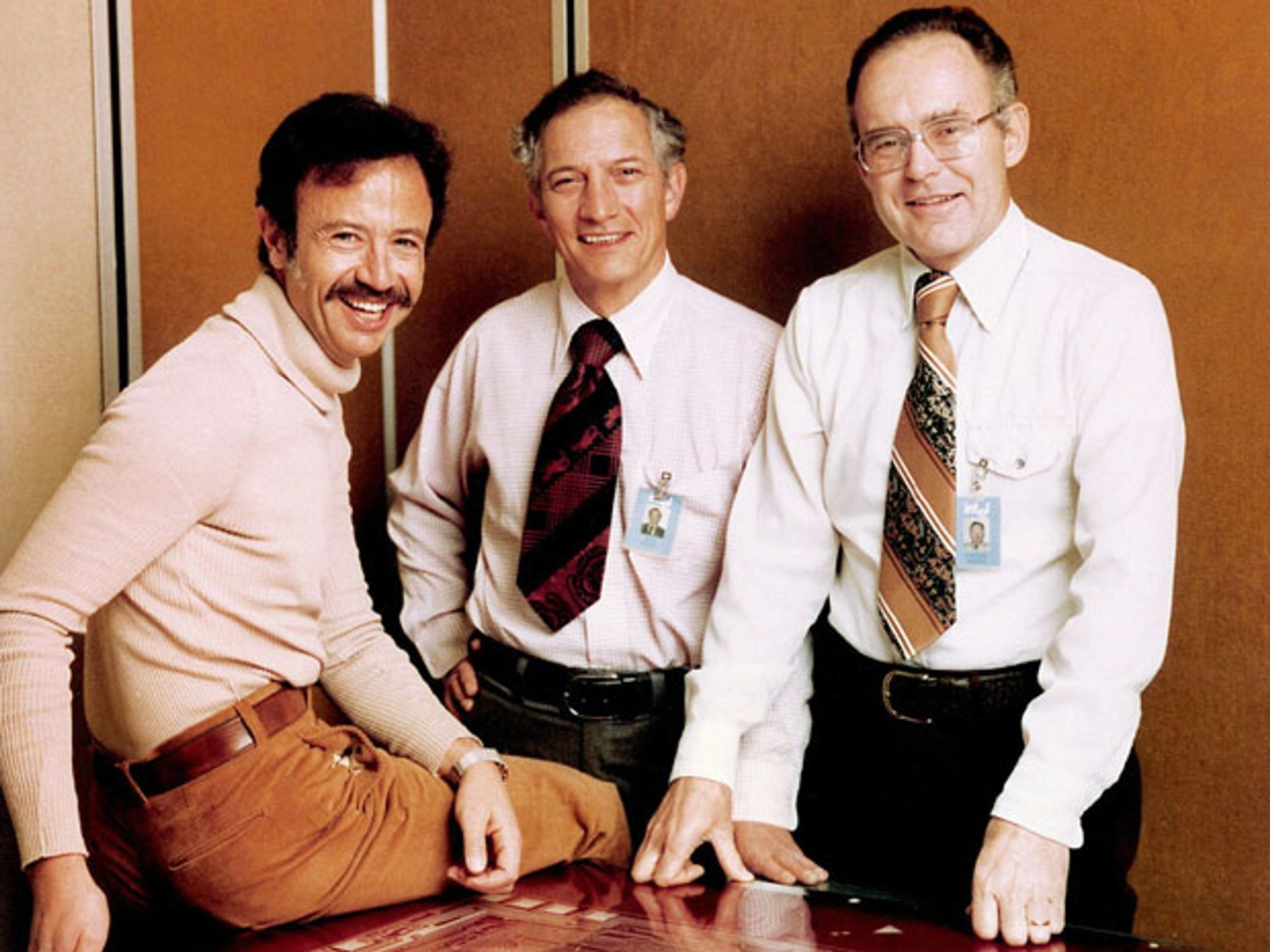 |
From left to right: Andy Grove, Bob Noyce, and Gordon Moore. Photo: Intel . |
Intel's first product was a memory chip, consisting of silicon sticks for short-term data storage. Later, Intel invented the microprocessor, which performed computing functions, with the U.S. government being one of its first customers. Moore himself advocated for the vision of semiconductor chips being in everything from cameras and toys to manufacturing equipment.
In the 1970s, tech enthusiasts and businesses alike built computers using Intel's 8080 microprocessor. The company then persuaded IBM to equip its computers with Intel chips.
Following IBM's lead, Microsoft developed Windows software on Intel processors in 1985. This combination created the "Wintel era," when the majority of computers worldwide used Windows software and Intel hardware.
This period saw Intel and Microsoft's profits skyrocket, placing them among the world's most valuable companies in the 1990s. Most computers worldwide bore the "Intel Inside" label, making the company a household and business household.
A series of mistakes
In 2009, the administration of President Barack Obama expressed concerns about Intel's dominance in the computer chip market, even filing a lawsuit. The case was settled after a year, with Intel agreeing to compromise but without significantly impacting its profits.
That's when the cracks appeared. Paul Otellini, Intel's CEO from 2005 to 2013, rejected an offer to manufacture the first iPhone chips because the contract value offered by Apple was too low. He later expressed regret when the iPhone became a blockbuster.
"The world could have been very different if we had accepted that," Otellini told The Atlantic in a 2013 interview.
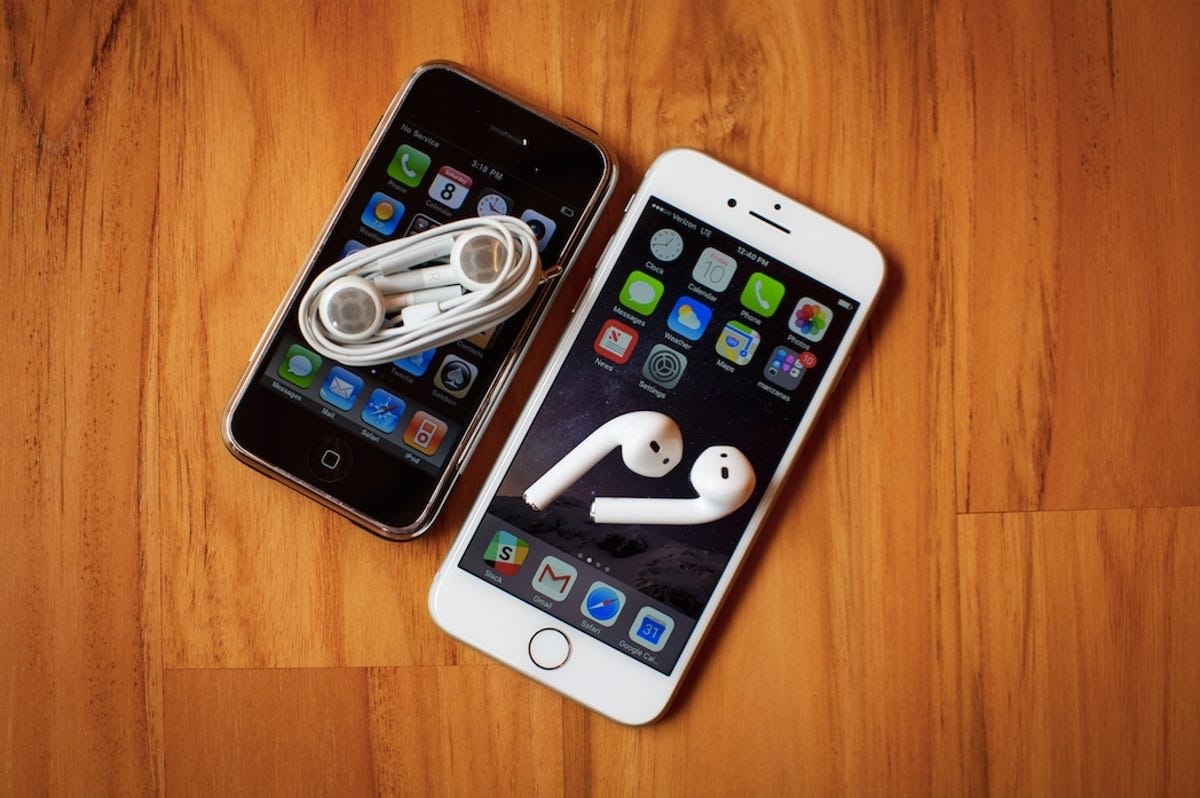 |
Intel once missed the opportunity to manufacture chips for the first iPhone. Photo: CNET . |
According to the New York Times , Intel rectified its mistakes by increasing its supply of chips to data centers, the system behind the cloud computing trend. The company's annual revenue increased from $34 billion (in 2005) to $53 billion (in 2013).
Intel also launched several new projects, but they were unsuccessful. These included a chip capable of performing multiple calculations simultaneously, simulating a graphics processing unit (GPU). Due to performance falling far short of expectations, the project could not continue.
Brian Krzanich, Otellini's successor, attempted to break into the mobile business by developing a network modem for the iPhone. However, the company struggled with technological development, leading to the entire team being sold to Apple. Krzanich also resigned due to close relationships with his subordinates.
Intel lagged behind in semiconductor manufacturing due to slow process innovation. This gave competitors like TSMC and Samsung an advantage, allowing them to overtake Intel between 2015 and 2019.
Returning to difficulties
In 2021, Intel rehired Pat Gelsinger with the hope of reviving the company. He harbored an ambitious plan to launch five new semiconductor manufacturing processes within four years to bring Intel back to its leading position. Gelsinger also lobbied for Intel to attract $50 billion in investment under the CHIPS Act during the Joe Biden administration.
Gelsinger committed to investing over $100 billion in Intel's chip manufacturing operations in the US. However, while Intel focused on production, demand for GPUs exploded from 2022 onwards with the emergence of ChatGPT.
Rival Nvidia holds an advantage in GPU technology. Intel's revenue quickly declined as cloud computing companies rushed to buy AI chips, while Intel's recruitment and manufacturing costs continued to rise.
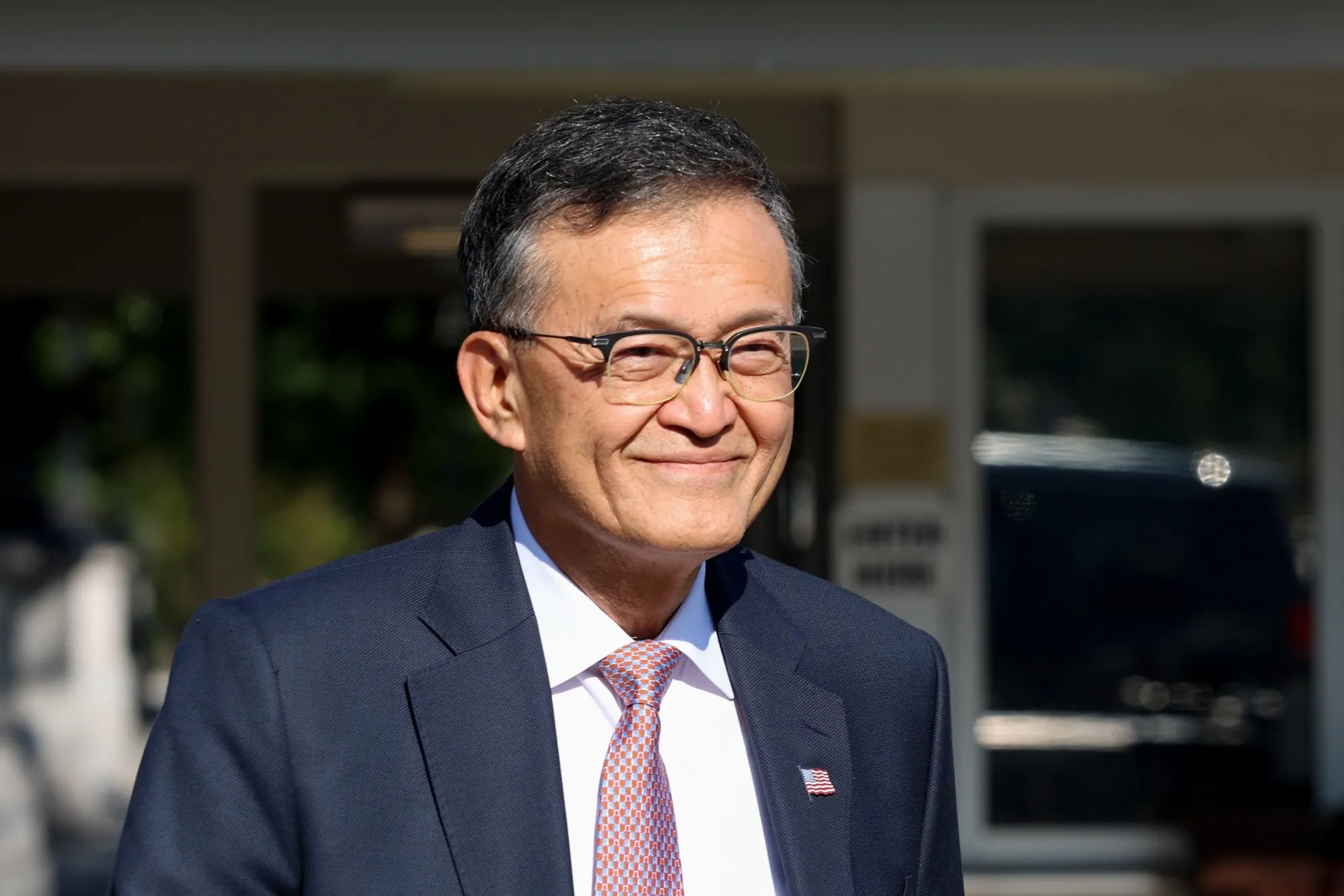 |
Intel CEO Lip-Bu Tan. Photo: Bloomberg . |
In November 2024, Intel received $7.86 billion in funding under the CHIPS Act. Following this, the company fired Gelsinger and appointed Lip-Bu Tan, a veteran in the semiconductor industry, as CEO.
Under the new administration, Tan planned to cut staff, boost AI, and focus on finding customers for chips. However, five months after taking office, Tan was urged to resign by Trump because of his past investment relationships in China.
The incident prompted Tan to travel to Washington to meet with President Trump. Following the meeting, the president proposed that Intel sell 10% of its shares to the U.S. government in exchange for funding from the CHIPS Act. The deal was officially finalized on August 22nd.
Intel spokesperson Cory Pforzheimer said Tan “acted swiftly to shape a new Intel, advancing America’s leadership in technology and manufacturing.” Intel representatives also welcomed the U.S. government investment and the recognition of “Intel’s vital role in addressing national priorities.”
During this period, Nvidia became the world's most valuable public company, with a market capitalization of over $4.3 trillion . For comparison, Intel is currently valued at $108 billion .
Source: https://znews.vn/hanh-trinh-lui-tan-cua-intel-post1580780.html

![[Photo] Prime Minister Pham Minh Chinh receives the Chinese Ambassador to Vietnam](https://vphoto.vietnam.vn/thumb/1200x675/vietnam/resource/IMAGE/2026/04/05/1775397481797_ndo_br_dsc-5512-jpg.webp)

















































































Comment (0)