Trans-Saharan Energy Corridor
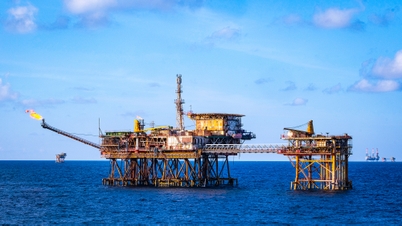
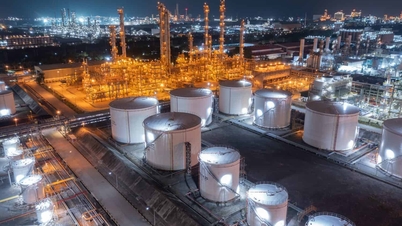
According to Business Insider , Algeria, Nigeria, and Niger are accelerating the deployment of TSGPs with a total investment of $13-19.5 billion and a designed capacity of up to 30 billion cubic meters per year.
The pipeline, approximately 4,128 km long, originates from the city of Warri in southern Nigeria, passes through Niger before reaching Hassi R'Mel, the world's largest gas hub in Algeria. From there, the gas is distributed through Algeria's existing pipeline network and export ports to supply European countries and other global markets.
After years of being "on paper" due to financial difficulties, infrastructure problems, and harsh geographical conditions, the project has seen significant progress as Algeria recently commenced construction of a 1,210km pipeline section from the Niger border to the Aoulef region in the south of the country. This is a clear signal that one of Africa's most ambitious energy projects is entering a phase of realization.
The TSGP's major advantage lies in Algeria's well-developed pipeline system and gas export infrastructure, directly connecting to Mediterranean ports and the European supply network. This significantly reduces investment costs compared to building entirely new pipelines.
Meanwhile, Niger plans to begin construction on a 720km section of the pipeline within its territory in 2027. When completed, the TSGP will become one of Africa's largest gas pipelines, equivalent to the annual consumption of several medium-sized European countries.
The dream of a new energy center.

The project is drawing attention not only to its scale but also to its timing. The European Union (EU) plans to completely end imports of Russian gas by 2027. This creates a huge gap in the European energy market, forcing countries to seek alternative sources of supply.
In this context, Africa's vast natural gas reserves have become more attractive than ever. According to The Guardian , Nigeria currently possesses one of the world's largest natural gas reserves, exceeding 200 trillion cubic feet.
However, the majority of the country's gas exports still depend on liquefied natural gas transported by sea. If the TSGP becomes operational, Africa's most populous nation will have an additional direct export corridor to Europe, diversifying its energy trade routes and increasing access to major customers.
For Niger, the TSGP project goes far beyond its role as a transit hub. A transnational project worth tens of billions of dollars will generate additional revenue from transit fees, attract investment, and boost infrastructure development in this still struggling nation. The TSGP also helps Algeria solidify its role as one of the most important energy gateways connecting Africa with Europe. Currently, Algeria supplies approximately 12% of the EU's imported natural gas.
From a broader perspective, TSGP reflects Africa's growing ambition to efficiently exploit its abundant energy resources rather than simply exporting raw materials. Investing in transboundary energy corridors allows resource-owning countries to participate more deeply in the value chain, increasing revenue, creating jobs, and enhancing the geopolitical standing of the entire region.
According to Business Insider , Algerian officials believe that the TSGP (Technical Transfer Gate Gas Platform) is a driving force for economic development and strengthening ties between African countries, while also enhancing the continent's role on the global gas supply map.
For the EU, the TSGP is part of a strategy to build long-term energy security. Compared to liquefied natural gas, which must be transported by sea and is heavily affected by price fluctuations, gas pipelines provide a more stable supply with lower operating costs in the long term.
More importantly, the TSGP reflects a new trend in cooperation between Europe and Africa. Many European policymakers believe it is time to move beyond traditional development aid thinking and build more equitable partnerships with Africa, based on investment, trade, and strategic infrastructure that will bring long-term benefits to both sides. The implementation of the TSGP project contributes to realizing this vision.



Challenges remain ahead as the project will face obstacles such as securing investment, ensuring security along the vast trans-Saharan pipeline route, and maintaining coordination among the three participating African countries.
Nevertheless, TSGP demonstrates Africa's increasingly clear determination to transform its abundant resources into a driving force for development; it also reflects a proactive spirit of integration, deeper participation in global supply chains, and a gradual affirmation of the continent's position in the international energy security network.
Source: https://baodanang.vn/hanh-trinh-moi-cua-khi-dot-chau-phi-3339815.html
![[Image] Ho Chi Minh City: Ma Lang area, Chicken-Rice Market about to change its appearance](https://vphoto.vietnam.vn/thumb/1200x675/vietnam/resource/IMAGE/2026/06/25/1782377698627_ndo_br_m1-jpg.webp)
![[Image] Schools organize meetings and introduce teaching models to students admitted to grade 10.](https://vphoto.vietnam.vn/thumb/1200x675/vietnam/resource/IMAGE/2026/06/25/1782368077271_ndo_br_z7970052192242-1ec8daeb77a6eed1a4e9f58c564ddd3e-jpg.webp)


![[Photo] General Secretary and President To Lam receives Palestinian Ambassador Saadi Salama](https://vphoto.vietnam.vn/thumb/1200x675/vietnam/resource/IMAGE/2026/06/25/1782365384740_a1-bnd-9423-8322-jpg.webp)