

The journey from the Bat Xat Commune Health Center – the "headquarters" of the Search and Collection Team for the remains of fallen soldiers, under the Lao Cai Provincial Military Command – to the 350B high point area to carry out their mission required the team's officers and staff to overcome many mountains, diligently clinging to every rock and tree stump, following trails, and searching for any remaining traces of war in their search for the remains of fallen soldiers.
The work of the Search Team members usually begins with the first piece of information received, such as: topographical findings; archival documents; accounts from veterans; or information provided by local residents. Every piece of information, however small, is valued and carefully verified by the Search Team members. Because it could be the only clue leading to the resting place of the outstanding sons and daughters who fell for their country.
 |
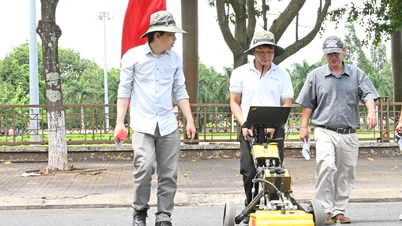
Major General Nguyen Ngoc Ngan, Deputy Head of Political Department of Military Region 2, directs the search and repatriation of the remains of fallen soldiers by the Search and Repatriation Team of the Lao Cai Provincial Military Command. |
 |
| Officers and soldiers of the Search and Collection Team for the remains of fallen soldiers under the Provincial Military Command of Lao Cai are carrying out the search for the remains of fallen soldiers. |
According to Lieutenant Colonel Pham Khac Truong, Political Officer of the Search and Collection Team for the remains of fallen soldiers, under the Lao Cai Provincial Military Command, to access areas suspected of containing the graves of fallen soldiers, officers and soldiers must overcome treacherous roads, trek through forests, wade through streams, and face harsh weather and many potential dangers. Some locations are deep in the mountains, far from residential areas; in some places, the terrain has completely changed over the decades. Nevertheless, with a sense of responsibility and profound respect for previous generations, each member of the team has never allowed themselves to lose heart or falter.
 |
| The search team's work requires a high level of concentration. |
 |
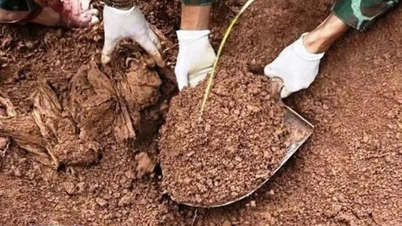
| Colonel Hoang Van Toan, Deputy Political Commissar of the Lao Cai Provincial Military Command, directed the task of excavating the remains of fallen soldiers. |
Each time a soldier's grave is discovered, the excavation process is carried out by the team members with meticulous care and attention to detail, ensuring absolute safety. This is because the work is not merely a professional task, but also a mission with profound political, social, and humanitarian significance. Each layer of soil is carefully removed, and every piece of remains and artifact discovered is cherished, respected, and preserved by the team members according to strict procedures, in order to effectively support the collection and DNA testing to identify the remains of fallen soldiers.
Sergeant La Van Nam, a member of the search team directly involved in the mission at Hill 350B, shared: "Although we knew we would face many difficulties in the process of searching for and collecting the remains of fallen soldiers, we could not falter when our uncles and aunts were still lying cold beneath layers of earth. I am aware of my duty and responsibility in this journey to bring the fallen soldiers home as soon as possible."
 |
tell |
Sergeant La Van Nam's sharing of his experiences in the search and repatriation of fallen soldiers' remains reflects the feelings and aspirations of the members of the Search Team under the Lao Cai Provincial Military Command. Corporal Chau Sao Thu, a member of the Search Team, confided: "Each time we find relics or remains of fallen soldiers, we feel both happy and deeply moved. The greatest happiness for us is witnessing the relatives of the fallen soldiers learn that their loved ones have been found and identified after many years of anxious waiting."
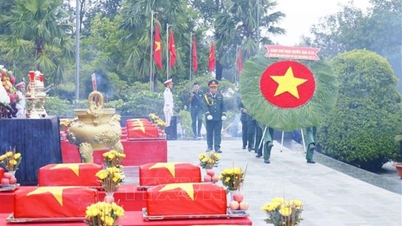
Silently carrying out their mission in Bat Xat commune, members of the search team have searched for and collected 12 remains of fallen soldiers, many of whom have been identified. For remains that cannot be identified or do not meet the criteria for DNA testing, the Lao Cai Provincial Military Command, in coordination with the local authorities, will organize their burial at the Bat Xat Commune Martyrs' Cemetery.
 |
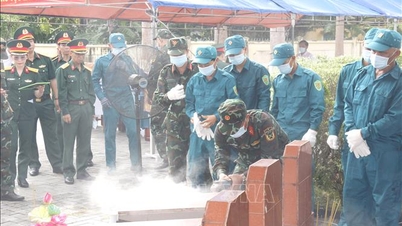
| Each relic of the fallen soldier is carefully preserved. |

Colonel Hoang Van Toan, Deputy Political Commissar of the Lao Cai Provincial Military Command, affirmed: "With deep responsibility and affection for the martyrs, the Party Committee and the Lao Cai Provincial Military Command are determined to closely lead and direct the sacred and noble task of searching for the remains of martyrs. The Lao Cai Provincial Military Command mobilizes all resources, closely coordinates with all levels, sectors, and the people in the work of searching for and collecting the remains of martyrs, and directs the forces participating in the search, excavation, and collection to always uphold the spirit and responsibility, not shying away from difficulties, and striving to successfully complete the tasks of the 500-day campaign."
It is clear that each case of identifying a fallen soldier not only helps a family or clan alleviate the longing after years of searching for their remains, but also demonstrates the moral principles of "remembering the source when drinking water" and "repaying gratitude" of our nation. It is also an act of responsibility, affection, and gratitude from today's generation towards those who dedicated their youth and entire lives to the cause of national liberation and the protection of the homeland.
Source: https://www.qdnd.vn/ban-doc/tim-mo-liet-si/hanh-trinh-thieng-lieng-tim-hai-cot-liet-si-o-bat-xat-1042554











































![[Video] Sunset at Lap An Lagoon – Where the sun sets over the fishing nets](https://vphoto.vietnam.vn/thumb/1200x675/vietnam/resource/IMAGE/2026/05/31/1780192137701_beach-landscape-sea-water-nature-grass-745871-pxhere-com.jpeg)






























Comment (0)