

Sowing the seeds of knowledge from the fields.
In 2012, the lives of the people in Tan An commune were still fraught with difficulties. During community meetings, besides discussing production, a constant worry was how to prevent children from dropping out of school due to poverty. Driven by this concern, the commune's Party Committee mobilized each household with agricultural land to contribute 1kg of rice per harvest to a scholarship fund. For farmers in this border region, it wasn't just a grain of rice; it represented the hard work and sacrifices they had made for their children's future.

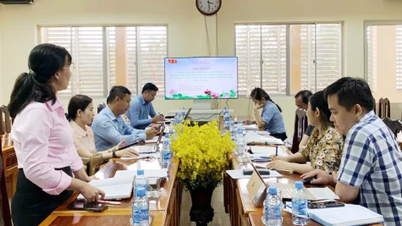
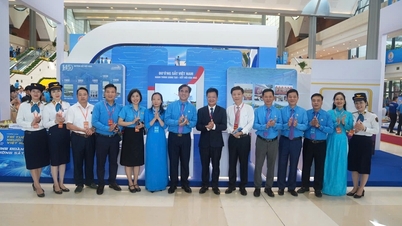
The Party Committee of Tan An commune honors the children of the commune for their achievements in studying, working, and creating. Photo: MINH HIEN
The initiative quickly gained the people's support. From then on, the "Rice Donation for Education" model became a concrete way to connect the Party's will with the people's aspirations. After 14 years of operation, the model has become increasingly effective. The total amount of rice collected has reached nearly 200 tons. Each year, the converted rice brings in approximately 54 million VND, along with over 100 million VND donated by philanthropists, creating a stable fund to care for poor students.
Mr. Nguyen Van Ruou, a member of the Economic and Budget Committee of Tan An commune, said: "The rice contributed by the people is converted into money and transferred to the commune's Education Promotion Association to support disadvantaged students. This is a practical approach that both utilizes resources from the people and ensures the sustainability of education promotion efforts."
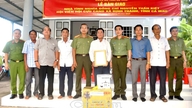
From this fund, at the beginning of each school year, the local authorities provide textbooks, clothing, and school supplies to students, while also rewarding those who overcome difficulties and excel in their studies. More importantly, the model contributes to fostering community responsibility towards education , forming a foundation for a learning society from the grassroots level. The value of the model is clearly demonstrated through each supported individual. Vo Thi Ngoc Nhu, a student at Tan An B Primary School, shared: “Without the help of the teachers and benefactors, I would face many difficulties in my studies. I promise to study hard so that I can contribute to my hometown in the future.”
From the carefully saved rice grains, many children have become teachers, officials, and returned to serve their local communities. A cycle has been established, from the fields to the school, and then back to building their homeland. Ms. Tran Thi Anh, former Chairwoman of the Tan An Commune Education Promotion Association, said: “The deciding factor is not the amount of money, but the unity of the people. When responsibility for their children's education becomes a shared consciousness of the community, the model is not only sustainable but also creates a long-term foundation for the development of local human resources.”
From that foundation, the movement to promote learning in Tan An has spread widely with 13 branches, more than 3,800 members, and the formation of many learning families and clans. These acts of kindness not only nurture literacy but also foster a lasting spirit of learning in this border region.
From affection to foundation
Originating in a border region, the "Rice Donation for Education" initiative is no longer just a story of Tan An commune, but has become a vivid testament to the movement to promote education and talent development, and build a learning society throughout the province. With flexible approaches tailored to each locality, many areas have adopted the model, effectively supporting disadvantaged students to continue their education. Many models such as "Learning Family," "Learning Clan," and "Learning Community" are gradually becoming a way of life, contributing to raising the intellectual level of the population and cultivating human resources at the grassroots level.
From a management perspective, the effectiveness of the model in Tan An is the result of the unity between the sound policies of the Party and the State and the consensus of the people. When the government provides clear direction, organizes implementation transparently, and people participate voluntarily, even small contributions can create a large resource.
Mr. La Hong Phong, Secretary of the Party Committee of Tan An commune, affirmed: “Education is the foundation and also an important driving force for the development of the locality. With an agricultural starting point, raising the intellectual level of the people and developing human resources is the most sustainable path. We take President Ho Chi Minh's words to advise the children, “Learn to work, to be a good person, to be a good cadre. Learn to serve the Fatherland and the people.” This is the guiding principle throughout the educational work in the locality.”
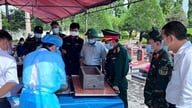
The "Rice Donation for Education" model not only raises the intellectual level of the population but also contributes to ensuring social welfare at the grassroots level. When children attend school and access knowledge, the risks of dropping out, early labor, and social evils are gradually reduced, contributing to maintaining security and stable order.
MINH HIEN
Source: https://baoangiang.com.vn/hat-lua-tiep-suc-hoc-tro-ngheo-a483236.html






























![[Video] Sunset at Lap An Lagoon – Where the sun sets over the fishing nets](https://vphoto.vietnam.vn/thumb/1200x675/vietnam/resource/IMAGE/2026/05/31/1780192137701_beach-landscape-sea-water-nature-grass-745871-pxhere-com.jpeg)




















Comment (0)