

I was fortunate enough to accompany him to many rural areas from North to South. Especially during his trips to mountainous regions, he often offered insightful observations and suggestions. Even back when mountainous areas were still full of difficulties, he maintained that with determination, they could certainly develop. He was deeply concerned about this issue and frequently discussed it with others.
Whenever he visited a country with promising plant or animal species, he immediately thought about bringing them back to Vietnam. He was particularly interested in our mountainous regions. Many forest tree species and some livestock, such as Tam Hoang chickens, Luong Phuong chickens, French pigeons, ostriches, bamboo varieties like Luc Truc and Dien Truc, hybrid rice varieties, macadamia trees, etc., were brought from abroad. He assigned local authorities to test them. He closely monitored the situation and always encouraged everyone to work together to find new, promising species, especially those suitable for mountainous areas.
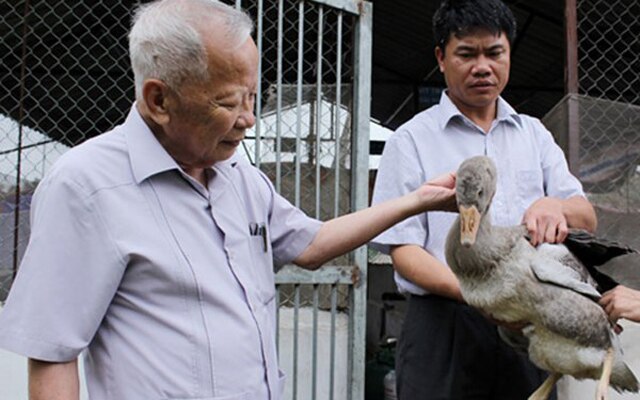
Mr. Nguyen Cong Tan in his wild duck farm. Photo: VNE
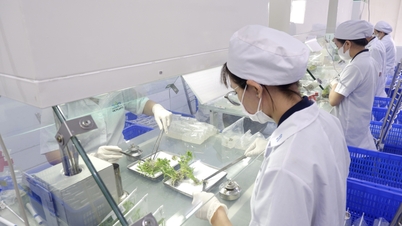
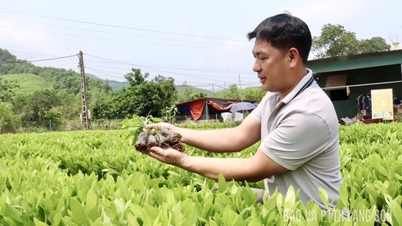
One of the facilities he frequently visited to supervise and monitor new recruits he brought in from abroad was the Northeast Forestry Seed Company (located in Lang Son ). He often asked me to accompany him…
Back then, the mountainous region was very poor! Passing through Bac Giang, he told me: "When our lychees reach the world market , the people here will become very rich..." He showed me several varieties of bamboo shoots from Taiwan that he had brought here. At that time, they were only being grown experimentally, but he still had hope: "The Taiwanese people have become rich thanks to these bamboo shoot varieties, so why can't our people in the mountains do the same!..."
He was the one who organized the introduction of macadamia seedlings to Vietnam. He came up to the company and discussed it with his colleagues. Then, a "campaign" to bring macadamia seedlings from China to Vietnam was launched. Everything went smoothly!
Once the trees were ready, Australian experts came and provided guidance on grafting macadamia trees. From then on, macadamia trees were planted everywhere. Unfortunately, at that time, macadamia trees were still too new to gain popularity.
When Mr. Tan and I attended a meeting with the Tuy Duc district ( Dak Nong province ) to discuss organizing macadamia tree planting, the provincial agricultural extension director remarked: "...If we're not careful, the macadamia trees might end up becoming 'stranded' trees!..."
Mr. Tan was very annoyed! I had to tell him, "Just let it go, we're determined to make the planting successful..."
To date, macadamia trees have spread throughout the Central Highlands, Northwest Vietnam, and even Northern Vietnam. Many families growing macadamia trees have earned hundreds of millions of dong per hectare…
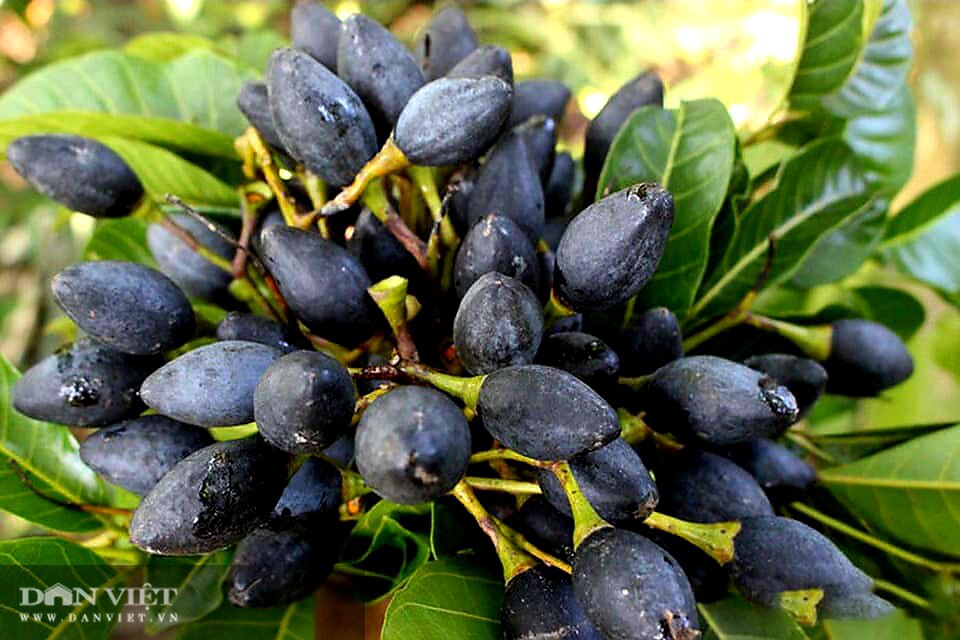
From around July to September of the lunar calendar each year, the people of Lang Son begin harvesting black olives. These dark purple fruits, with their rich, nutty, and flavorful taste, are a specialty that brings high economic value to the people of Lang Son. (Photo: Moc Tra)
Lang Son is also a place where we are actively developing the cultivation of grafted Terminalia catappa trees. The Northeast Forestry Seed Company has taken care of the seed development. Because they are grafted, the trees bear fruit in just 3 years. Chinese buyers are scrambling to purchase all the Terminalia catappa fruit. They take it back and process it into many attractive products.
Recently, I traveled to Phu Binh (Thai Nguyen) and even to Huong Son (Ha Tinh) and learned that the price of black olives is 120,000 – 140,000 VND/kg. That's amazing! I thought that if every household in the mountainous areas planted just a few dozen grafted olive trees, they would have enough money to buy a car!
In the dry, hilly mountainous regions, another type of tree can be grown: the chestnut tree. Our chestnuts are larger than those from China. I visited a family in Lang Son. The owner told me that she has planted 400 chestnut trees on one hectare, and they have been there for 5 years. Each tree yields at least 10 kg of nuts. The current price of nuts is 100,000 VND/kg.
Thus, one hectare can yield 400 million! If a processing company gets involved, the price will surely be even higher. Currently in China, more than 10 different types of cakes are made from chestnuts. The cakes are delicious and very expensive!
I visited Chi Dao commune, Lac Son district, Hoa Binh province. This is where the locals have been growing dổi trees (a type of tree) for generations. Some of these trees are over a hundred years old!
Currently, the dổi tree (a type of tree) is widely planted throughout the commune. The trees are propagated by grafting, so they bear fruit in just 3 years. Chinese buyers come directly to the commune to purchase dổi seeds; fresh seeds cost around 700,000-800,000 VND/kg, while dried seeds cost 1-1.5 million VND/kg. The Muong ethnic people who migrated to Dak Lak also brought dổi trees with them. Around Ea Kao Lake (Buon Ma Thuot), tens of thousands of dổi trees have been planted… It is said that dổi trees have also begun to be planted in the mountainous areas of Quang Nam.
I've just realized that if mountainous regions dare to make changes, they might even surpass lowland areas!
There is a great lesson that other places are looking to learn from: the Son La Provincial Party Committee's decision to convert a large portion of the province's corn and cassava growing area to fruit tree cultivation. Tens of thousands of hectares of mangoes, longan, passion fruit, etc., have been established. The income of people in these areas has increased dramatically, in some places by as much as tenfold!
Now, the central government has just decided to build a new road from Hoa Binh to Moc Chau. The people in this area, who are already rich from dairy farming and tea cultivation, will become even richer thanks to tourism…
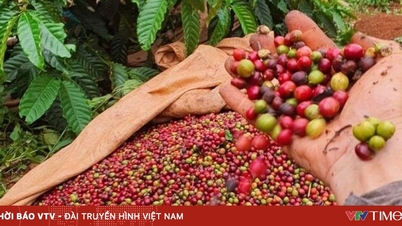
In the Central Highlands provinces, coffee prices are rising, doubling in some areas. If quality is maintained and food safety is ensured, farmers can freely expand production. That's not even mentioning durian. In Dak Nong, Dak Lak, and even Khanh Hoa, many durian orchards are generating billions of dong in revenue! The potential in these highland regions is enormous!
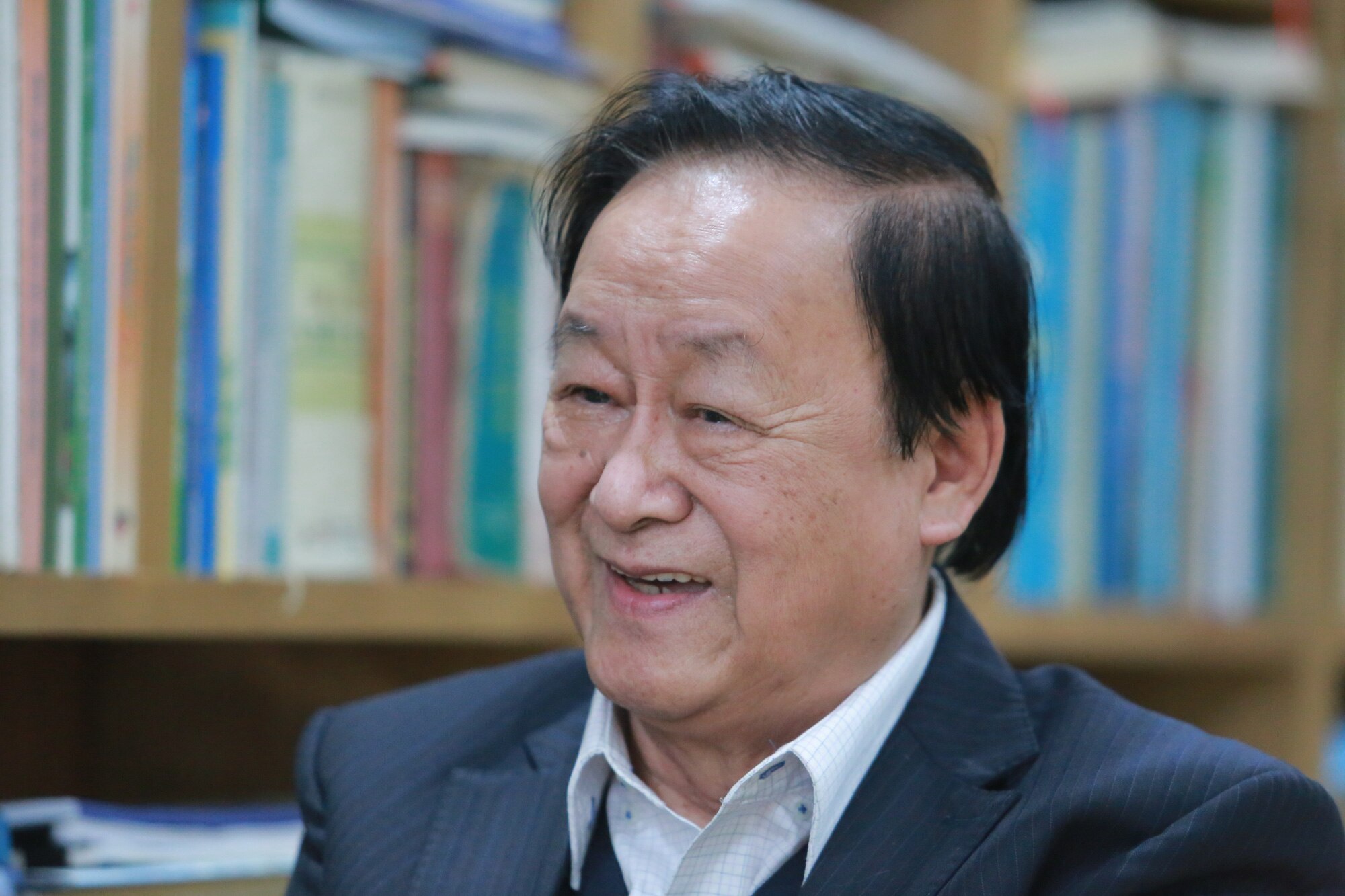
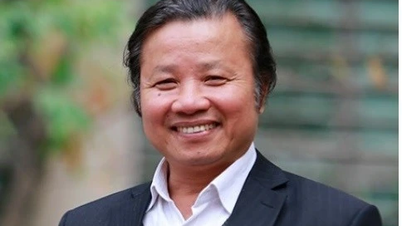
Agricultural expert Nguyen Lan Hung.
If you travel to Northwest Vietnam, Northeast Vietnam, and even the Central Highlands, you'll truly see the full potential of our medicinal plants. Countless valuable species remain untapped; the time will come when this vast treasure trove of medicinal resources will be "awakened." The whole world will flock to Vietnam to buy our medicine!
While traveling from Sa Pa to Lai Chau, I kept wishing that some business would come here to develop a flower-growing region like Da Lat. The climate here is no different from Da Lat!
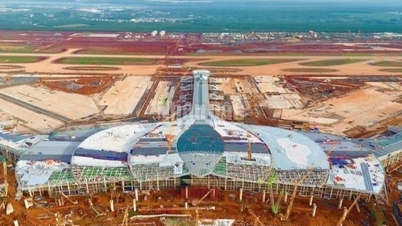
With determination, a new flower-growing region can certainly be created. Soon, the government will even build an airport here. Flowers from these mountainous areas will travel all over the world!
Which businesses will come here to work with the local people to transform this remote mountainous region into fertile areas for temperate flowers and fruit trees?
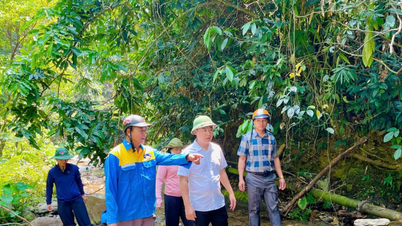
The mountains are no longer far away; let's go to the mountains and forests!
![[Photo] General Secretary and President To Lam meets with National Assembly delegates from ethnic minorities.](https://vphoto.vietnam.vn/thumb/1200x675/vietnam/resource/IMAGE/2026/04/20/1776696701056_a1-bnd-8331-3342-jpg.webp)
![[Image] National Assembly discusses the implementation of the socio-economic development plan.](https://vphoto.vietnam.vn/thumb/1200x675/vietnam/resource/IMAGE/2026/04/20/1776696707422_ndo_br_img-20260420-185419-jpg.webp)


































































Comment (0)