

 |
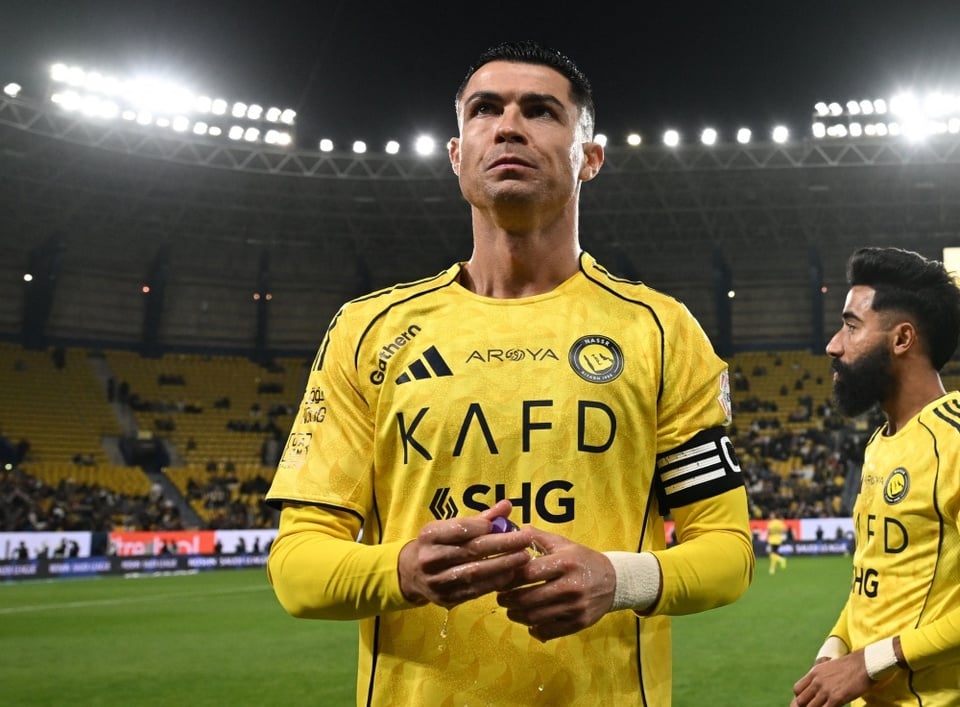
Ronaldo is in trouble in Saudi Arabia. |
The troubles surrounding Cristiano Ronaldo recently don't just stem from the pitch, contracts, or power in Saudi Arabia. They originate from a long-standing mindset, one that has accumulated enough to become the "Cristiano ideology," the very thing that once propelled him to the top, but now binds him.
When "Cristiano ideology" transcends the football pitch.
A seemingly ordinary detail in the documentary series "I Am Georgina" inadvertently highlights a crucial issue. Georgina Rodriguez, Ronaldo's girlfriend, complained that the furniture in Ronaldo's villa was too big, no house could fit it, and it was impossible to sell.
Stories like these, from unreliable Wi-Fi to home renovations, may seem trivial. Yet, it is precisely from these small things that one reality becomes clear: everything surrounding Ronaldo must be "big enough," special enough, and revolve around him.
"Cristiano's ideology" didn't emerge overnight. It's existed for a long time, but during his peak at Manchester United or Real Madrid, it was overshadowed by talent and achievements.
On numerous occasions, Ronaldo has shown annoyance when teammates score, as if goals without his signature are less valuable. When he was at his peak, the public overlooked it. When he's no longer there, everything becomes obvious.
Towards the end of his career, that ideology took on an increasingly monotheistic character. Football was no longer a team game, but a space where everything had to serve Ronaldo.
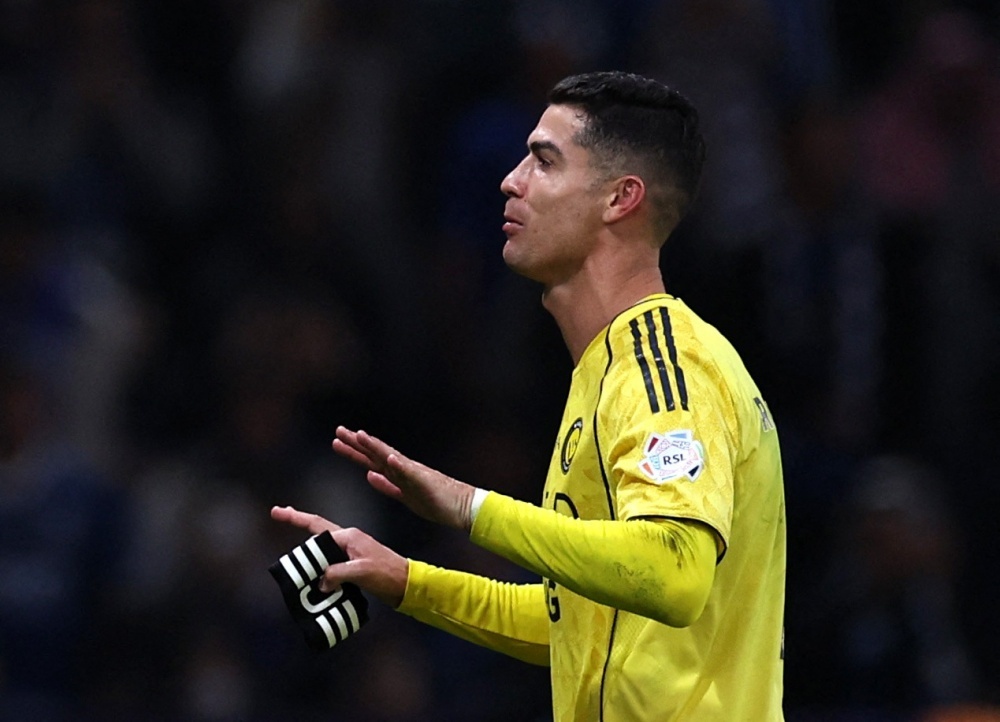 |
Ronaldo's ego is said to be too big. |
In Saudi Arabia, this notion is further fueled by the calculated veneration from those running the Saudi Pro League. Ronaldo is not just a player, but a media icon, a strategic asset. And when an icon is placed so high, it's difficult to accept sharing the spotlight.
"Cristiano's ideology," therefore, doesn't stop at Al Nassr, but spreads throughout the entire league ecosystem. It's like Ronaldo creating his own " sovereign territory," where he is the default center and every decision must revolve around his interests.
An inflated ego and a solitary battle.
Things escalated when Karim Benzema joined Al Hilal. For Ronaldo, it wasn't simply a transfer, but a direct challenge to his position as "number one" in a world he believed was designed for him.
Ronaldo's reaction—refusing to play, skipping training sessions—was nothing short of a Ronaldo-style "strike," exported to the Middle East.
In form, it's resistance. In essence, it's a solitary crusade against anything that doesn't serve the interests of the "Ronaldo kingdom."
But football, even in Saudi Arabia, is still a team game. And when an individual puts themselves above the collective structure, conflict is inevitable.
Looking at Ronaldo's entire career, one sees a paradox: the older he gets, the more he seems to regress in terms of maturity. This comparison is somewhat harsh, but not unreasonable: it resembles the reverse journey of the character in The Curious Case of Benjamin Button .
The image of the boy leaving Madeira to pursue his dream, shouldering family responsibilities from a very young age, has faded. The image of the young man leaving Manchester and arriving in Madrid as a major star of world football is also only a memory.
Instead, we have a Ronaldo whose ego has grown larger with age. An ego that no longer fits in any dressing room unless it was specifically designed for him. No longer fits in any league unless he is the absolute center of attention. Too big to coexist with, yet too fragile to accept sharing.
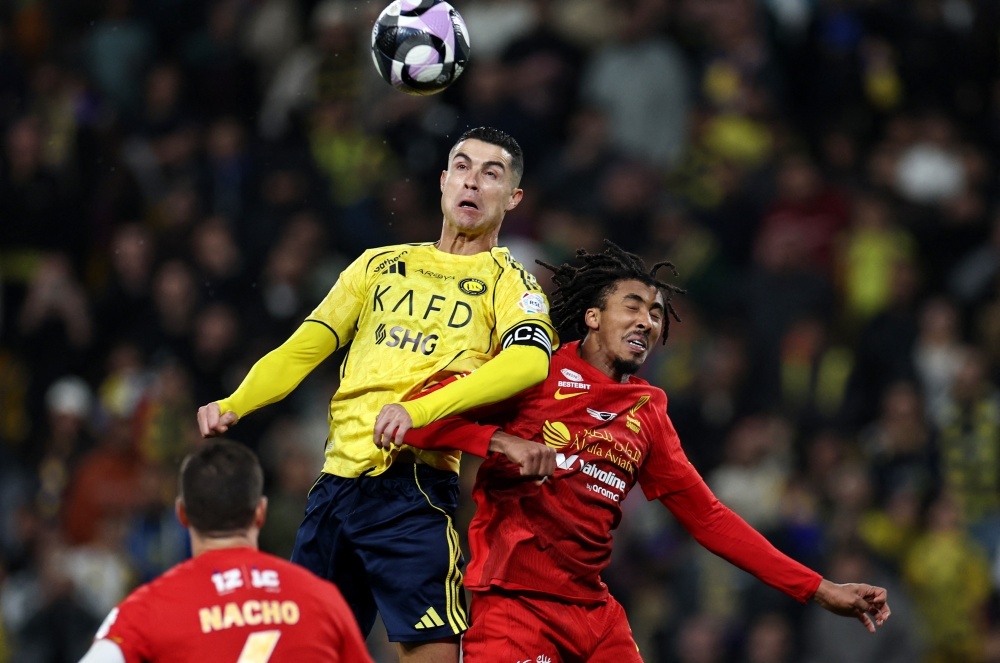 |
Ronaldo wants everything to revolve around him. |
Perhaps the problem was never oversized furniture or unreliable Wi-Fi. The problem lay in Ronaldo's own "size." As the player within faded, the symbolic and ego-driven side took over. He yelled, stomped his feet, disappeared, and then built his own "independent kingdoms" to assert his continued power.
Ronaldo's tragedy doesn't lie in his declining form or his conflict with the Saudi Arabian Public Investment Fund. The tragedy lies in the fact that the ideology that once helped him conquer the world has now left him isolated. When everything no longer revolves around him, he doesn't know where to stand.
Ronaldo remains one of the greatest players in history. That hasn't changed. But football waits for no one, not even legends.
If he can't shed the "Cristiano ideology" and return to the collective nature of the game, he may possess everything except the most important thing: a real place in football. And then, that large room with empty chairs will probably be the only place where Ronaldo doesn't need everything revolving around him, because there will be no one there to do that for him.
Source: https://znews.vn/he-tu-tuong-qua-da-cua-ronaldo-post1625774.html
![[Photo] Prime Minister Pham Minh Chinh receives the Chinese Ambassador to Vietnam](https://vphoto.vietnam.vn/thumb/1200x675/vietnam/resource/IMAGE/2026/04/05/1775397481797_ndo_br_dsc-5512-jpg.webp)



































Comment (0)