

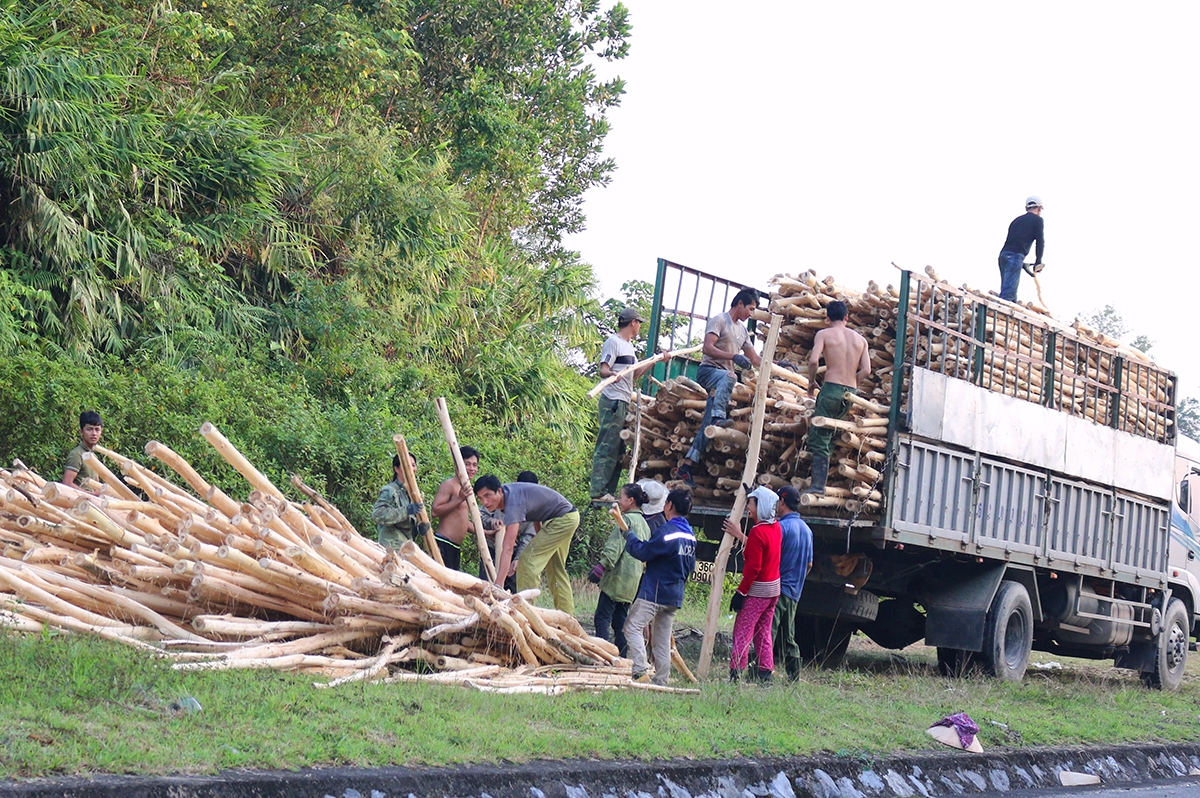
Nghe An currently has a total forest land area of over 1.018 million hectares, accounting for nearly 75% of the province's total natural area. Currently, forested land covers over 1 million hectares (including 790,352.86 hectares of natural forest and 171,421.51 hectares of planted forest); non-forested land covers over 271,000 hectares (including 70,004.23 hectares that have been planted but do not yet meet the criteria for being considered a forest).
For a long time, the forestry sector has played a crucial role in the economic , social, and national defense development of Nghe An province. From an economic perspective, the forestry sector has contributed to increasing the export value of wood and non-timber forest products of the province during the 2021-2023 period, consistently exceeding 5.5%. Specifically, the growth rate of forestry production value reached 7.85% in 2021, 9.07% in 2022, and 6.67% in 2023. Meanwhile, the export value of wood and non-timber forest products from 2021 to 2023 reached US$821.25 million, including US$207 million in 2021, US$344 million in 2022, US$270.25 million in 2023, and US$161 million in the first six months of 2024.
Forestry is gradually becoming an important economic sector of the province. This is further confirmed by the annual increase in planted forest area. From 2010 to the present, the planted forest area has reached over 15,000 hectares per year, and the total planted forest area currently exceeds 220,000 hectares; of which, the production forest area is over 178,000 hectares. As a result, the forest cover of Nghe An has increased and currently reaches 58.33%. This serves as a leverage to increase the biodiversity of the forest, while also opening up more opportunities for carbon credit exports.
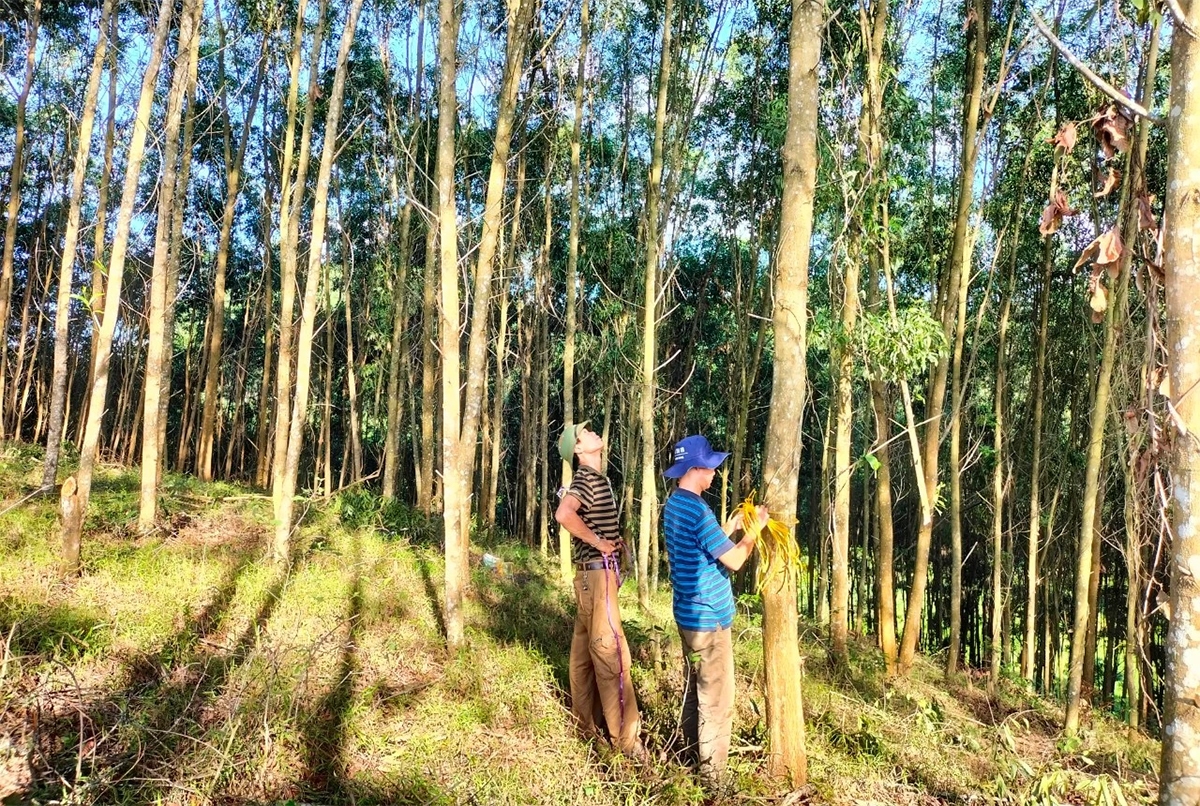
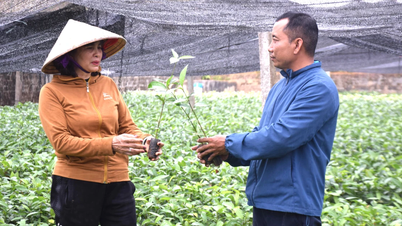
Looking at Con Cuong district, which has the highest forest cover in the province, at over 84%, an average of 1,500-1,800 hectares of concentrated forest are planted each year. And the forests are bringing prosperity and well-being to forest planters. Mr. Ha Van Quyet, a Thai ethnic minority from Thanh Dao village, Bong Khe commune (Con Cuong), shared: "My family has over 1 hectare of bamboo and 18 hectares of acacia. Each hectare of bamboo and acacia provides a stable income of over 100 million VND per year. I also intercrop with cassava, which yields over 70 million VND annually."
Forest economic development has been creating sustainable livelihoods for people in many economically disadvantaged areas. In Quy Chau district, which has a large area of forest land, with over 95,000 hectares distributed across all 12 communes and towns, forests are creating jobs and income for people, contributing to sustainable poverty reduction in the locality. According to the leaders of Quy Chau district, on average, Quy Chau plants 3,000 hectares of forest each year, and currently, the planted forest area has reached over 23,000 hectares, generating over 350 billion VND in revenue annually.
The dream of growing from the forest is blossoming with the revenue from selling carbon credits. Through the Emission Reduction Payment Agreement (ERPA) program in the North Central region, Nghe An province has collected over 282 billion VND since October 3, 2023. This amount is derived from 789,462 hectares of natural forest area throughout the province.
Given the limited resources allocated by the central and local governments to the forestry sector, Nghe An province in general, and forest management agencies in particular, place high hopes on the revenue generated from selling forest carbon credits. The substantial revenue generated will, in theory, significantly alleviate the heavy burden of forest management and protection.
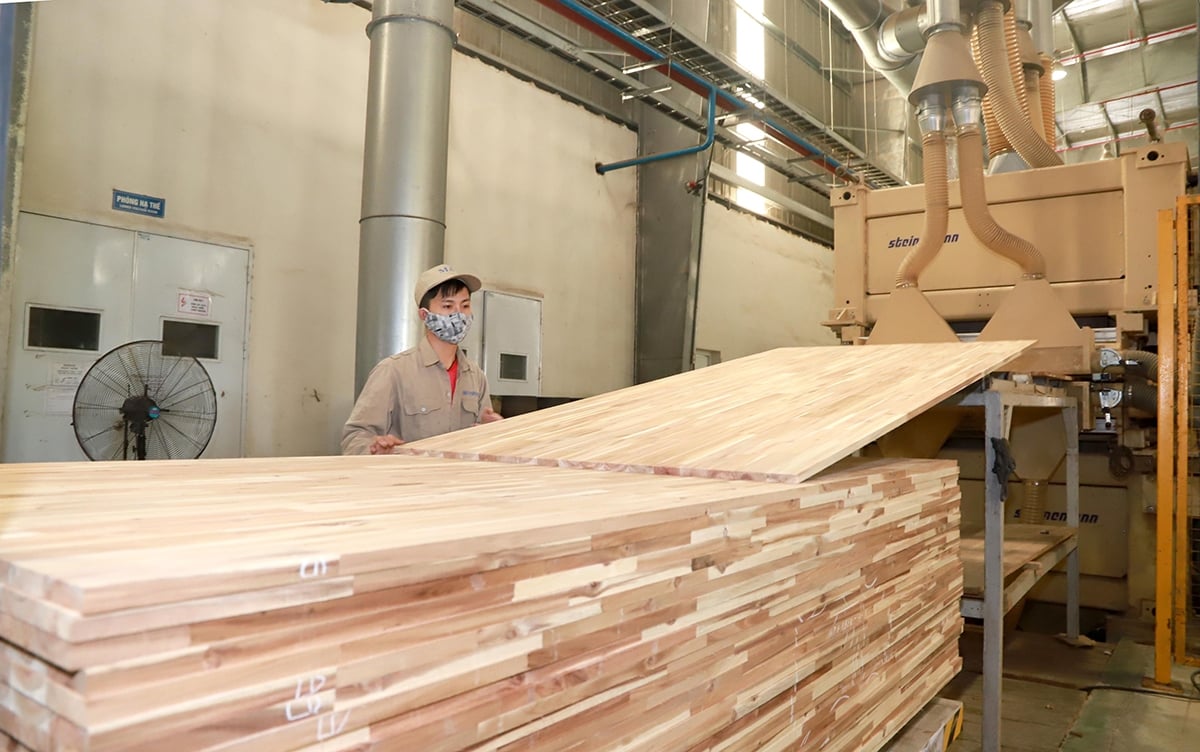
Another important driving force in realizing the dream of living and prospering from the forest for the people of Nghe An is the goal of developing sustainable agricultural and forestry economy associated with forest protection and increasing people's income according to Sub-project 1, Project 3, National Target Program 1719 in Nghe An.
Currently, districts have completed and approved technical design and cost estimate documents for forest protection with the following contents: Support for contracted forest protection for special-use forests and protection forests totaling 101,630.44 hectares; Support for protection of planned forests, protection forests, and production forests that are natural forests assigned to communities and households totaling 151,982.15 hectares; Support for planting production forests, economic exploitation under the forest canopy, and developing non-timber forest products totaling 3,580 hectares; and the amount of subsidized rice for poor households participating in planting production forests, developing non-timber forest products, and protection forests totaling 84.83 hectares. In total, 25,613 households are benefiting from the forest under these support measures.
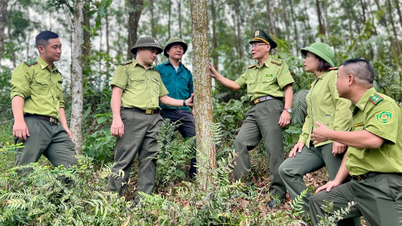
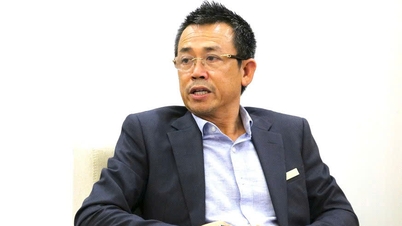
Mr. Phung Thanh Vinh, Director of the Department of Agriculture and Rural Development of Nghe An province, emphasized: Nghe An is resolutely implementing solutions and measures to improve the quality of forest resources and promote sustainable development from forests. Looking at the reality, this is becoming a reality. Sustainable development from forests will limit deforestation and forest fires, creating a green and clean ecological environment.
A stable life and prosperity derived from forests is a reality. The legal framework for forest development and the development of the forestry sector is further strengthened with the Prime Minister's approval on August 24, 2024, of Decision No. 895/QD-TTg on the National Forestry Planning for the period 2021-2030, with a vision to 2050, and a number of mechanisms, policies, and orientations for forestry development in the period 2026-2030.
The new forestry planning will create a legal framework for the province to develop programs, projects, plans, mechanisms, and policies for development. This will foster a vibrant emulation movement, making a practical contribution to the successful achievement of the forestry sector's development goals as planned for 2030 and with a vision to 2050.
Nghia Dan (Nghe An): Ensuring social security and supporting livelihoods helps many ethnic minority households escape poverty.


![[Photo] Prime Minister Pham Minh Chinh presides over a meeting on private sector economic development.](/_next/image?url=https%3A%2F%2Fvphoto.vietnam.vn%2Fthumb%2F1200x675%2Fvietnam%2Fresource%2FIMAGE%2F2025%2F12%2F20%2F1766237501876_thiet-ke-chua-co-ten-40-png.webp&w=3840&q=75)





































































Comment (0)