

The revolution to streamline the administrative apparatus is not an easy task, but it is a necessary step for Vietnam to improve its national governance capacity and meet the demands of the times.
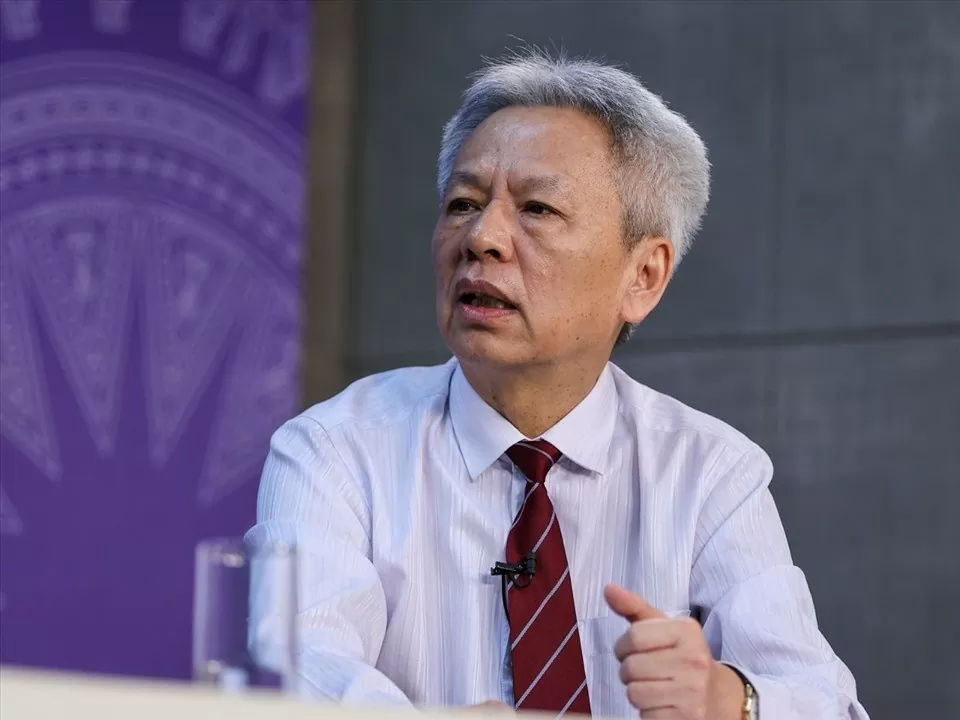 |
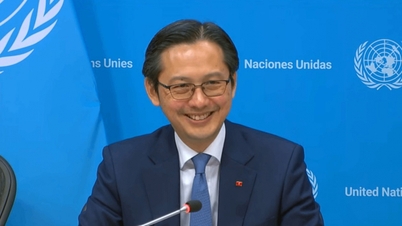
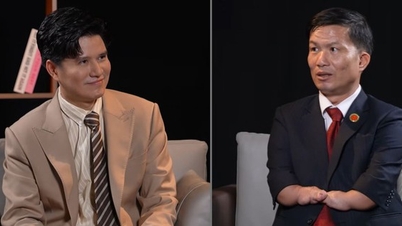
| Dr. Nguyen Si Dung believes that streamlining the administrative apparatus will not only solve internal problems but also create momentum for sustainable development for the country in the future. (Photo: Provided by the interviewee) |
In an increasingly complex and volatile world , building a streamlined and efficient administrative apparatus is not only an urgent requirement but also a driving force for national development. For Vietnam, the revolution to streamline the administrative apparatus has been strongly launched in recent years, but to succeed, we need to learn valuable lessons from countries around the world.
Lessons from around the world on streamlining administrative systems are extremely important and useful, helping us shorten the path and avoid the mistakes that other countries have learned from. New Zealand once faced a cumbersome bureaucracy before shifting to results-based management. Singapore built e- government from the ground up to overcome corruption. Japan had to make adjustments after decades of centralized power.
These experiences represent the "price" they paid in time, resources, and failures. By applying these lessons, Vietnam not only saved time in reforms but also accelerated the building of a more efficient system that better served national development.
A cumbersome administrative apparatus not only wastes national resources but also slows down the decision-making process, hindering policy implementation. The consequences include inefficiency, a lack of transparency, and a loss of public trust in the government.
In Vietnam, the Party and State have clearly recognized this issue and have set forth the requirement to reform the administrative apparatus, with the focus on "reducing but strengthening, streamlining but improving efficiency." However, to realize this goal, Vietnam needs to learn from the experiences of other countries.
First and foremost , there's the New Zealand experience: results-oriented management. New Zealand is renowned for its results-oriented public sector management model, which focuses on achieving goals rather than simply following procedures.
This country has implemented the following: First, performance-based contracts between the government and agencies, requiring periodic reporting of results. Second, merging agencies with overlapping functions, significantly reducing the number of public institutions. Third, defining key performance indicators (KPIs) to monitor performance.
New Zealand's lesson for Vietnam is that administrative systems should be evaluated based on concrete results, rather than just the volume of work or the time taken to complete it.

Secondly, there is the experience of Singapore: Digitalization and high-quality human resources. Singapore is an ideal model of a small but efficient government. This country has implemented: Digitalization of the entire administrative process, allowing citizens to access public services through online platforms; recruitment based on competence and high competitiveness, combined with attractive compensation packages; and strong anti-corruption measures, such as financial transparency and strict controls.
Singapore's lesson for Vietnam is that Vietnam needs to accelerate the digitalization and automation of administrative procedures and raise the standards for recruiting civil servants.
Thirdly, there is the experience of Japan: Decentralization to reduce the burden. Japan has successfully decentralized power to local authorities, reducing the administrative pressure from the central government.
Specifically: Many administrative functions have been transferred to the provincial and city levels, significantly reducing the number of central government officials; local governments have been granted greater autonomy in socio -economic development.
Japan's lesson for Vietnam is the need to grant greater autonomy to provinces and districts, coupled with clear accountability, thereby reducing the burden on central agencies.
Fourth is the experience of Sweden: Digitalization to reduce manpower. Sweden is one of the pioneering countries in the comprehensive digitalization of public services. As a result, government agencies use shared databases, avoiding information duplication. Many administrative tasks are automated, significantly reducing the need for personnel.
Sweden's lesson for Vietnam is that building a national database and sharing data among agencies will help save resources and speed up work processing.
Fifthly, there is the German experience: Restructuring agencies. Germany focuses on restructuring administrative agencies to eliminate duplication and enhance coordination. Measures include: Merging agencies with similar functions; reviewing the functions and tasks of each agency, and eliminating unnecessary tasks.
Germany's lesson for Vietnam is the need for a comprehensive review of the entire system of agencies, boldly cutting back on inefficient or redundant departments.
Based on global experience, to streamline Vietnam's administrative apparatus, we need to pursue the following strategies:

Firstly, comprehensive digitalization is essential. Strong investment in information technology is needed to build a modern e-government. Secondly, decentralization and delegation of power are crucial. Greater authority should be granted to local governments, while simultaneously implementing transparent inspection and monitoring mechanisms.
Third, focus on efficiency. Measure work efficiency based on results rather than quantity. Fourth, train and select personnel. Select and train competent staff, while also offering attractive compensation packages.
Fifth, strong political commitment. The Party and the State need to demonstrate high determination in leading the revolution to streamline the administrative apparatus.
The revolution to streamline the administrative apparatus is not an easy task, but it is a necessary step for Vietnam to improve its national governance capacity and meet the demands of the times. Learning from advanced countries will help Vietnam build an efficient, transparent, and truly people-oriented administrative system.
If implemented systematically and decisively, streamlining the administrative apparatus will not only solve internal problems but also create momentum for sustainable development for the country in the future.
Source

















































![[Video] Sunset at Lap An Lagoon – Where the sun sets over the fishing nets](https://vphoto.vietnam.vn/thumb/1200x675/vietnam/resource/IMAGE/2026/05/31/1780192137701_beach-landscape-sea-water-nature-grass-745871-pxhere-com.jpeg)






























Comment (0)