

Thào A Su, from Sáng Nhù village, is only 20 years old this year – an age when many young people his age are engrossed in city dreams and modern technology, yet Su has chosen a path of traditional values, of the serene sounds of the traditional Hmong flute. In Mù Cang Chải, there aren't many flute makers, and Su is one of the youngest. Day after day, Su breathes life into each bamboo stick and piece of wood to create flutes – sacred musical instruments, symbols of Hmong culture.
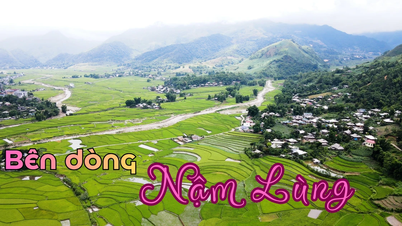
The Sang Nhu village is only a few kilometers from the center of Mu Cang Chai commune, but it's uphill. Along the way, you'll find a magnificent landscape of terraced rice fields, interspersed with low wooden houses of the Hmong people, adding a touch of charm to this stunning scenery.
Su's house was also nestled halfway up the mountain, with terraced rice fields, white clouds, and pine and bamboo forests stretching out below and in the distance. Right in front of the gate stood a majestic wild apple tree, its fragrant fruit filling the air. Su sat by the door, a small knife in hand, carving a gourd for a traditional Vietnamese flute.
Seeing a customer, Su quickly stopped what she was doing, nimbly pulled up a chair, and prepared drinks. Su explained that she had been exposed to the khene (a type of bamboo flute) since she was a child, and its sound had become an indispensable part of her life.
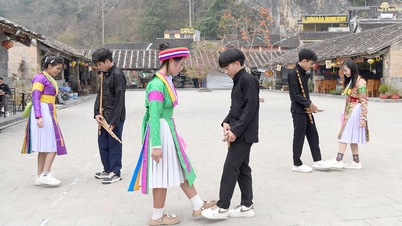
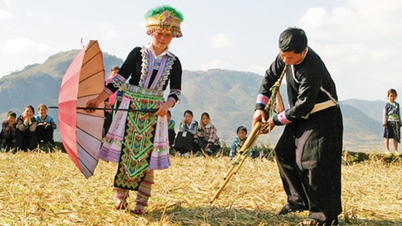
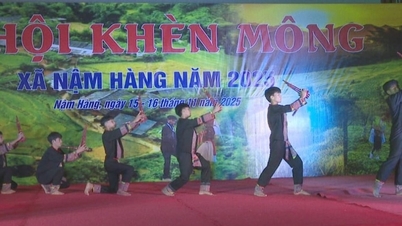
The sound of the khene (a type of bamboo flute) resonates in harvest festivals, lively weddings, romantic moonlit nights, and even in ceremonies bidding farewell to the deceased. The khene is not just music ; it is a language, a memory, an invisible thread connecting people to the earth and sky, to the past and the present.
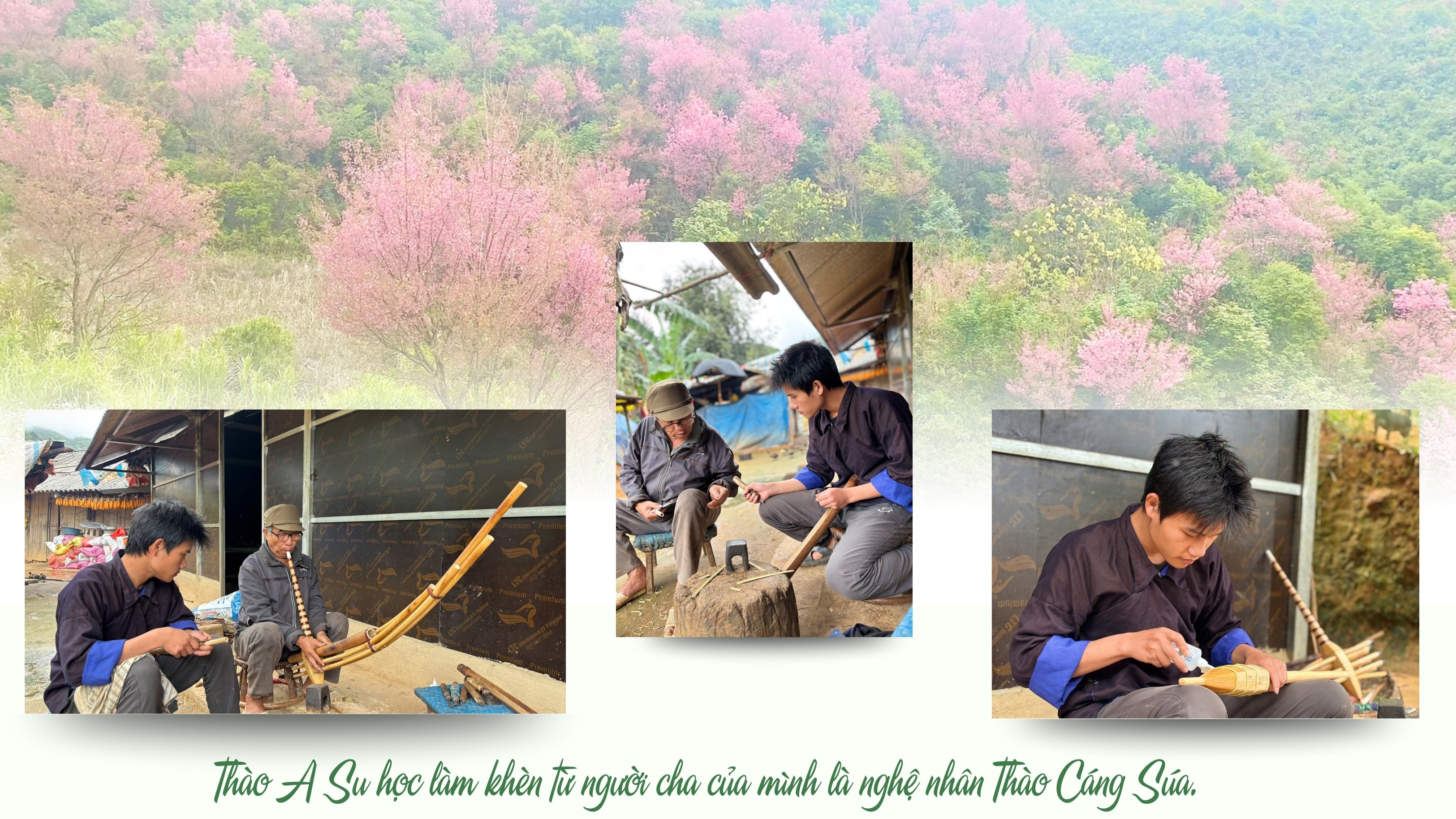
A Su's father, Thào Cáng Súa, was a renowned khene (bamboo flute) artist in the region and also his first and greatest teacher.
"I don't know when it started, but the image of my father meticulously working with pieces of bamboo and wood, his calloused hands skillfully carving and assembling, has been etched into my mind."
Thào A Su - Bản Sáng Nhù, Mù Cang Chải Commune
Her father's flute playing nurtured her soul and fostered her love for the instrument. During her boarding school years, on weekends, Su would eagerly follow her father, learning how to select bamboo, carve wood, and sharpen the brass reeds. Her small hands were initially clumsy and awkward, but with perseverance and burning passion, Su gradually mastered the most refined techniques.
“My father said that making a Hmong mouth organ isn't just about creating a musical instrument, but about creating a part of our ethnic group's soul. Each mouth organ must have its own voice, it must carry the spirit of the mountains and forests, the emotions of the Hmong people,” A Su recounted, his eyes sparkling with pride as he spoke of his father.
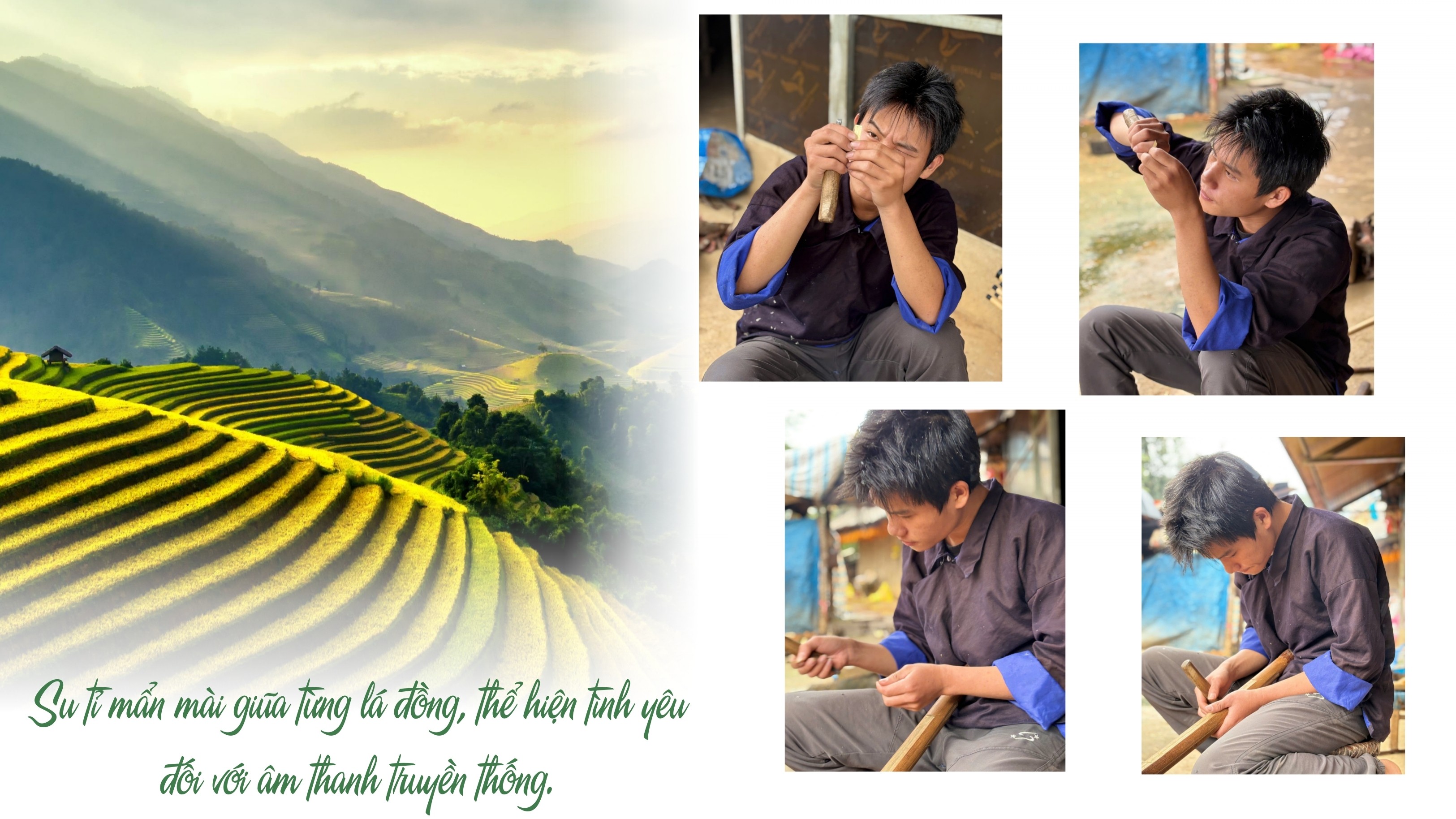
Sitting with Su on the porch, watching her meticulously carve and polish, I realized that the process of making a Hmong flute is a laborious journey, requiring meticulousness, patience, and a wholehearted dedication. Su explained that the main materials are bamboo and wood. The bamboo must be of just the right age, neither too old nor too young; the body of the flute is usually made of Pơ Mu wood, which is highly durable and has beautiful grain.
"The most important thing is choosing the bamboo; it must be naturally dried for a period of time to ensure durability and the correct sound. If the bamboo is too young or not dried in the sun enough, the sound of the mouth organ will not be resonant or warm," Su added.
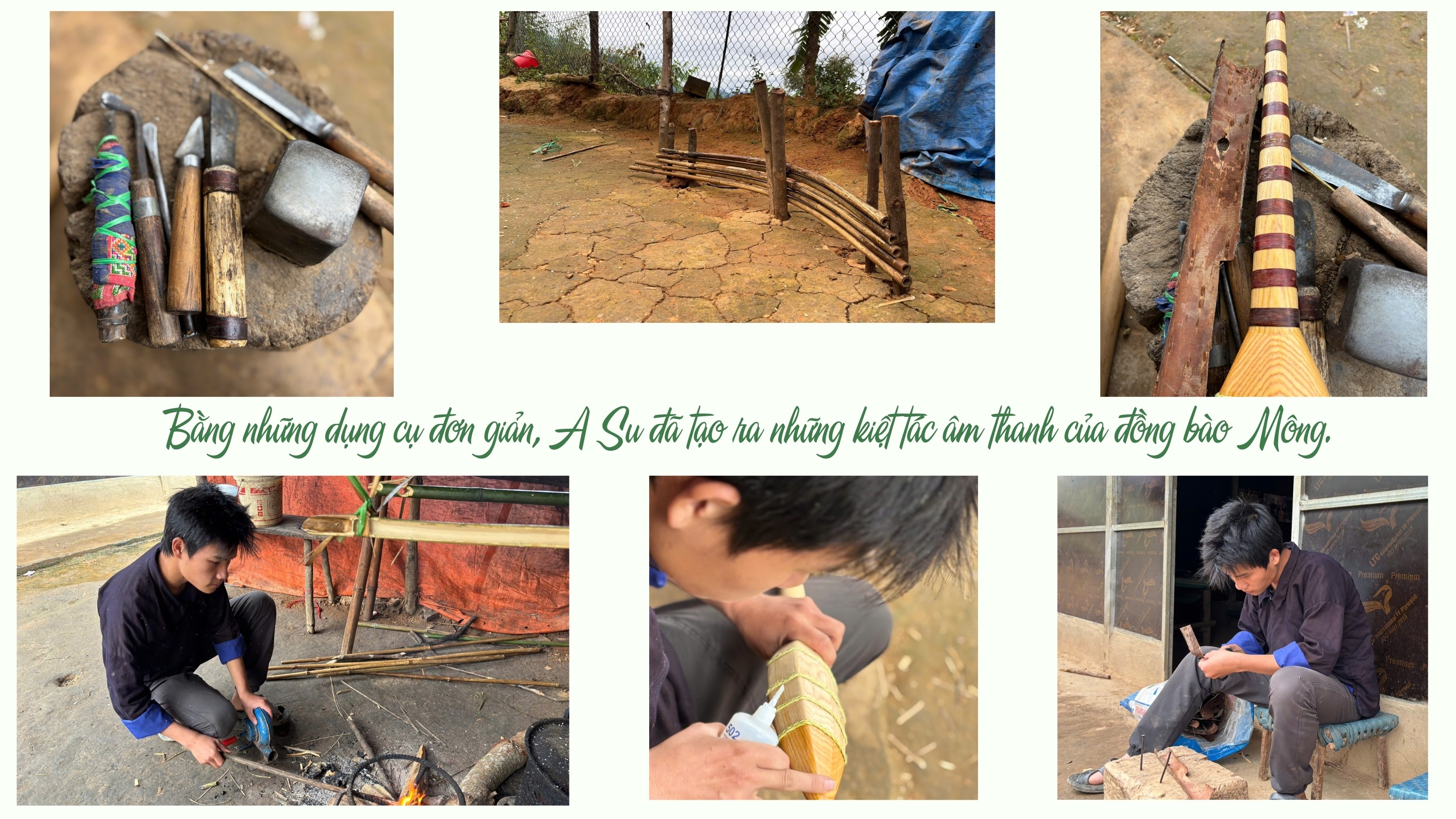
After selecting the desired materials, Su began the shaping process. Bamboo tubes of varying sizes were heated over a fire and then gently bent to create curves, which also served as pathways for the airflow to pass through and produce sound.
Next is the reed chamber, usually made from cypress wood, hollowed out to create a resonance chamber. A brass reed is attached to the chamber. This is the heart of the khaen. The brass reeds are thinly hammered and carefully polished; this process is largely done by feel.
Su said: "Everyone has their own way of making copper foil, and they test the sound differently; it's mainly based on personal feeling."
Finally, there's the finishing stage: sanding, polishing, and decorating. Each step is meticulously executed by A Su, without overlooking any small detail. Su works with intense concentration, his eyes following every line, his ears listening to even the slightest sound.
Despite being only 20 years old, A Su has years of experience making the khene (a type of bamboo flute). The khenes created by Su's skillful hands carry the sweat, effort, and love of a young person preserving traditional culture.
A Su's Hmong flutes are not only trusted by the villagers but also sought after by tourists from all over. Many foreigners, upon visiting Mu Cang Chai, are surprised and delighted by the unique sound and rustic beauty of the Hmong flute, and they seek out A Su to own a work of art bearing the distinctive mark of local culture. Notably, Su even receives orders from customers in Thailand.
Each Hmong flute that A Su makes is not just a handcrafted product, but also a part of his aspirations. Su hopes that the sound of the Hmong flute will not only resonate within the Sang Nhu village, but will also reach more people, so that the world can learn more about this rich and unique culture.
Su confided, "Now there are new technologies for making the mouth organ, like plastic gourds and tubes, but the sound isn't as good; it feels like something is missing."
That's right! The "something missing" that Su mentioned is her love for the khaen (a traditional Vietnamese wind instrument), her heartfelt desire to preserve traditional culture.
When asked about his future plans, Su shared that he wanted to earn money to pave the yard, build livestock pens, and buy more household equipment . Selling the khaen (a type of bamboo flute) would allow him to do those things. Thus, A Su's future plans are closely linked to the khaen.
"I dream that one day, when tourists come to Mu Cang Chai, they will remember not only the terraced rice fields but also the sound of the Hmong flute," Su shared with a gentle smile.
In modern life, with its diverse cultural influences, the fact that a young man like Thào A Su has chosen to preserve and make a living from traditional crafts is truly commendable. This not only demonstrates a deep love for his homeland and people but also proves the enduring vitality of traditional culture in the hearts of young people.
Through Su's hands and breath, the sound of the Hmong flute is not just the sound of a musical instrument, but also the voice of the mountains and forests, the echo of ancestors, the voice of a people. The flute carries the breath of the land, of plants and trees, of love stories, and of aspirations for a prosperous and happy life.
When A Su gently blows on the Hmong flute, the melodious sounds resonate, gliding across the terraced rice fields, blending with the mountain wind, and soaring into the sky. It is the sound of the flute, the "soul of the mountains," being preserved and infused with new life through the hands and heart of this passionate young man. With his unwavering determination and love, Thào A Su is continuing the story of the Hmong flute – an indispensable part of the majestic Northwest mountains.
Source: https://baolaocai.vn/hon-nui-qua-tieng-khen-post888478.html















































































Comment (0)