

Localization of global cultural products
Amidst the wave of localizing global cultural products, the "Rivers and Mountains of Southern Vietnam" Tarot deck stands out as a project with both academic and artistic depth. According to author Le Chinh, who is responsible for the project's content, the biggest challenge in the localization process lies not in changing the form or "renaming" the original cards, but in preserving the core spirit of Tarot while allowing Vietnamese symbols to speak for themselves.
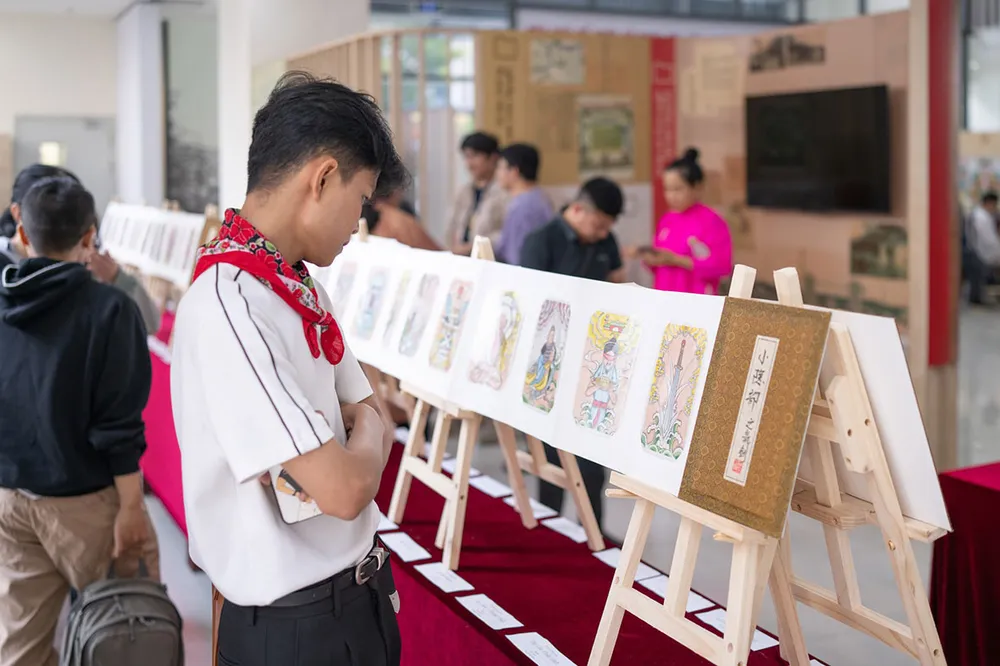
Tarot is a symbolic product, built upon the distinctive cultural characteristics of Europe from the 15th century. These characteristics differ greatly from the legends and myths in Vietnamese culture. “The real challenge is finding the intersection point. Each card must be true to the spirit of Tarot while also reflecting how Vietnamese people view life, fate, and relationships,” shared author Le Chinh. It was a process of “listening for a long time”—listening to the traditional essence of Tarot and listening to the unique material of the legends in traditional culture.
The result of this journey is a set of 78 bilingual Vietnamese-English flashcards, featuring hand-drawn illustrations that inherit traditional artistic styles. The content is based on familiar myths, folk tales, and beliefs deeply ingrained in the Vietnamese psyche, such as: The Hundred Eggs, Lac Long Quan and Au Co, Saint Mother Lieu Hanh, Saint Tran, Emperor Tran Nhan Tong, Tam, Cuoi, Truong Ba… The materials were carefully selected from various ancient sources such as: Linh Nam Chich Quai, Viet Dien U Linh Tap, Truyen Ky Man Luc…, along with genealogical records, royal decrees, and official cultural and religious research works. This approach demonstrates the seriousness of the team in laying a solid academic foundation for a creative product aimed at young audiences.
Tell the story of traditional culture.
The team stated that the process was also a journey of rediscovering Vietnamese cultural identity. Previously, like many young people of their generation, they unconsciously compared their national culture to that of other countries. However, the deeper they delved into the project, the more they let go of that mindset. They likened this experience to living in a happy family: once they truly understood and cherished their own unique values, they no longer cared about being superior or inferior to others. This "return to their original innocence" is the foundation for creating more confidently and naturally using traditional materials.
From a broader perspective, the project team also presented a noteworthy viewpoint on the role of the younger generation. According to author Le Chinh, preserving and promoting culture is not the "sole responsibility" of any one generation, but a continuous flow across many generations. From the time of writing books with ink, to newspapers, television, online news, and short videos , the medium may change, but the need to tell the story of national culture always remains. What today's generation needs is the understanding and courage to tell that story in the language of their time.
The Tarot "Rivers and Mountains of Southern Vietnam" is the result of nearly five years of interdisciplinary collaboration. The deck's content was written by Le Chinh, illustrated by artist Doan Thanh Loc (pen name Nam Ngoc), who also provided cultural and religious advice. It also benefited from the professional editing and overall design by lecturer Tran Nguyen Anh Minh (Van Lang University). In 2025, the project's fundraising campaign received nearly 700 million VND from community support. This figure demonstrates the growing demand for serious, creative products that place traditional cultural foundations within a contemporary context.
In the broader context of efforts to revitalize traditional heritage, the Tarot of the Southern Rivers and Mountains can be seen as a noteworthy experiment. Young people not only "borrow the form" of representative global cultural products but also actively engage in dialogue using their own unique identity and traditional culture.
Source: https://www.sggp.org.vn/hon-viet-trong-van-hoa-duong-dai-post840332.html
























































































Comment (0)