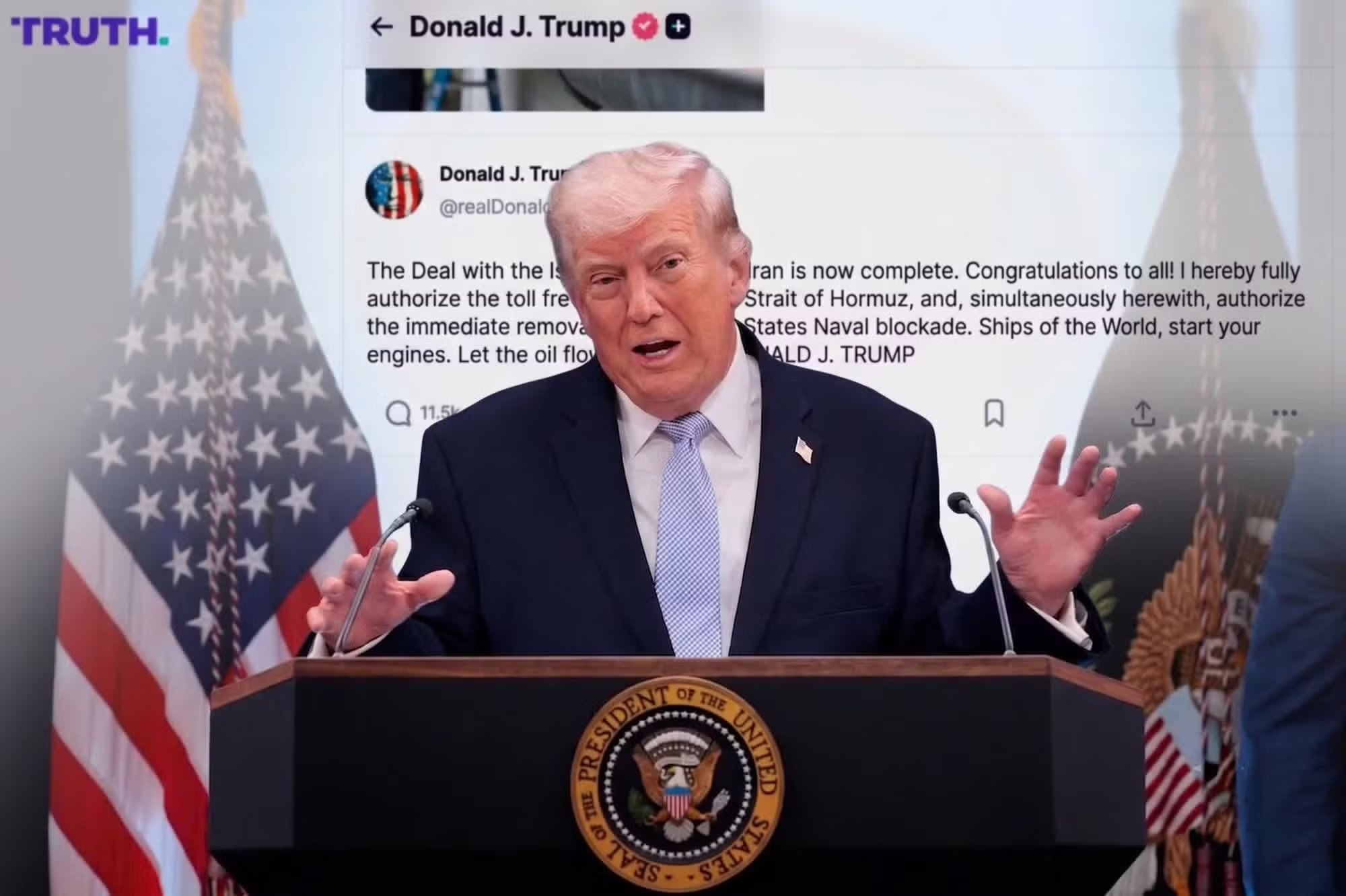
Early on June 15th (Vietnam time), Pakistani Prime Minister Shehbaz Sharif, acting as a mediator, announced that the US and Iran had reached a framework agreement to end the war. US President Donald Trump declared that the Strait of Hormuz would be reopened and the naval blockade targeting Iranian ports would be lifted.
Tehran also stated that military operations on all fronts, including Lebanon, would cease. But this is not the end. Rather, it is only the first lull after a long storm.
When a strait sets the pace of oil prices
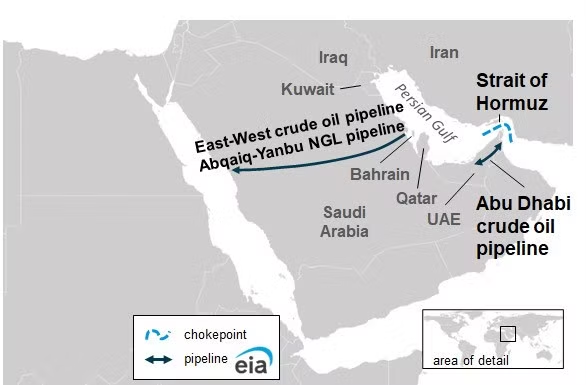
The conflict began on February 28, 2026, when the U.S. and Israel launched Operation Epic Fury, with nearly 900 attacks in the first 12 hours targeting Iranian missiles, air defenses, military infrastructure, and targets linked to the Iranian leadership. Tehran retaliated. Just days later, shipping through Hormuz was nearly paralyzed, triggering an immediate shock in energy markets.
Brent crude prices briefly surpassed $120 per barrel. Qatar Energy announced that the majority of liquefied natural gas contracts were affected by force majeure. Energy-importing economies in Asia, heavily reliant on oil and gas passing through the Hormuz River, immediately faced pressure from transportation costs, insurance, supply, and fuel prices.
The U.S. Energy Information Agency (EIA) subsequently estimated that Middle Eastern production had fallen by approximately 11 million barrels per day, forcing the market to drastically reduce inventories to compensate. Oil inventories in OECD countries are projected to fall to their lowest levels since 2003.
The agency also forecasts Brent to average around $105 per barrel in June and July. However, global oil demand in 2026 has been revised down by 1.1 million barrels per day due to high prices and fuel conservation measures.


Remarkably, the market didn't wait for the Hormuz to actually reopen before reacting. Just the news of the framework agreement caused oil prices to fall by more than 4%, while futures contracts for US stock indices rose across the board. In wartime, oil prices are driven not only by the actual flow of individual ships, but also by fear, expectations, and the reliability of the promises made.
Pakistan and its unexpected mediating role.
According to initial reports, the agreement brokered by Pakistan and Qatar outlines three main directions: ending hostilities, gradually reopening the Hormuz Strait, and initiating a new round of negotiations on sanctions and Iran's nuclear program. The official document is expected to be signed in Switzerland on June 19th. The crucial point is that the most difficult part remains unresolved and has been moved to a further stage of negotiations.
Pakistan, a country long viewed through the lens of internal instability, now finds itself in a position where the United Nations and many European powers cannot effectively address its concerns. Islamabad has relations with both Washington and Tehran, is not rigidly bound by Western alliances, and has a direct interest in de-escalating the energy crisis. This combination makes Pakistan a viable channel for dialogue between the two sides.
However, the biggest risk to the deal lies outside the US-Iran negotiations: Israel and the battlefield in Lebanon. On June 14, Israel launched airstrikes on Dahiyeh, a southern suburb of Beirut, after the Israeli army said Hezbollah had fired shells toward northern Israel.
The Israeli military said the target was a Hezbollah command center; Lebanon reported casualties in the attack. The strike came as Washington and Tehran were close to reaching an agreement, turning the Lebanese front into the first test of the resilience of the new commitment.



Therefore, the real question isn't just whether the document will be signed on June 19th. The question is: Does Washington have enough control over its allies to keep the agreement alive through the initial hours?
Hormuz may reopen, but the global energy market is unlikely to return to its starting point of February 28, 2026. More than three months of lockdown have been enough for governments, transport companies, insurance companies, and energy-importing economies, including Vietnam, to reassess their entire supply chains.
The lessons from Hormuz, therefore, are not limited to the Middle East. Oil security doesn't begin when a crisis erupts, but must be prepared from the days when the seas are calm, ships are sailing, and oil prices seem to be under control.
Source: https://cand.vn/hormuz-mo-lai-the-gioi-chua-het-lo-post813977.html