

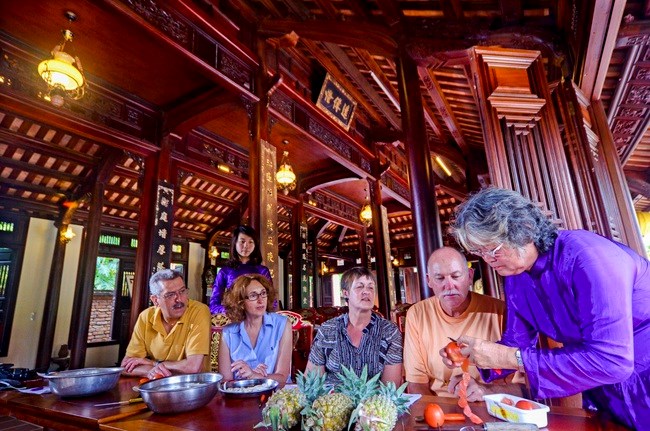
In that "picture," cuisine emerges as a field that is both familiar and highly influential: Cuisine is not just food, but also the language of memory, aesthetics, folk knowledge, and the creative capacity of the community.
We need to "redefine" our culinary strengths.
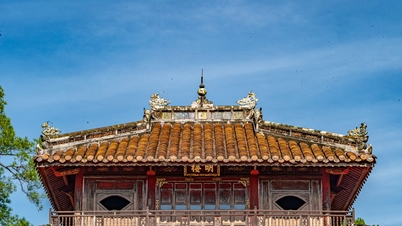
For Hue , choosing the culinary field as the basis for its application to join the UNESCO Creative Cities Network (UCCN) in 2027 is a well-founded and promising direction. Hue is renowned for its refined, profound, and harmonious cuisine, blending royal and folk traditions, rituals and daily life, and the beauty of presentation with the authenticity of flavor.
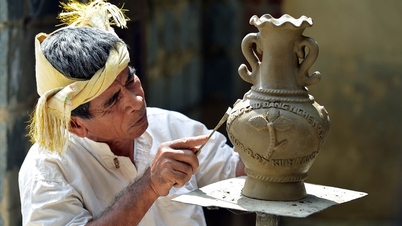
It is a "living heritage," existing not only in books, but also in every market, in family kitchens, in festivals, in traditional crafts, and in the very lifestyle of the people of Hue.

However, it's important to clarify: UNESCO doesn't judge a city solely by its reputation or glorious past. UNESCO is more interested in its capacity for action and commitment to creating social impact over the next four years. Therefore, the core question isn't "Does Hue have many delicious dishes?", but rather whether Hue has a sufficiently robust culinary ecosystem, a clear development plan, and a substantial organizational mechanism to participate in the global network.
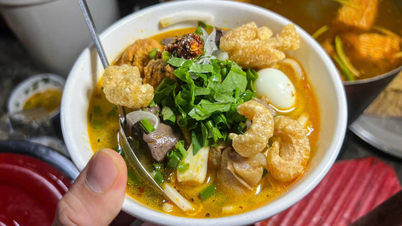
First and foremost, Hue needs to "redefine" its culinary strengths with a sufficiently in-depth thesis. It's not enough to simply name dishes like beef noodle soup, clam rice, Hue cakes, Hue sweet soups, etc. Instead, it must present a strategic message: Hue cuisine is a cultural knowledge system and a creative economic sector capable of promoting sustainable tourism, creating livelihoods for the community, and contributing to the city's branding. A clear central thesis will ensure the entire dossier stays on track, while also providing a foundation for action plans, priority projects, and specific performance indicators.
Next, equally important is building a properly structured, inter-sectoral implementation mechanism that meets UNESCO standards. The UCCN dossier cannot be prepared in a superficial or perfunctory manner, nor can it be merely "written for the sake of appearances." The city needs a substantive, authoritative, and operational coordination mechanism, in which the role of the lead agency, especially the Department of Culture and Sports, must be clearly defined. Simultaneously, relevant departments and sectors such as tourism, industry and trade, agriculture, education, science and technology, and foreign affairs need to participate with a spirit of collaboration and shared responsibility.

What is the action plan?
A very practical requirement is that Hue must have a culinary ecosystem map with sufficiently robust data to gain UNESCO's trust. This is the foundation to demonstrate that Hue cuisine is not just a story of tradition, but a functioning system: from the creative entities (artisans, chefs, business households, the younger generation), to the practice spaces (markets, craft villages, food streets, festivals), to the economic value chain (ingredients - processing - services - experiences).
When data is standardized and verifiable, the records will have a "backbone"; at the same time, the city will also have a "data brain" to manage the culinary sector in the long term.
And finally, if we had to choose the most important part of the dossier, it would be the four-year Action Plan. UNESCO needs to see concrete projects, specific partners, specific resources, and clear social impact. Hue should prioritize several key programs: Preservation and digitization of culinary knowledge; capacity building for culinary communities; integrating cuisine into education and skills transfer; and internationalizing Hue's cuisine through cooperation with UCCN cities in the field of Gastronomy.
Joining the UCCN (United Nations Convention on the Law of the Sea) is not just a foreign policy objective, but must become a city-wide development program. If done correctly, Hue will not only gain another "title," but also a strategic boost to develop its heritage city in a creative, sustainable, and integrated direction, where cuisine truly becomes its identity, its livelihood, and a soft power on the world map.
Hue needs to redefine its culinary strengths with a sufficiently in-depth thesis. It's not enough to simply name dishes like beef noodle soup, clam rice, Hue cakes, Hue sweet soups, etc.; instead, it must present a strategic message: Hue cuisine is a cultural knowledge system and a creative economic sector capable of promoting sustainable tourism, creating livelihoods for the community, and contributing to the city's branding.
A clear central thesis will keep the entire dossier on track, while also providing a foundation for an action plan, priority projects, and specific performance indicators.
Source: https://baovanhoa.vn/van-hoa/hue-can-phai-lam-nhung-gi-200299.html
![[Photo] General Secretary and President To Lam works with the Party Committee of the Ministry of Health on the work of Vietnamese traditional medicine.](https://vphoto.vietnam.vn/thumb/1200x675/vietnam/resource/IMAGE/2026/05/20/1779294323718_a1-bnd-2978-3319-jpg.webp)
![[Image] "Journey of Hope" promotes the organ and tissue donation movement in Vietnam.](https://vphoto.vietnam.vn/thumb/1200x675/vietnam/resource/IMAGE/2026/05/20/1779294400833_1-8910-jpg.webp)























































Comment (0)