Illustrative image
This tree species, embodying the noble character of the emperor, has been intimately connected with the imperial land as a historical witness, from the "sacred trees" personally cultivated by the emperors to the forests embracing the dragon veins of the capital's geographical location.
Our journey to rediscover the charm of " Hue, the city of a thousand pine trees" led us to encounter fascinating stories of culture and history.
The "green guardians" of the sacred site
More than a century ago, L. Cadière – a brilliant scholar and "a great friend of Hue" – uttered an urgent plea in the BAVH journal in 1916: "Save our pine trees!"
That appeal not only highlighted the existing danger at the time but also affirmed the irreplaceable position of this tree species in the consciousness and landscape of the ancient capital of Hue.
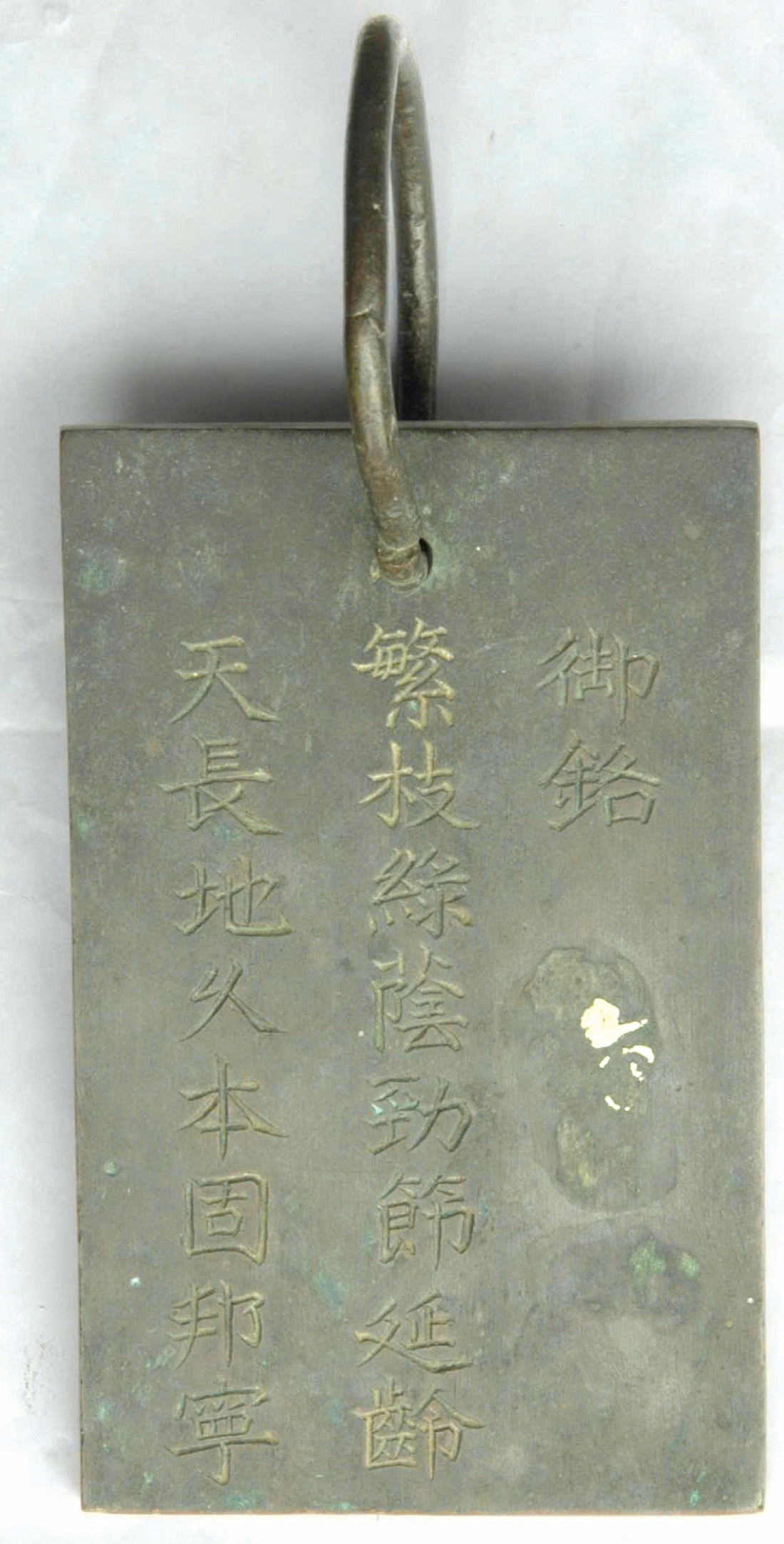
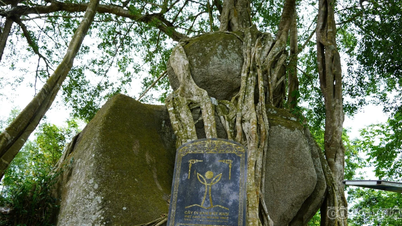
A bronze plaque inscribed with an inscription by King Thieu Tri commemorates the planting of pine trees at the Nam Giao altar in 1841 - Photo: Provided by Nguyen Phuoc Hai Trung
Tracing back through history, Hue was once truly a city nestled within a pine forest. According to the late forestry engineer Nguyen Huu Dinh, the scenic forests surrounding the ancient capital covered approximately 1,650 hectares, encompassing low hills south of the citadel and extending to famous mountains and hills such as Ngu Binh, Tam Thai, Kim Son, Thien An, and Vong Canh...
The entire area is covered in lush greenery from ancient pine trees, creating an elegant and tranquil atmosphere.
We conducted fieldwork at the most important historical sites of the Nguyen Dynasty to verify the vitality of this tree species. The most impressive site was undoubtedly the tombs of the Nguyen emperors.
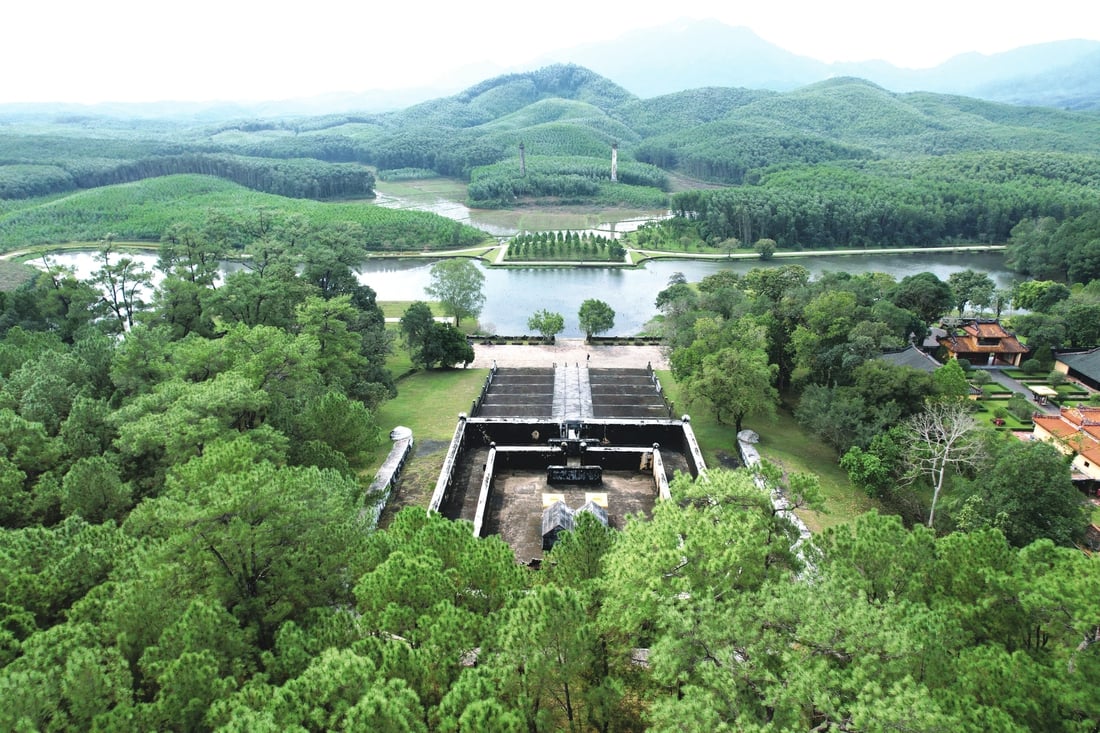
At Thien Tho Mausoleum (Gia Long), the path leading to the mausoleum winds between two rows of towering ancient pine trees. The mausoleum complex is nestled within rolling pine hills surrounding a lake, creating a tranquil and melancholic setting.
At Minh Mang Mausoleum, visitors are overwhelmed by the ancient pine trees on both sides of the Bi Dinh pavilion and Minh Lau, some with trunk circumferences exceeding 2 meters, casting their shadows onto Truong Minh Lake.
In particular, the Huyền Cung area – the resting place of the king on Khải Trạch mountain – is surrounded by giant "ancient pines," some with trunk circumferences up to 213cm, their branches and leaves winding like guardian arms.
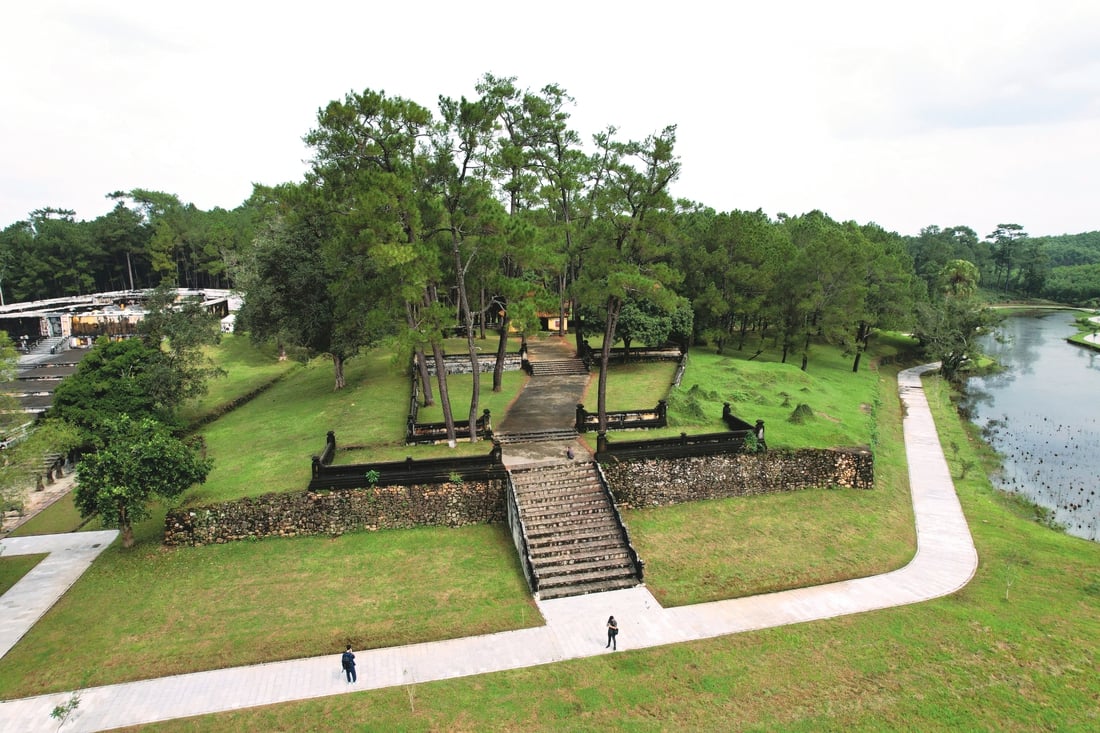
Pine trees are not only found in royal tombs, but also densely present at the Nam Giao Altar – where the king offered sacrifices to heaven and earth. Standing in the middle of the altar area at dusk, listening to the wind rustling through thousands of pine needles, a truly sacred feeling envelops the soul. Currently, there are more than 3,700 pine trees here, with over 1,500 ancient ones.
The towering pine trees, their trunks bearing the rough brown bark etched with the marks of time, reach straight up to the blue sky like giant incense sticks connecting earth and heaven. The Hue Ancient Citadel Conservation Center reports that there are over 27,000 pine trees at the historical sites, with nearly 1,900 ancient ones. These telling figures demonstrate that Hue is still preserving the precious living green heritage left by its ancestors.
Illustrative image
In the old days, Hue had many pine trees. Pines surrounded the tombs and temples, within the citadel, on Ngu Binh Mountain and the surrounding hills. Ngu Binh Mountain was once the highest point of a vast "tourist forest" filled with dark green pines, associated with familiar places such as Ba Don, Tu Tay, Duong Pham, and Xuan Son…
Nguyen Huu Dinh, a hydraulic and forestry engineer.
The ancient "ascending dragon" of the emperor
Among the tens of thousands of pine trees casting their shade over the heritage site of Hue, there is a particularly ancient pine tree located within the grounds of The To Temple, the temple dedicated to the Nguyen dynasty kings in the Hue Imperial Palace. The Hue Ancient Citadel Conservation Center reports that this tree is over 100 years old.
A valuable documentary photograph taken by the French in 1925 shows the tree already mature, with a majestic and ancient form similar to today. What makes this "old pine" unique is its unusual shape: the trunk doesn't grow straight but leans at about 30 degrees, curving spectacularly to form the image of a dragon in a soaring posture with nine dark green branches reaching upwards.
Dr. Le Cong Son, Deputy Director of the Hue Ancient Citadel Conservation Center, made an interesting discovery: the shape of the pine tree at The Mieu Temple is similar to the shape of the pine tree carved by Emperor Minh Mang on the Du Dinh, part of the Nine Dynastic Urns symbolizing the Nguyen Dynasty, located nearby.
Legend has it that this pine tree was personally planted by King Minh Mạng. While the two-leaved pine (Pinus merkusii) typically grows straight, this tree was meticulously shaped by ancient artisans at the king's command, creating a unique and extraordinary "living" masterpiece.
You may also like

After the reorganization, Vy Da ward now has 22 residential groups.HNN.VN - On the afternoon of July 1st, the Party Committee of Vy Da ward held a ceremony to announce the Resolution on the reorganization of residential groups; the decisions on the establishment of Party branches in residential groups; and the decisions on organization and personnel after the reorganization. The stele at Gia Long Mausoleum is situated amidst centuries-old pine trees - Photo: NHAT LINH
The story of the king planting pine trees is not just a legend. The history of the Nguyen dynasty records a very high level of awareness among the emperors regarding planting and protecting pine trees.
At the Nam Giao altar, historical records state that in February of the 15th year of Minh Mang's reign (1834), one day before the Giao sacrifice ceremony, the king went to Trai Cung and personally planted 10 pine trees. On each tree, the king hung a copper plaque engraved with an inscription that he himself composed.
During the reign of Emperor Thieu Tri, in 1841, following the example of his predecessors, the king also planted 11 more pine trees and hung bronze plaques on them at this altar. On one of the surviving bronze plaques, the front is engraved with four spirited verses by the king himself: "The branches and leaves flourish/ Following the strong and enduring principles/ Heaven and earth endure forever/ The foundation is firm, the country is peaceful" (Translated by Nguyen Phuoc Hai Trung).
More specifically, the imperial court allowed princes, dukes, and officials from the fourth rank and above, upon returning to the capital to attend the Giao sacrifice ceremony, to have the honor of personally planting pine trees and displaying their names on plaques. Researcher L. Cadière once remarked that these pine trees "possess historical significance, sacredness, and adherence to tradition." The Nam Giao pine forest thus became a "historical forest," where each tree trunk is a living monument commemorating the loyalty and dedication of an entire generation of national pillars.
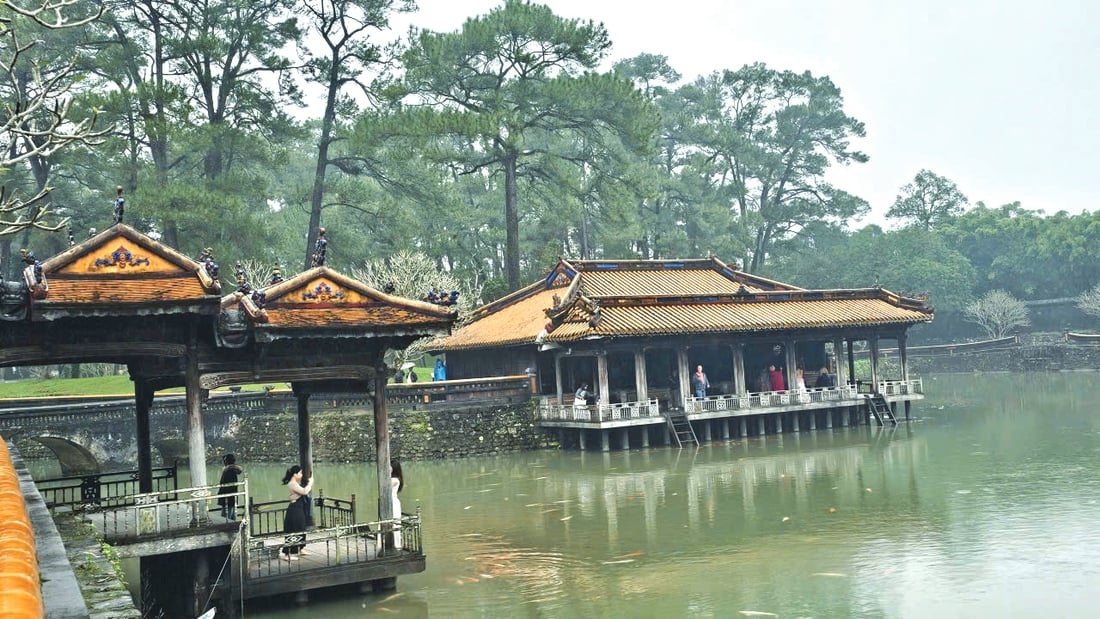
Tomb of Tu Duc amidst a forest of pine trees
Hue, the land of a thousand pine trees.
Why did the Nguyen emperors choose pine trees to green the most sacred places in the imperial capital? The answer lies not only in the scenic beauty but also in the deeper cultural layers, especially in terms of feng shui. According to East Asian beliefs, pine (Tùng) is the foremost of all trees, symbolizing a virtuous person. The Dai Nam Nhat Thong Chi, citing the book "Ban Thao," explains that the character for pine (Tùng) consists of the radical for wood and the character for "work," implying nobility and respect.
Pine trees thrive in dry, rocky soil, remaining green all year round, with upright trunks symbolizing unwavering resilience and indomitable spirit. Dr. Nguyen Phuoc Hai Trung, Deputy Director of the Hue Ancient Citadel Conservation Center, shared: "Pine trees are deeply ingrained in the consciousness of Asians, becoming an aesthetic symbol representing the aspirations of dynasties and kings."
In terms of feng shui, expert Hoang Trong Tron explains that pine trees are "energy-gathering" trees. Thanks to their ability to purify the air, pines are often planted in places considered "sacred forests and poisonous waters" to dispel toxic gases and protect the health of those who guard the tombs.
Furthermore, the evergreen pine forests also served to protect the dragon veins and safeguard the "strategic locations" of the capital city, such as Ngu Binh Mountain, the Nam Giao Altar, and the strategic sites for the construction of tombs in the mountain mausoleum area.
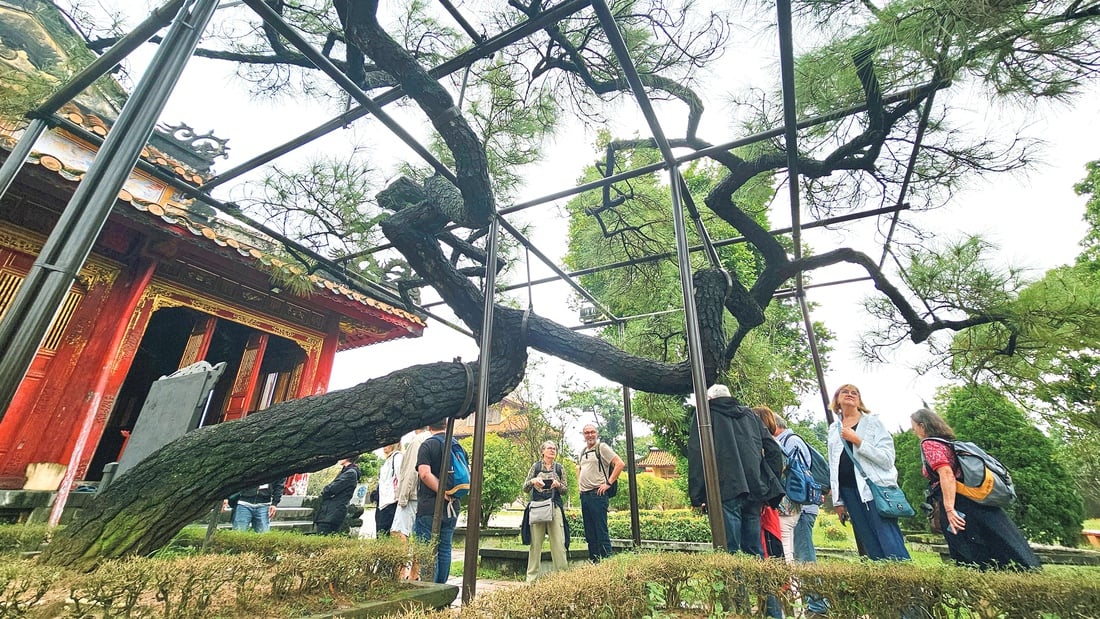
The ancient pine tree at The To Temple, with its shape resembling a winding dragon, always attracts tourists - Photo: T. Loc
In fact, the two-leaved pine (Pinus merkusii) in Hue is remarkably resilient and well-suited to the barren, hilly terrain southwest of the city. This compatibility with the soil and its symbolic significance led the Nguyen emperors to issue numerous strict decrees to protect the pine forests. In the 15th year of Gia Long's reign, the emperor issued a decree prohibiting the felling of trees in the area around the royal mausoleums. During the reign of Minh Mang, officials responsible for allowing pine forest fires were severely punished with flogging and demotion.
Through the vicissitudes of history and the devastation of war and bombing, the area of pine forests in Hue was significantly reduced. However, restoration efforts since 1975 have helped bring back the greenery to Thien An Hill, Vong Canh Hill, Ngu Binh Mountain, and other areas.
Today, "Hue, the land of a thousand pine trees" is not just a poetic metaphor. It represents the inheritance of a magnificent green heritage, where nature and culture blend seamlessly. From the ancient pine tree shaped like a dragon beside the The To Temple to the vast pine forests of Thien An and Vong Canh, all tell the story of a dynasty that entrusted its aspiration for "eternal love" to each old pine tree, ensuring that Hue remains a "green capital," serene and noble.
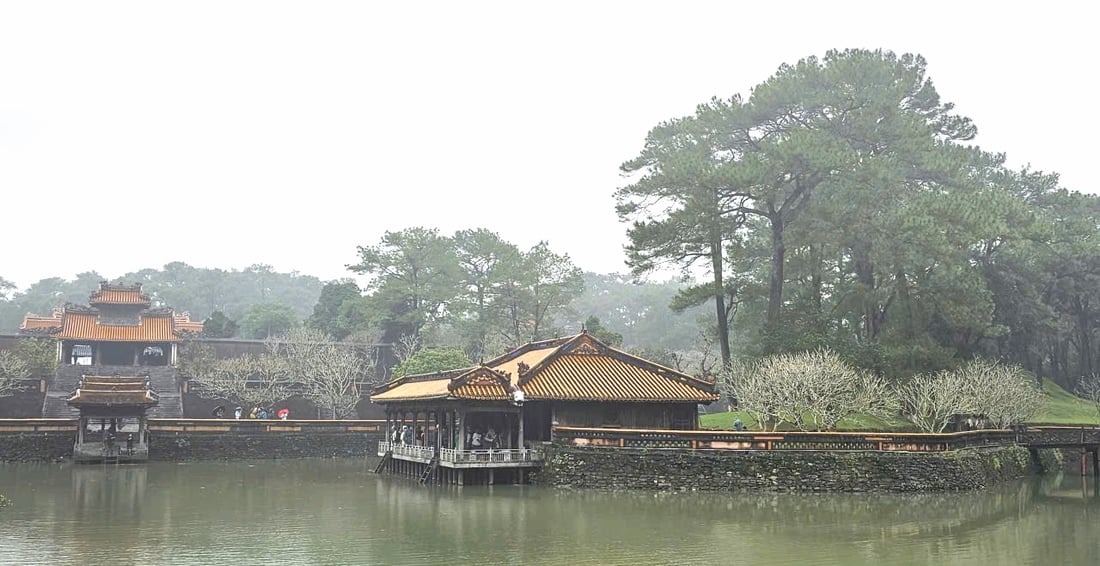
Illustrative image
Going to Hue for Tet
Sunny weather in Hue for Tet (Lunar New Year)
golden apricot blossoms, golden courtyard, golden street, golden temple
With tears in his eyes, he planted a branch of fresh sunlight.
Back to where I used to sit, in the old days.
Mist descends upon Hue for Tet (Lunar New Year).
The fragrant smoke of New Year's Eve cake fills the air.
Spring rain brings the taste of ginger jam to your hair.

Vietnam encourages US businesses to expand investment in high technology.On the morning of June 26th, at the Government Headquarters, Deputy Prime Minister Ho Quoc Dung received Mr. Jeff Place, Supply Chain Director of Coherent Group (USA). During the meeting, the Deputy Prime Minister affirmed that Vietnam encourages US businesses to expand investment, especially in high-tech, innovation, and semiconductor industries. Moss still clings to the path through the Imperial Citadel.
people returning to Hue for Tet
Chewing betel nut makes cheeks and lips red.
The person cracking sunflower seeds, the person waiting for a date.
tattoo card temple giggle tomorrow
Let's all go back to Hue to celebrate Tet (Lunar New Year).
Thousands of pine trees light up like candles as the season arrives.
The Perfume River has been the royal river for a hundred years.
Still as crispy as it was before...
Ngo Minh
THAI LOC
Source: https://tuoitre.vn/hue-ngan-thong-2026020217120958.htm







![[Image] National conference summarizing one year of operation of the overall organizational model of the political system, the three-tiered government model.](https://vphoto.vietnam.vn/thumb/1200x675/vietnam/resource/IMAGE/2026/07/01/1782882811691_ndo_br_1-jpg.webp)