

Nearly four decades since the milestone of the 6th National Congress of the Communist Party of Vietnam (1986), the reform process has transformed the face of the country, ushering in a period of comprehensive development and deep integration. Along this journey, Hung Yen – a newly formed region resulting from the merger of Hung Yen and Thai Binh provinces – has undergone a strong transformation. From a purely agricultural area, it has now become a dynamic center of industry, trade, and services, aspiring to become a new growth pole of the Red River Delta.
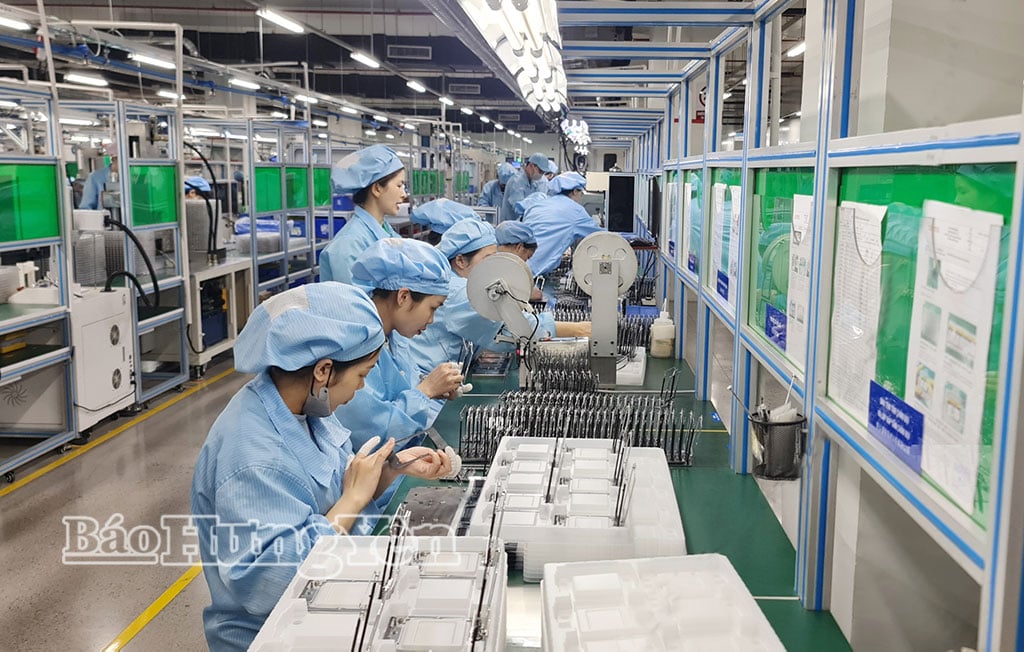
Rising from hardship
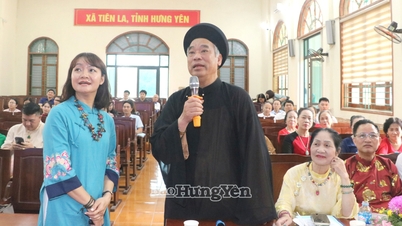
In the late 1980s and early 1990s, the entire country embarked on a path of reform with countless challenges. Both Hung Yen and Thai Binh provinces were also caught up in this process, facing numerous difficulties. Comrade Bui Quang Huy, former Standing Deputy Secretary of the Hung Yen Provincial Party Committee, recalled: During the period when it was still Hai Hung province and in 1997, after its re-establishment as a province, Hung Yen was ranked among the second poorest provinces in the country, only slightly poorer than Bac Kan province. The budget only reached 61 billion VND per year, with the main source of revenue coming from agricultural taxes; industry was virtually non-existent except for a few small-scale projects in Pho Noi. Infrastructure was weak, transportation relied mainly on National Highway 39 and the dike roads along the Red River, and the lives of the people were still fraught with hardship.
Meanwhile, emerging from the wars of national liberation, Thai Binh – once considered the rice granary of the North – also faced the pressure of economic restructuring. To escape poverty and underdevelopment, the Party Committee, government, and people of Thai Binh implemented a breakthrough mindset starting from the fields. Comrade Nguyen Duy Viet, former Deputy Head of the Central Committee's Mass Mobilization Department, former Deputy Secretary of the Provincial Party Committee, and former Chairman of the People's Committee of Thai Binh province, recalled: “Implementing the reform policy, we chose to restructure agriculture with land consolidation, large-scale model fields, canal hardening, mechanization, and the introduction of scientific and technological advancements into production. As a result, from an achievement of 5 tons of rice per hectare, Thai Binh rose to 10 tons per hectare, and then reached a value of 50 million VND per hectare.”
Against the backdrop of modernized agriculture, Thai Binh simultaneously "switched on" industrial development with the emergence of industrial parks and clusters at the district level; attracting new capital, including FDI enterprises bringing technology to the province. At the same time, social life was cared for, from restoring cultural spaces to implementing the "one doctor per commune" project, strengthening grassroots healthcare, and spreading mass sports and physical education movements. Hung Yen also began to open up a new direction with a policy of "rolling out the red carpet" to attract businesses. The first concentrated industrial parks in Pho Noi gradually formed, marking the transformation from a purely agricultural province to an industrial development province. Alongside economic development, socio-cultural life also underwent many changes through policies investing in upgrading the healthcare and education systems, and caring for the spiritual well-being of the people. It can be said that, in times of difficulty, the correct decisions of the Party committees and governments of each province have ignited the flame of innovation, laying the foundation for Hung Yen and Thai Binh to gradually break through and keep pace with the country's reform process.
Breakthrough development
As someone who has witnessed the development of his hometown, Mr. Phung Tan Phu from Thanh Khe village, Nhu Quynh commune, shared: “I feel that from the early years of the 21st century, the province began to develop strongly. The Pho Noi A and Pho Noi B industrial parks expanded and became destinations for domestic and foreign businesses. Hung Yen, from a purely agricultural province, has become a dynamic industrial area, providing jobs and income for many people.”
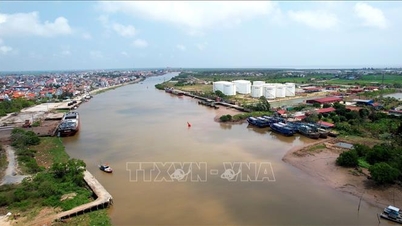
Speaking to us about the changes in his hometown, Mr. Tran Duy Ngoc, from Vo Ngai village, Vu Thu commune, excitedly said: “The flourishing economic development in industry, agriculture, and the marine economy has created favorable conditions for the province to invest in rural infrastructure. Thai Binh was once a leading locality nationwide in expanding and concreting rural roads. Most memorable is the Tan De bridge, built and inaugurated in 2002, which broke the ‘isolation’ of the area and opened a new era for trade and transportation for the people.”
In the first two decades of the 21st century, both Thai Binh and Hung Yen provinces experienced strong socio-economic breakthroughs, and the period from 2020 to 2025 continues to reach new heights of development. Notably, the average GRDP growth rate reached 9.17% per year, bringing the economic scale to over 328,000 billion VND in 2025, 1.73 times higher than in 2020. The economic structure is shifting rapidly, with industry and construction accounting for more than half, services expanding, and agriculture being restructured towards high quality. As Comrade Bui Quang Huy, former Standing Deputy Secretary of the Hung Yen Provincial Party Committee, once remarked: If, at the time of its re-establishment, Hung Yen had virtually no industry, it has now become a springboard, creating a completely new face for the province.
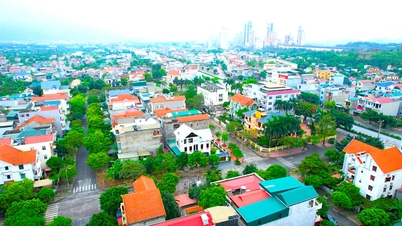
Over the past five years, the two provinces have established 11 new industrial parks and 26 industrial clusters, attracting hundreds of large projects with a total registered capital of over 396,000 billion VND and nearly 9.6 billion USD. Modern infrastructure and strategic investors bringing advanced technology have transformed the face of production. Small-scale industries and traditional craft villages continue to play an important role, both preserving traditional values and creating stable jobs for tens of thousands of local workers. Trade and services have developed vibrantly and shown significant breakthroughs. Ms. Tran Thi Hong Hanh, Deputy Director of the Department of Industry and Trade, stated: The province's total retail sales and consumer service revenue have increased by more than 23% per year, e-commerce has become a popular consumption channel, and export turnover in 2025 is estimated to reach nearly 12 billion USD, double that of 2020. These are extremely impressive results and demonstrate the effectiveness of innovation and creativity from the provincial level to the grassroots. Agriculture has become an advantage thanks to production according to VietGAP standards, the widespread OCOP program, and the rapid increase in cultivation value per hectare of land, affirming a sustainable direction.
Alongside economic development, social life has seen many positive changes. Most encouraging are the results: health insurance coverage reaching 93.75%, education maintaining its leading position nationwide, upgraded primary healthcare, and digital transformation covering 100% of communes and wards. It can be said that the 2020-2025 term has laid a solid foundation, a culmination of leadership vision, continuous innovation from the provincial Party committee and government, and the collaborative efforts of businesses and all sectors of the population.
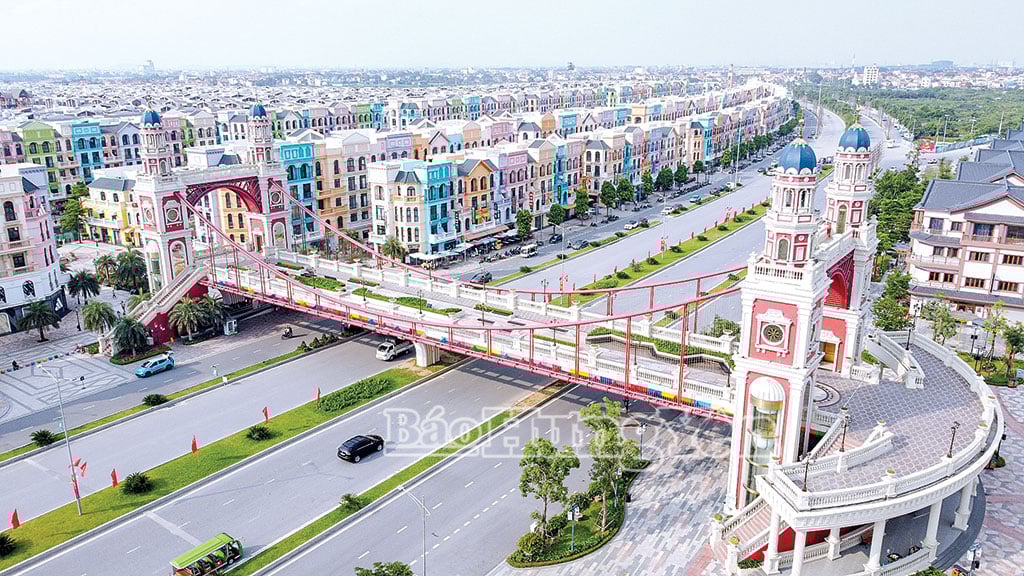
Stepping confidently into a new era.
Located in the heart of the Northern economic triangle, with modern industrial parks, the northern rice granary, a rich coastal region, vast land resources, and increasingly improved infrastructure, Hung Yen today possesses all the necessary "wings" for breakthrough development. The people of the province are enthusiastic and clearly see the enormous potential for industrial, service, and high-tech agricultural development in the next 10-15 years. The province's particular competitive advantages include a workforce of over 3.5 million people; a complete and modern inter-regional transportation network; abundant land and resources; a constantly evolving energy, logistics, and marine economy; open investment mechanisms and policies; and a strong local aspiration for development.
Looking back at 40 years of reform, the achievements of Hung Yen and Thai Binh provinces have laid a solid foundation, providing valuable experience and resources for Hung Yen to rise even stronger today. Confidence is placed in the wise leadership of the Party Committee, the dynamism of the government, and the aspirations of the people. From the culmination of tradition and the achievements of reform, Hung Yen will certainly affirm its position as a modern industrial, urban, and service center in the Red River Delta, making a worthy contribution to the country's industrialization, modernization, and international integration in the new era.
Ha Thanh
Source: https://baohungyen.vn/hung-yen-40-nam-doi-moi-vuon-len-cung-dat-nuoc-3186023.html






















































![[Infographic] Vietnam's Economic Situation Report, Q1 2026: Strong Growth Momentum](https://vphoto.vietnam.vn/thumb/402x226/vietnam/resource/IMAGE/2026/04/04/1775298512042_tang-truong-kinh-te-viet-nam.jpeg)
![[Image] Close-up view of the 10-lane road connecting to Long Thanh Airport](https://vphoto.vietnam.vn/thumb/402x226/vietnam/resource/IMAGE/2026/04/04/1775291871988_ndo_br_1-resize-5690-jpg.webp)


















Comment (0)