

SGGP
In each European country, the Vietnamese community, though small in number, has left a significant mark on business and commerce, especially in the retail sector.
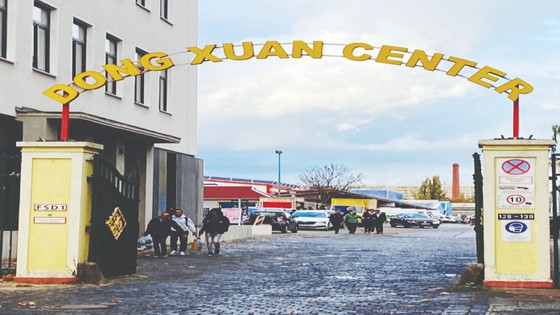 |
| Dong Xuan Market in Berlin (Germany) is famous for its wide variety of goods and diverse cuisine . Photo: Hoa Nguyen |
In Eastern European countries, after transitioning to a free market, the wholesale market model became very popular with Vietnamese entrepreneurs, particularly prominent and widespread in the Russian Federation, the former Soviet republics, and Germany. In countries like Romania and Hungary, Vietnamese entrepreneurs rent kiosks and conduct business in markets opened by the Chinese community.
Previously, wholesale markets, also known as delivery areas, only served wholesale buyers. The main goods sold were clothing, household items, home and garden decorations, and food. Retailers in more distant areas would drive to the markets to select their goods. Everything was done quickly and efficiently, aiming to gather enough stock in a single morning and return home the same day.
Previously, Ms. Pham Lan (who used to own three clothing stores in the Red Dragon Market in Bucharest, Romania) had to wake up at 2:30 AM, prepare breakfast for her family, and pack it in her car to get to the market before 4:00 AM, because wholesale markets were usually located on the outskirts of the city. Between 6 and 8 AM was the peak time at these markets a decade ago, with bustling activity and buying and selling. Nowadays, retail business methods have changed significantly due to the rapid development of e-commerce.
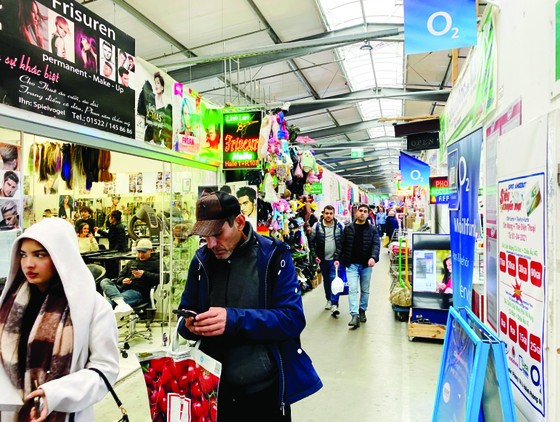
The traditional wholesale market model has become outdated, leading to a desolate and deserted landscape. Stall owners have also shifted their focus, serving both individual and retail customers, and many savvy individuals are selling online, eliminating the need for customers to visit the market. Many markets have transformed into Vietnamese food markets, such as Dong Xuan in Berlin, Ben Thanh in Leipzig, and Sapa in Prague. Not only do Vietnamese people shop and have lunch there, but locals also come to enjoy authentic Vietnamese dishes. Those who want to cook at home also come here to buy ingredients imported from Vietnam and other Asian countries. Locals collectively refer to these as Asian markets.
 |
Depending on the local consumer culture, Vietnamese entrepreneurs adapt their business strategies accordingly. In Germany, Vietnamese restaurants and fast-food outlets are numerous and widespread in major cities across the country. Vietnamese food is popular because of its fresh ingredients, delicate flavors, affordable prices, and the warm, hospitable service of the staff.
In the Czech Republic, grocery stores are a popular business, not only in the capital Prague but also in other tourist and resort cities like Cesky Crumlov and Karlovy Vary. Mr. Hieu Nguyen, the owner of a grocery store on the road to the Royal Palace in Prague, said that with an initial investment of about 1 billion VND and a store area of about 70 square meters , and a monthly rent of around 60 million VND, he and his wife are doing well financially.
In France, people have long accepted and integrated the culture of former colonial countries into their daily lives. Vietnamese people set up glass display cases selling ready-to-eat cooked food on many street corners throughout France, not just in the capital, Paris. You can buy beef stew, beef meatballs, braised pork, spring rolls, hot pot ingredients, etc., at Vietnamese restaurants to reheat and cook at home. If you want to eat quickly at the restaurant, there are also standing tables serving about 5 people at a time.
No matter how times change, whether shopping online or using e-commerce, traditional market-style businesses remain popular among Vietnamese living abroad, a cultural icon that evokes memories of their roots and homeland. Thousands of Vietnamese people continue to make a living at these markets, spreading the flavors of Vietnam throughout Europe.
Source



![[Image] National Assembly discusses the implementation of the socio-economic development plan.](https://vphoto.vietnam.vn/thumb/1200x675/vietnam/resource/IMAGE/2026/04/20/1776696707422_ndo_br_img-20260420-185419-jpg.webp)
![[Photo] General Secretary and President To Lam meets with National Assembly delegates from ethnic minorities.](https://vphoto.vietnam.vn/thumb/1200x675/vietnam/resource/IMAGE/2026/04/20/1776696701056_a1-bnd-8331-3342-jpg.webp)





































































Comment (0)