

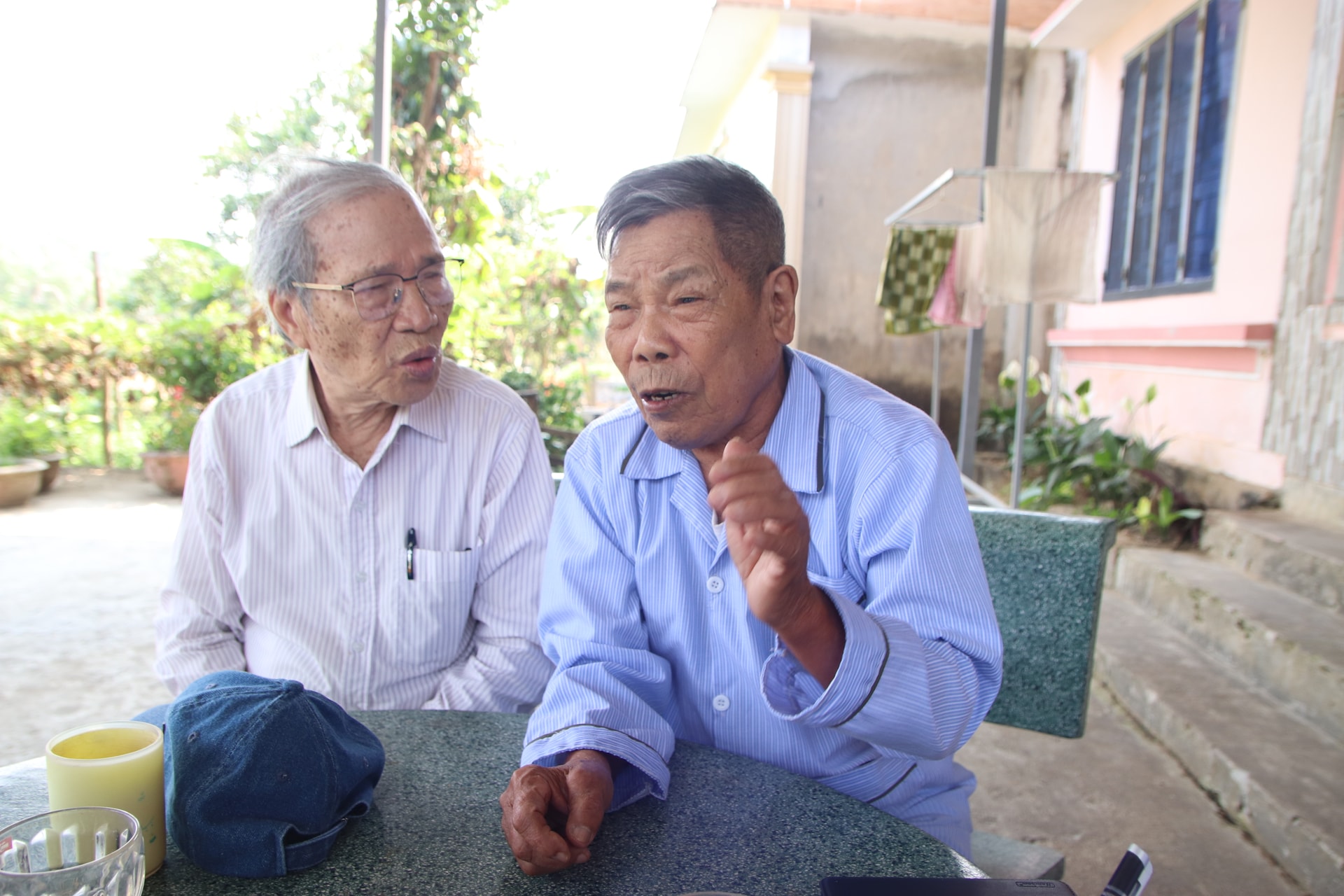
Mr. Huynh Can, alias Hoang Mien, was born in 1921 (his death certificate states his birth year as 1925), in Giang Hoa village, Quang Hoa commune, Duy Xuyen district, Quang Nam province (formerly). His position and workplace (before his death) was Deputy Secretary of the Dai Loc District Party Committee, Quang Nam province (formerly), now Da Nang city. He joined the revolution in February 1944 and became a Party member in 1946.
According to the history of the Party Committee of Dai Thang commune, formerly Dai Loc district, after the success of the August Revolution, the Provisional Revolutionary People's Committees were established in Phu Xuan, Phu Thuan, and Giang Hoa communes. In Giang Hoa commune, Mr. Huynh Can and Mr. Le Ba were among the first to join the Viet Minh government.
During the struggle to implement the 1954 Geneva Accords and the period of clandestine activities, the Quang Nam Provincial Party Committee established a secret network connecting the Provincial Party Committee with the Central Committee and the District and City Party Committees. This was the main communication line for transporting secret Party documents. The network also handled the transportation of high-ranking cadres, soldiers suffering from serious illnesses, or those released from enemy prisons to the North. Due to its location along the Thu Bon River, stretching along the mountainous terrain, and having many ferry crossings such as My Luoc, Thu Bon, Ghenh Gom, Phu Da, Ben Dau, etc., Duy My became a convenient gathering and transit point for transport to other locations.
Duy My commune was a crucial location in that communication line, directly connecting the Provincial Party Committee with the mountainous districts of Que Son, Hien, and Giang (Quang Nam province), as well as Zone 5 and the Central Government. Mr. Huynh Can directed the operation of the communication line through Duy My commune, connecting the Provincial Party Committee (which had relocated several times from Tam Ky to Thanh Binh, Que Son, Dien Ban, and then Trung Mang) with higher levels and the Central Government, especially linking it to the later North-South axis. The line operated with difficulty but was most active when connecting the Provincial Party Committee (in Hoi An, Go Noi - Dien Ban) through Xuyen Thanh and Duy My (Duy Xuyen) to Trung Mang (Hien), and later connecting Hon Tau with Hien and Giang.
In 1957, the enemy launched a fierce terrorist attack on secret revolutionary bases. The Party cell in Loc Quy was destroyed. Many cadres and soldiers were arrested, neutralized, or fled to other places. Those who remained had to go underground and operate independently.
“Comrade Huynh Can was the only remaining Party member active in Loc Quy. Although the enemy relentlessly pursued him using extremely cunning methods such as terror and killing families who sheltered cadres, the people of Loc Quy were not intimidated. Many families secretly protected Comrade Huynh Can. Therefore, he escaped the clutches of the enemy and built up the revolutionary movement,” (History of the Party Committee of Dai Thang Commune, 1930 - 1975).
In January 1959, Resolution 15 (2nd Congress) of the Central Committee of the Party was issued, marking a strategic turning point, deciding to shift from political struggle to a combination of political and armed struggle, allowing the South to use revolutionary violence to overthrow the US-Diem regime. In early 1960, Mr. Huynh Can, formerly a member of the Duy Xuyen District Party Committee in charge of the former Duy My communes, was transferred to the Dai Loc District Party Committee after the enemy merged Duy My into Dai Loc, dividing it into three new communes. Consequently, Mr. Can moved his activities to Dai Loc and was appointed to the District Party Committee.
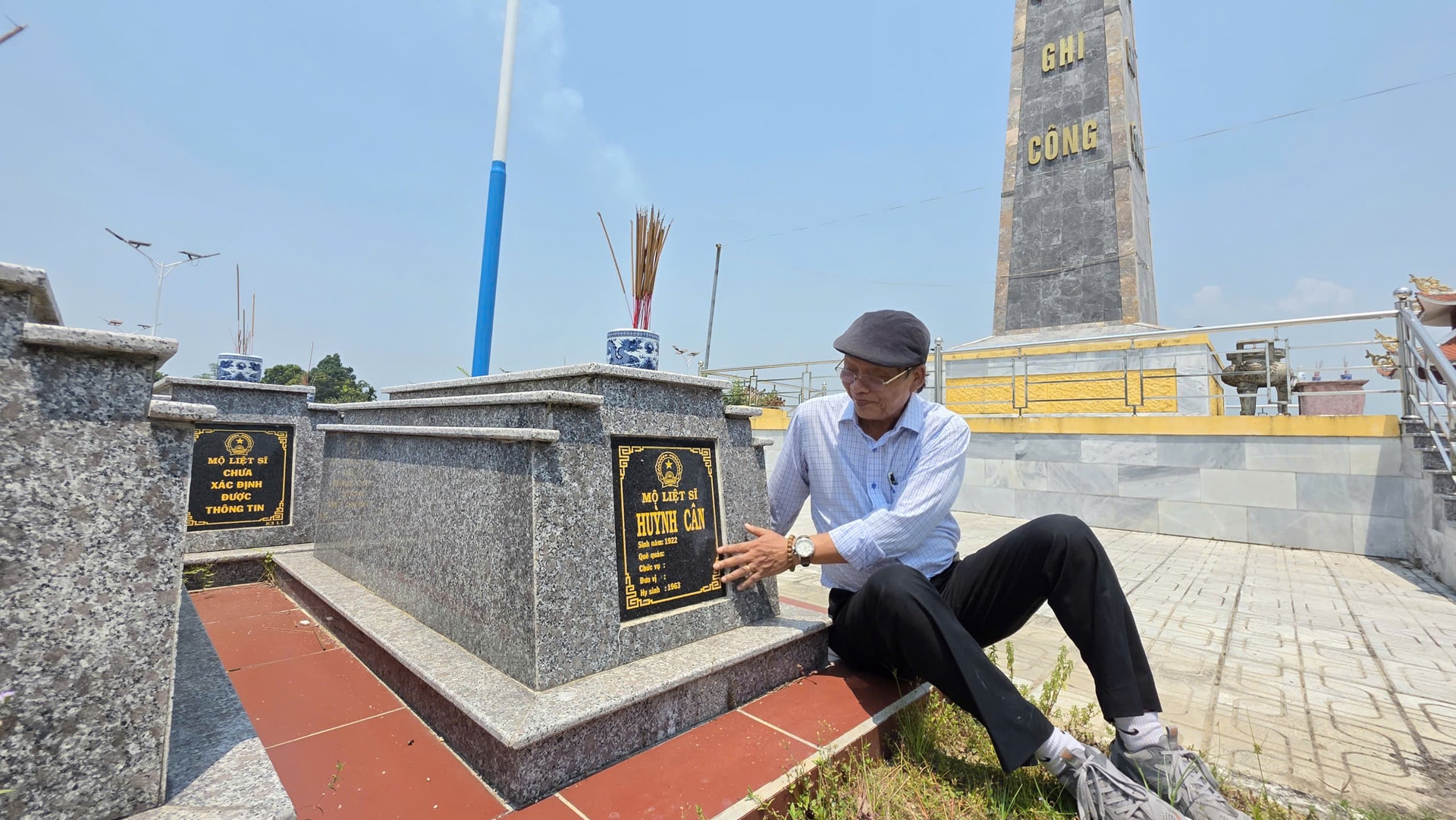
From July 1960, Mr. Can joined the Executive Committee and then served as Deputy Secretary of the Dai Loc District Party Committee, permanently tasked with building armed forces from the working team to the guerrillas and local troops, eliminating enemy forces and disrupting enemy control to support the local mass revolutionary movement, leading to the complete liberation of Zone B of Dai Loc.
The revolutionary movement in Dai Loc during the years 1960-1962 grew stronger qualitatively, forcing the enemy to retreat to large towns and military outposts. In November 1963, Mr. Huynh Can was killed while on his way to the province to receive his assignment to prepare for breaking the enemy's grip, dismantling strategic hamlets, and liberating the B region of Dai Loc.
According to Mr. Hoang Minh Chin, former Provincial Party Committee member and Deputy Head of the Provincial Party Committee's Inspection Committee of Quang Nam - Da Nang, now nearly 90 years old, and a staff member of the Dai Loc District Party Committee office since 1962, maintaining the aforementioned communication line can be considered Mr. Huynh Can's most outstanding achievement, due to the crucial role and position of Duy My commune in this line. Because of its vital importance, this operation was kept absolutely secret. Most of the collaborators worked in a single-line manner to ensure the safety of the line.
Mr. Hoang Thanh Thuy (a fellow villager of Mr. Huynh Can), now over 83 years old and former Secretary of the Son Tra District Party Committee, said that Mr. Can was the one who encouraged and recruited him into the Youth Union. “Around 1962, I officially began participating in the revolution by being admitted to the Youth Union, which was led by Mr. Huynh Can. Before that, when I was about 14 or 15 years old, I met Mr. Huynh Can, and he told me not to inform the enemy, because if I did, he would be arrested and killed. It seemed simple enough, but the whole village, the whole hamlet, the whole commune were worried, because if his activities were exposed, not only he himself but also those who sheltered him would be implicated,” Mr. Thuy recalled.
According to Mr. Hai Thoa, 94 years old, from Quang Dai village, Vu Gia commune, Mr. Can was an extremely courageous and resourceful individual who sheltered revolutionary cadres and served as a link in the communication network through Duy My commune. To maintain secrecy and ensure the smooth operation of the network, Mr. Can proactively mobilized and relied on the people, staying close to the masses and patiently building a widespread network of revolutionary shelters throughout the villages of Duy My commune at that time.
Mr. Hoang Minh Hung, born in 1953, son of Mr. Can, recounted that during the time Mr. Can was undercover in Mr. Hai Thoa's house, he was occasionally taken down to Mr. Thoa's church to "study," though he didn't know what they were studying there. Later, his mother and others told him that it was so Mr. Can could see his son.
Source: https://baodanang.vn/huynh-can-nguoi-giu-mach-duong-day-lien-lac-cach-mang-3334636.html
![[Image] Shipbuilders exposed to steel and record-breaking heat.](https://vphoto.vietnam.vn/thumb/1200x675/vietnam/resource/IMAGE/2026/06/04/1780545781745_ndo_br_img-5402-4683-jpg.webp)






























![[Video] Sunset at Lap An Lagoon – Where the sun sets over the fishing nets](https://vphoto.vietnam.vn/thumb/1200x675/vietnam/resource/IMAGE/2026/05/31/1780192137701_beach-landscape-sea-water-nature-grass-745871-pxhere-com.jpeg)























Comment (0)