According to Al Jazeera , Iran's Supreme Leader Mojtaba Khamenei reportedly expressed reservations about a provisional peace agreement (MoU) with the United States. This move immediately gave impetus to hardliners in Tehran, who are firmly opposed to any concessions to Washington.
Observers believe that Khamenei appears to have delegated responsibility for implementing the agreement to Iranian President Masoud Pezeshkian, a relatively moderate figure.
Currently, President Pezeshkian is facing opposition from hardliners who fear the risk of renewed conflict with the United States.
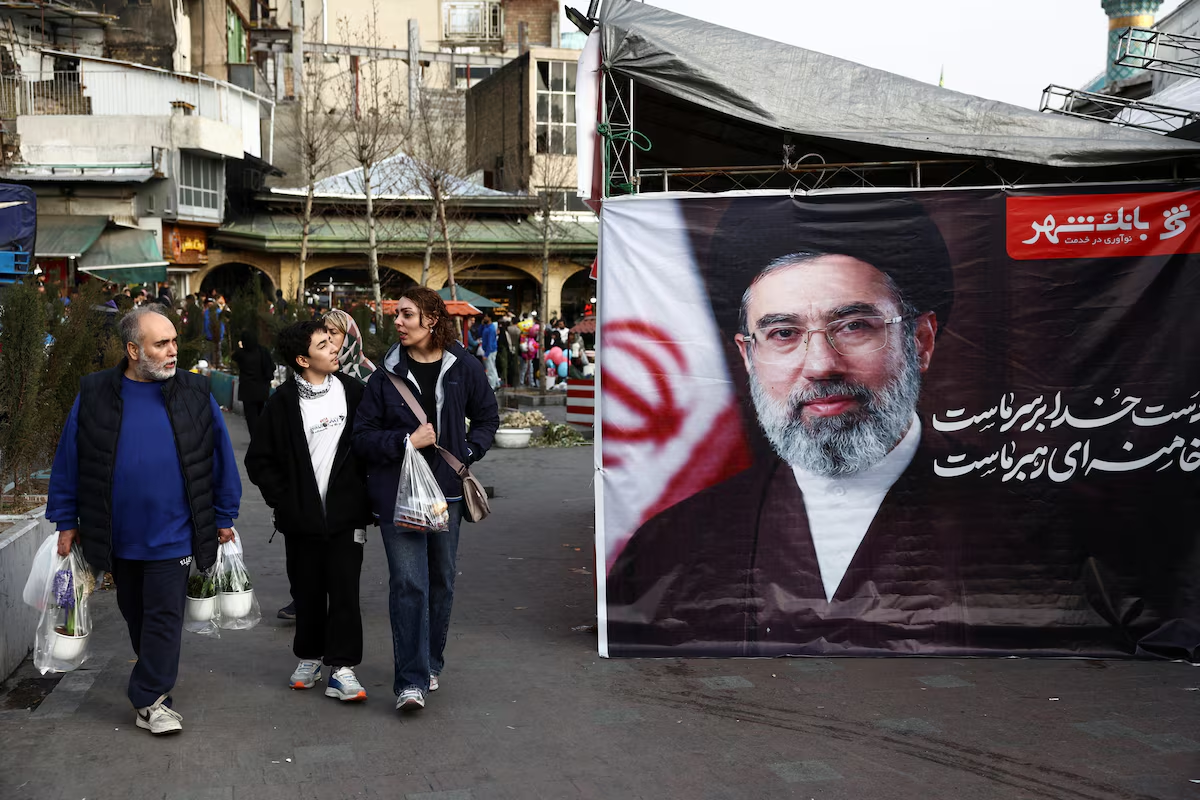 |
A poster featuring Iran's Supreme Leader Mojtaba Khamenei is displayed in Tehran on March 19. Photo: Reuters. |
Khamenei's position
Khamenei has not appeared or spoken publicly since succeeding his father as Supreme Leader in March. However, his views on the Iran-U.S. deal have been made clear.
"In principle, I have a different view on the MoU," according to a brief written statement allegedly from Khamenei released on June 18. Nevertheless, he approved the document after receiving commitments from the Supreme National Security Council (SNSC) and President Masoud Pezeshkian to protect national interests and the interests of the "Axis of Resistance."
The statement also said that Pezeshkian “made it clear that if the US side makes excessive demands, Iran will not accept them.”
According to the statement, the upcoming face-to-face talks "do not mean accepting the other side's position."
Iranian state-linked media reported that Khamenei also stipulated that the agreement must be approved by at least three-quarters of the members of the Supreme National Security Council, including senior military commanders.
According to these sources, almost all council members voted in favor, although details of the voting process have not been independently confirmed.
What did Iranian officials say?
Iran's Supreme National Security Council issued a statement reassuring Khamenei that it would protect "the rights of the Iranian people and the resistance front," while also commemorating Iranian leaders who died in conflicts with the United States.


The council said it would pursue negotiations with the US while remaining "vigilant," and had prepared response options should Washington violate any terms of the agreement.
President Pezeshkian called the document "a historic document and a message from a strong Iran that peace will be realized on the basis of mutual respect."
"This text reflects the voice of a people who will not compromise their dignity and independence in the face of any threat or pressure," he wrote in X.
The Speaker of the Iranian Parliament and chief negotiator, Mohammad Bagher Ghalibaf, thanked Khamenei for his “wise and insightful guiding message,” and stated that while the memorandum had translated the achievements of the war into the negotiation process, it was only “the beginning of a difficult and winding road.”
Ghalibaf also saw himself as a “post-war economic commander” and expressed a desire to be empowered to make decisions during the negotiations.
"I'm not someone who sits around waiting without making a decision. I suggest that opinions that will contribute to decision-making should be prepared so that I can make the right decision," he said.
According to the Iranian parliament speaker, Iranian authorities must now “take over the front lines from the missile launch units, maintain our position, and help the people escape economic pressure.”
Why are hardliners against it?
Supporters of Khamenei argue that Iranian negotiators must continue to push for control of the Strait of Hormuz and should leave the negotiating table if the agreement does not include this provision.
Nightly rallies in numerous Iranian cities during the war featured criticism of Pezeshkian, Ghalibaf, and Foreign Minister Abbas Araghchi. These figures were seen as moderates and were considered by hardliners to be the most likely to make concessions to the United States.
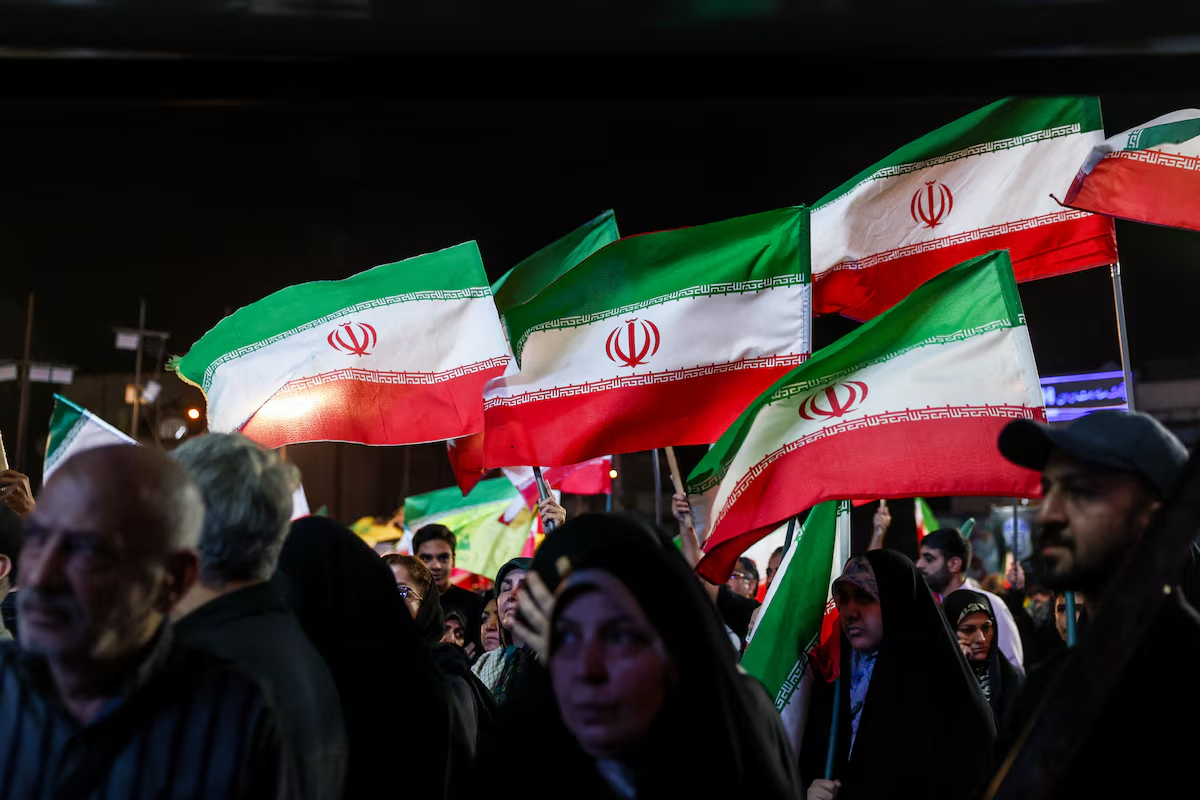 |
A protest in Tehran, Iran, on May 29. Photo: Reuters. |
Some hardline lawmakers have demanded that Iran's parliament, which has been largely inactive since the war broke out except for a few in-person sessions, be fully reopened so that it can prevent any deal with the US that these lawmakers believe would harm Iran's interests.
“Be fair and reopen Parliament. My supreme leader is being left alone,” wrote Mohammad Mannan Raisi, a conservative MP representing Qom, on X.

In the Shiite holy city of Mashhad in northeastern Iran, Supreme Leader Ahmad Alamolhoda, a highly influential figure and representative of the Supreme Leader, declared that "our fight with Washington is not yet over."
On the morning of June 20th, the first working day of the week in Iran, the country's newspapers dedicated their front pages to publishing Khamenei's message and the contents of the memorandum.
Some conservative newspapers suggested that the Supreme Leader had authorized the signing of the agreement, but with conditions attached, while emphasizing that the path to peace with the US remains very difficult.
Meanwhile, the reform-leaning newspaper Etemad described the memorandum as a “victory document,” reflecting the deep differences in how the two sides viewed the details of the agreement with the US.
Source: https://znews.vn/iran-chia-re-post1661734.html
![[Image] Schools organize meetings and introduce teaching models to students admitted to grade 10.](https://vphoto.vietnam.vn/thumb/1200x675/vietnam/resource/IMAGE/2026/06/25/1782368077271_ndo_br_z7970052192242-1ec8daeb77a6eed1a4e9f58c564ddd3e-jpg.webp)


![[Image] Ho Chi Minh City: Ma Lang area, Chicken-Rice Market about to change its appearance](https://vphoto.vietnam.vn/thumb/1200x675/vietnam/resource/IMAGE/2026/06/25/1782377698627_ndo_br_m1-jpg.webp)

![[Photo] General Secretary and President To Lam receives Palestinian Ambassador Saadi Salama](https://vphoto.vietnam.vn/thumb/1200x675/vietnam/resource/IMAGE/2026/06/25/1782365384740_a1-bnd-9423-8322-jpg.webp)