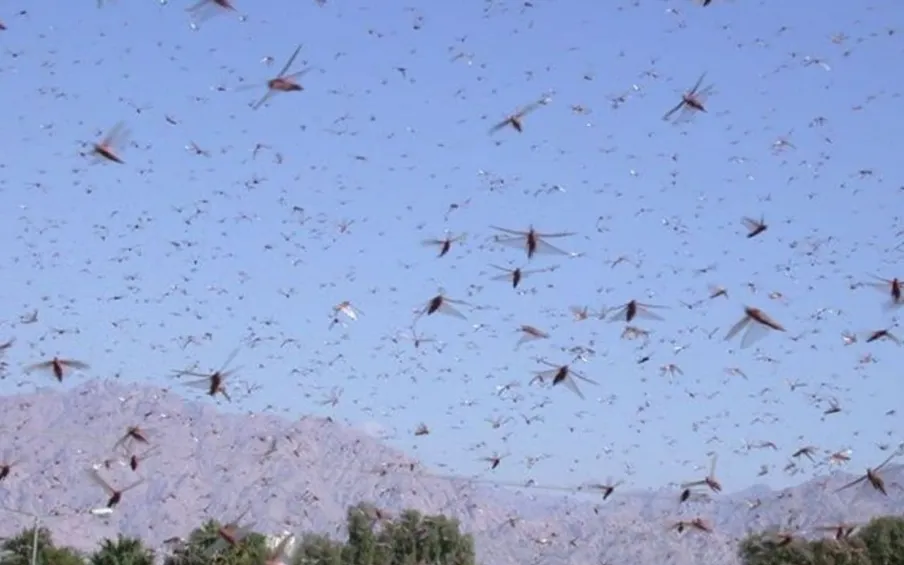
(Photo: Prof. Amir Ayali/TAU)
Iranian media reported that many areas in eastern Iran have seen a massive influx of Moroccan locusts – one of the most dangerous migratory locust species. Images and videos from the scene show millions of insects covering fields, causing significant damage to agricultural production. The locusts are devastating crops and pastures, forcing Iranian authorities to urgently implement pest control measures.
This locust species is considered one of the most dangerous pests for crops. They reproduce very quickly, with each female laying 2 to 4 egg clutches in her lifetime, each clutch containing an average of about 30 eggs. They primarily feed on grains, date palms, citrus trees, fruit trees, olives, and figs.
According to the United Nations Food and Agriculture Organization (FAO), locusts are one of the most serious pests affecting many cultivated crops. Not only do they destroy crops, but locusts also consume large amounts of vegetation on pastures, increasing the risk of food shortages for livestock.

(Photo: Yeni Şafak)



Iranian health officials say the locusts do not pose a direct threat to human health. However, the semi-official Tasnim news agency warns that the outbreak is threatening the livelihoods of thousands of families who depend on agriculture.
Experts believe the unusual outbreak of Moroccan locusts is linked to climate change and prolonged drought. Iran is now facing a severe water shortage for the sixth consecutive year.
The impact of climate change and rising global temperatures is exacerbating this situation. According to local experts, without timely intervention, some areas could lose up to 50% of their harvest.
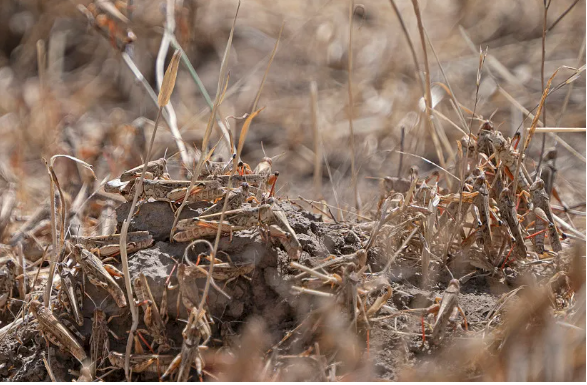
(Photo: AFP/Getty Images)
Iranian authorities have carried out large-scale spraying of pesticides to combat the locust infestation. At the same time, farmers have been advised to temporarily refrain from harvesting crops to limit the risk of chemical contamination from pest control activities.
The sudden outbreak of Moroccan locusts is believed to be due to changes in weather patterns and drought conditions.



Iran is now entering its sixth consecutive year of water shortages after years of inefficient water management. After abandoning the ancient qanat aqueduct system, invented by the Persians approximately 3,000 years ago, the Tehran government has built dams to boost agricultural production. This short-term approach has contributed to the rapid drying up of rivers, a problem exacerbated by global warming.
Source: https://vtv.vn/iran-doi-mat-voi-cuoc-khung-hoang-moi-100260606180503157.htm




























































































![[Infographic] Pensions, social insurance benefits, and monthly allowances will increase from July 1, 2026.](https://vphoto.vietnam.vn/thumb/402x226/vietnam/resource/IMAGE/2026/06/29/1782695537956_bna_-anh-8888.jpeg)