The golden time to launch the low-level economy.
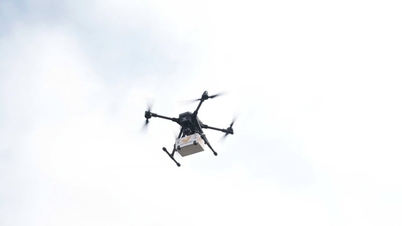
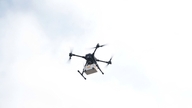
The low-altitude economy, or low-altitude space economy, refers to activities exploiting low-altitude flight (typically below 1,000 meters) associated with the application of drones, small aircraft, helicopters, and low-altitude air traffic control and management systems. It's not just a single flight activity; it's a complete economic ecosystem encompassing equipment, infrastructure, services, and applications that support production and daily life.
In its recently published 2025 Business Law Flow Report, the Vietnam Chamber of Commerce and Industry (VCCI) dedicates a separate section to analyzing the lower-income economy – a sector considered the new "growth frontier" of the economy.
According to VCCI, in the context of transforming the growth model, digital transformation, and restructuring the economy, the low-altitude economy is becoming a strategically significant policy topic for Vietnam. This refers to the operating space below 1,000 meters and can be extended to below 5,000 meters depending on management requirements and development practices.
While previously this space was primarily viewed from the perspective of defense, security, and aviation management, it is now being redefined as a new economic space where unmanned aerial vehicle (UAV) technologies, advanced aircraft, low-altitude information, positioning, and surveillance networks, along with digital and physical infrastructure, can form entirely new value chains.

International forums on the small-scale economy, scheduled to be held in Hanoi from 2025 onwards, indicate that Vietnam possesses a "golden opportunity" to develop this sector. According to assessments, with appropriate institutional strategies, the small-scale economy could reach a size of approximately US$10 billion and create around 1 million jobs by 2035.
Beyond serving sectors like precision agriculture, e-commerce logistics, smart cities, search and rescue, and national defense and security, the low-level economy also opens up opportunities for the development of high-tech industries, data services, cybersecurity, and specialized insurance.



Opening the legal framework for a $10 billion market.
Based on international experience, VCCI believes that the low-income economy should be viewed as an independent public policy topic, requiring a separate institutional framework instead of being regulated only through fragmented amendments in aviation, telecommunications, or defense laws.
However, in Vietnam, the current legal framework only initially addresses the management of unmanned aircraft and some low-altitude flight activities through Decree 288/2025/ND-CP. Although this decree has created a relatively comprehensive management framework for registration, licensing, training, and supervision of flight operations, the focus remains on ensuring security, safety, and social order.
The legal system related to low-level economic activities remains fragmented across various sectors such as civil aviation, defense, telecommunications, cybersecurity, land, construction, investment, and science and technology.
Many critical activities, such as constructing landing strips for low-altitude aircraft, air traffic control centers, or deploying low-altitude air traffic management systems (UTM), still lack specific technical standards and guidelines. Projects testing UAVs and UAMs in agriculture, logistics, or smart cities also require multiple permits, increasing compliance costs and legal risks for businesses.
Vietnam currently lacks a legal document at the level of a law or a National Assembly resolution defining the low-altitude economy as an independent policy area. Management thinking remains primarily focused on controlling aircraft, while developing the low-altitude economy requires planning and governing an entire new economic space, encompassing access to space, insurance, privacy, data governance, and mechanisms for distributing benefits among the State, businesses, and the community.
The Vietnam Chamber of Commerce and Industry (VCCI) recognizes that the low-level economy opens up significant opportunities for the Vietnamese business community, from equipment manufacturing and software development to service provision and data mining. For large technology companies, this is an opportunity to leverage their strengths in artificial intelligence (AI), big data, cloud computing, and cybersecurity. For small and medium-sized enterprises (SMEs), this sector opens up opportunities to participate in various links such as operations, maintenance, training, last-mile logistics, or precision agriculture services.
However, the lack of a clear legal framework is forcing many businesses to operate in a "legal gray area," dependent on the individual approvals of various regulatory bodies, thereby increasing investment risks and limiting scalability.
To effectively harness the potential of this sector, VCCI proposes including the low-level economy in the legislative agenda of the National Assembly and the Government, aiming towards the enactment of a framework law or a specialized pilot resolution. Simultaneously, a national sandbox mechanism should be established to allow testing of new business models and technologies in key locations such as Hanoi, Ho Chi Minh City, the Mekong Delta, and border regions.
In addition, VCCI proposed improving technical standards, data sharing mechanisms, civil liability insurance, and cybersecurity; developing public-private partnership models for low-level infrastructure; and ensuring a balance between economic development goals and national defense, security, and data protection requirements.

According to VCCI, if guided by a suitable institutional framework, the low-income economy can absolutely become a new growth engine, contributing to enhancing competitiveness and expanding development opportunities for the Vietnamese business community in the coming period.
| In September 2025, the Low Level Economic Alliance (LAE), under Committee 1 - Private Sector Economic Overview (ViPEL), was established with the participation of leading technology, finance, startup, and expert corporations. Mr. Nguyen Van Khoa, CEO of FPT Group, serves as the Alliance Chairman, while the two Vice-Chairmen are Mr. Don Lam, founder and CEO of VinaCapital, and Mr. Tran Anh Tuan, CEO of the Vietnam UAV Network. |
Source: https://doanhnghiepvn.vn/doanh-nghiep/khai-mo-kinh-te-tam-thap-don-co-hoi-ty-do/20260609033618103


![[Photo] Overview of the renovation and upgrading of the Ho Chi Minh Museum - Ho Chi Minh City Branch](https://vphoto.vietnam.vn/thumb/1200x675/vietnam/resource/IMAGE/2026/06/24/1782287051250_ndo_br_01-jpg.webp)

![[Image] Paris's oldest bridge goes viral after transforming into a giant cave.](https://vphoto.vietnam.vn/thumb/1200x675/vietnam/resource/IMAGE/2026/06/24/1782283441197_ndo_br_dsc05314-jpg.webp)
![[Photo] Opening Ceremony of the 13th National Congress of the Ho Chi Minh Communist Youth Union](https://vphoto.vietnam.vn/thumb/1200x675/vietnam/resource/IMAGE/2026/06/24/1782286753905_ndo_br_1-8510-jpg.webp)