

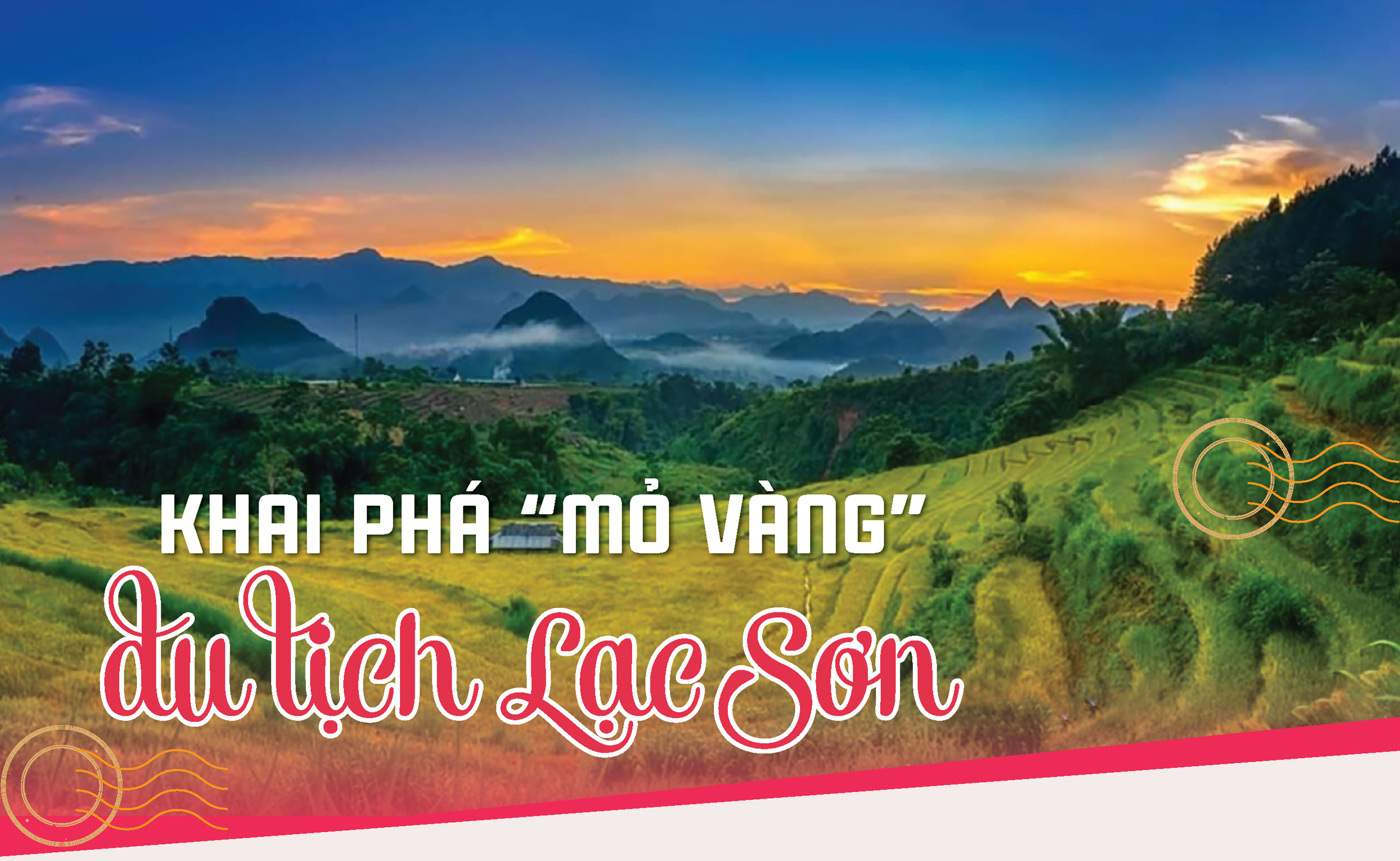
Located approximately 80km from Hanoi, Lac Son district, with its majestic natural beauty, is considered a key tourist destination in Hoa Binh province, attracting visitors to explore nature and experience the unique local culture. Leveraging its natural and cultural advantages, Lac Son district is continuously striving to develop tourism, bringing about outstanding and sustainable economic value.

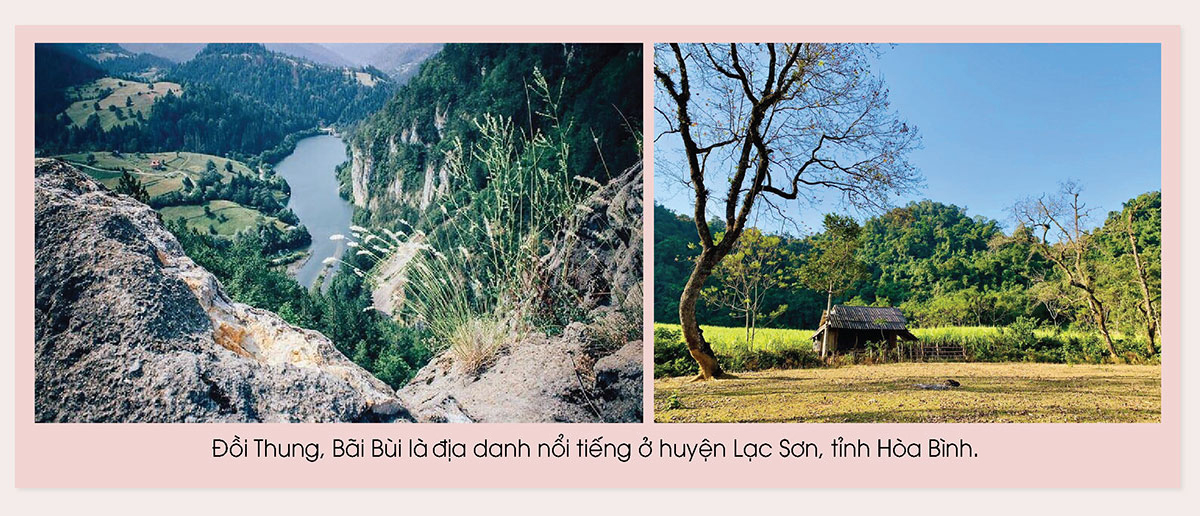
During a trip to explore the highlands of Lac Son, one cannot fail to mention Bai Bui, located in Khop hamlet (Ngoc Lau commune). The highlight of this 5-hectare meadow is the more than 60 ancient, lush palm trees. Under the canopy of these ancient palm trees, the villagers of Khop hamlet clear the vegetation, tie ropes to create swings, and set up wooden tables and chairs to sell goods to visiting tourists.
Mr. Bui Van Phuong, one of the two households that opened stalls in Bai Bui, shared: “In recent years, Bai Bui has welcomed quite a lot of tourists, with some groups even camping and staying overnight. Recognizing the potential for tourism development, my family opened a shop to serve tourists. After swimming at Mu Waterfall, Bai Bui is a must-visit destination for tourists when coming to the Lac Son highlands.”
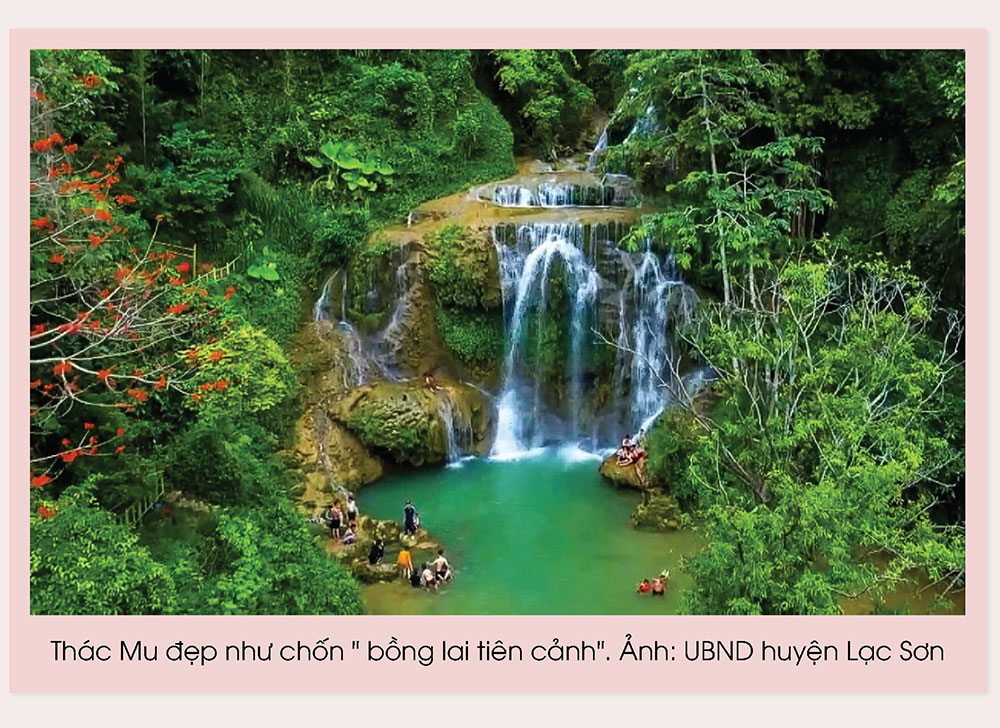
For a long time, Mu Waterfall (in Tu Do commune) has been one of the hottest spots in Lac Son district during the sweltering summer days. The tall waterfall and its clear, cool water are a gift from nature to the people of this highland region. The allure of Mu Waterfall has opened up a promising direction for tourism development, meeting the needs of tourists and fostering homestay services for the local people in Tu Do commune.
Ms. Quách Thị Hạnh, owner of a homestay in Mu hamlet, said: “Summer is the time when Mu Waterfall receives the most tourists. These include foreign tour groups, but the majority are domestic tourists. In the last two years, the number of visitors has increased dramatically; on some days, our family has hosted over 200 guests. Tourism has been and continues to be the main source of income for my family and the local people.”
For a long time, Thung Hill (Quy Hoa commune) has been an attractive destination with the unique culture of the Muong ethnic people. Thung Hill boasts a highland climate, peaceful natural scenery, and a pristine ecological environment that remains green all year round, offering great potential to become an ideal ecotourism and resort area. Furthermore, Thung Hill has a vast old-growth forest with incredibly rich vegetation, making it particularly suitable for developing ecotourism and resort activities.
With significant changes in the awareness, mindset, and approach to tourism by the Lac Son district government, creating favorable conditions for businesses and the community to develop tourism, the large-scale eco-tourism, resort, and high-end entertainment complex project by Sun Group is about to take shape on Thung Hill, Quy Hoa commune. The project, spanning 184 hectares with a total investment of 5,300 billion VND and a projected population of over 10,000 people, is currently underway and is expected to be completed in 2026. The project aims to leverage the natural and cultural advantages of the locality to create an attractive tourist destination, drawing both domestic and international visitors.
Recently, the "Market Fair - Beauty of the Highlands" festival organized by Lac Son district, Hoa Binh province, attracted 50,000 participants, boosting the economy in the highlands and promoting the cultural identity of ethnic minorities.
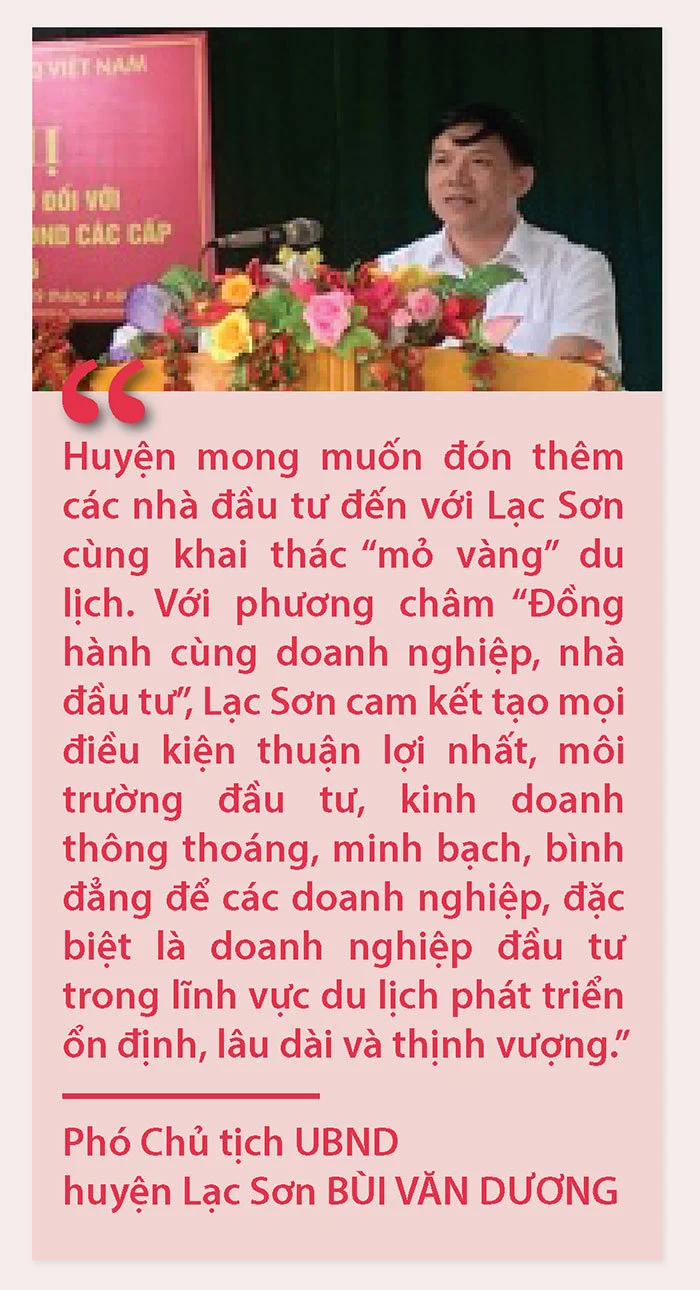
According to Bui Van Duong, Vice Chairman of the Lac Son District People's Committee: “The ‘Market Fair – A Beauty of the Highlands’ is one of the large-scale annual events in the series of activities of the ‘Hoa Binh Province Culture and Tourism Week’ aimed at introducing and promoting the unique and distinctive cultural activities of the ethnic minority communities in Hoa Binh province to tourists from inside and outside the province, creating a joyful and exciting atmosphere for the people.”
At the same time, the activities actively preserve, conserve, and promote the fine traditional cultural values of the ethnic groups in Hoa Binh province, including customs, cuisine, unique cultural activities, and traditional costumes. These activities also contribute positively to promoting trade and tourism, and introducing and advertising products from ethnic minority areas in the province to tourists.
The festival not only brings economic benefits to the people and promotes trade and export connections, but also helps strengthen social relationships within the ethnic communities. The exchange of goods and culture between the ethnic groups here contributes to sustainable development and the spirit of solidarity in the locality.
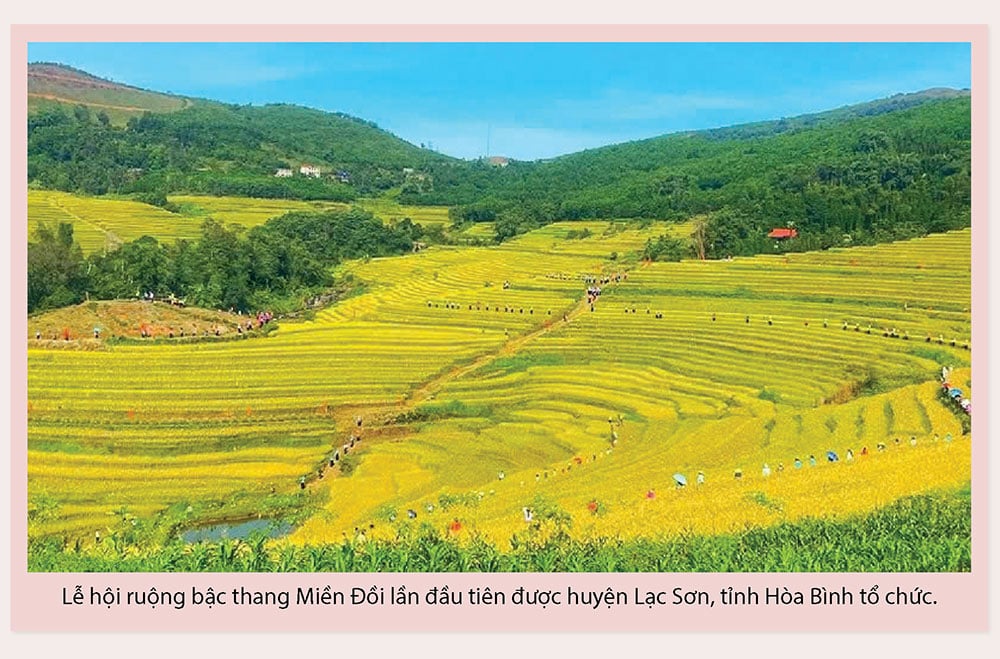
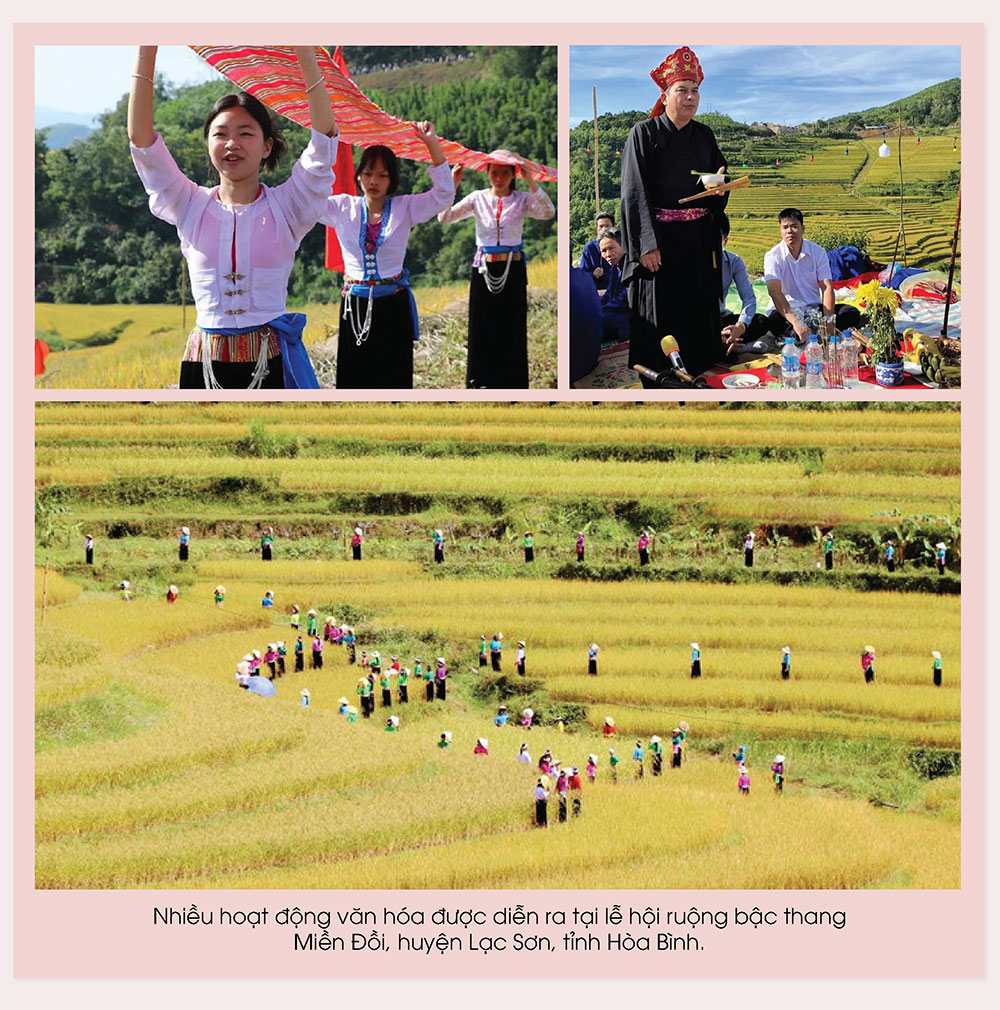
This year marks the first time Lac Son district has organized the opening ceremony of the Terraced Rice Field Festival and the OCOP (One Commune One Product) product display and promotion market. The festival attracted thousands of local people and tourists from within and outside the province. Visitors to the festival were immersed in the unique cultural features of the ethnic groups in Hoa Binh province, especially the Muong culture. They experienced a journey with many different facets at the festival.
The Hillside Terraced Rice Fields Festival features a variety of activities such as a market showcasing, promoting, and introducing OCOP products and typical products of Lac Son district in 2024. This aims to promote local products, attract investment in ethnic minority and mountainous areas, and support the National Target Program for socio-economic development in ethnic minority and mountainous areas of Lac Son district.
The market features 13 stalls showcasing and introducing typical and distinctive local products that have been exported to international markets, such as: Nhung Van turmeric starch; Thanh An honey; Phu Luong chili peppers; and many unique products from the region: Khe Mien Doi sticky rice; Chi Dao nutmeg; Huong Nhuong hill chicken; and Lac Son fermented pork.
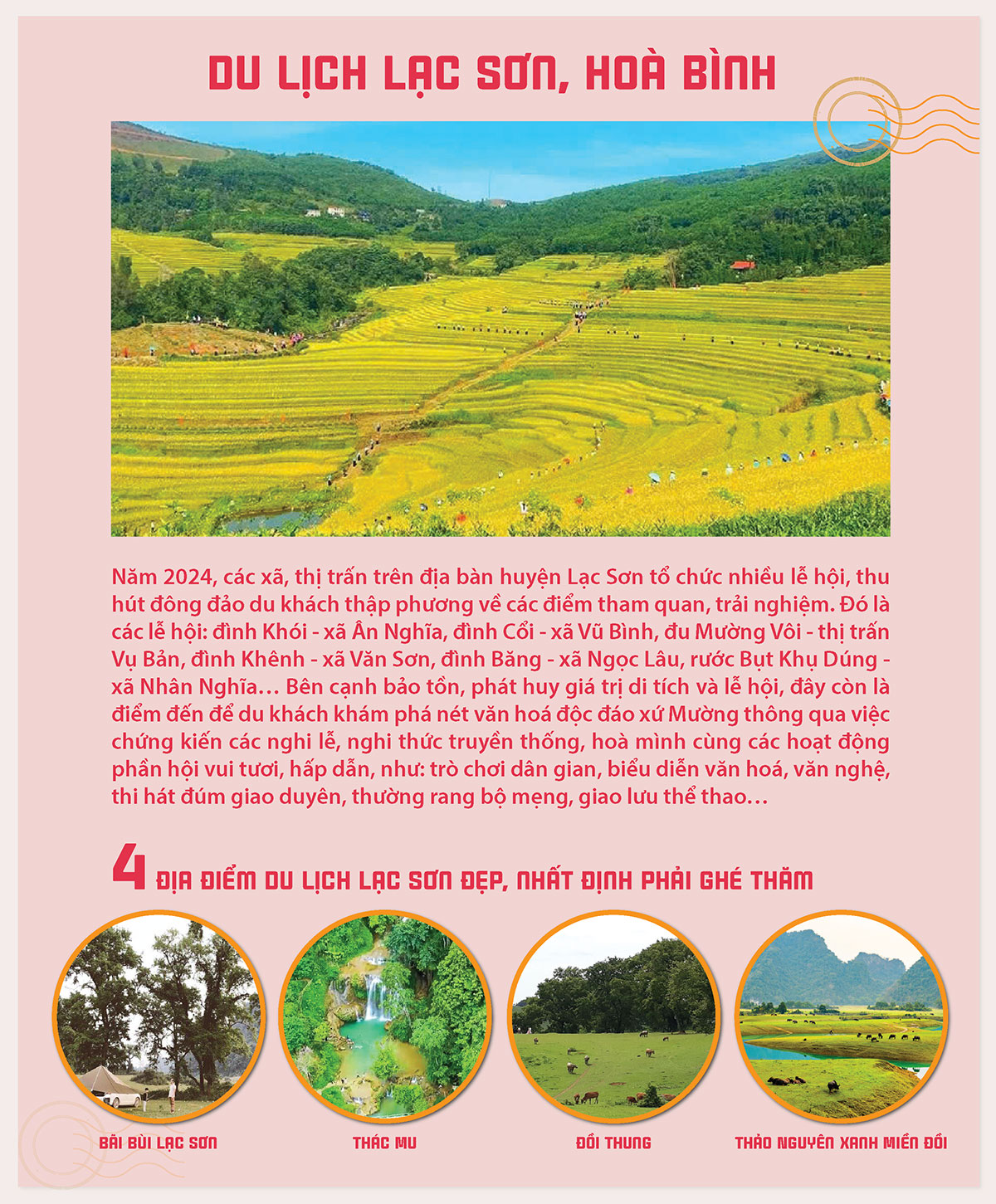
The highlight of the festival is the majestic beauty of the terraced rice fields of Mien Doi commune during the rice harvest season. Through this, locals and tourists from all over can visit and experience the natural beauty bestowed upon Mien Doi commune. In addition, it is an opportunity to learn about the culture of the Muong ethnic group, such as the New Rice Festival, Muong gong performances, and other cultural and sports activities that reflect the unique cultural identity of the Muong people in Lac Son district.
In recent years, the infrastructure serving socio-economic development, especially tourism infrastructure, in Lac Son district has improved significantly. With funding from various sources, the district has completed investments in upgrading and expanding routes such as Highway 12B, Provincial Road C, Provincial Roads 436 and 437, etc.
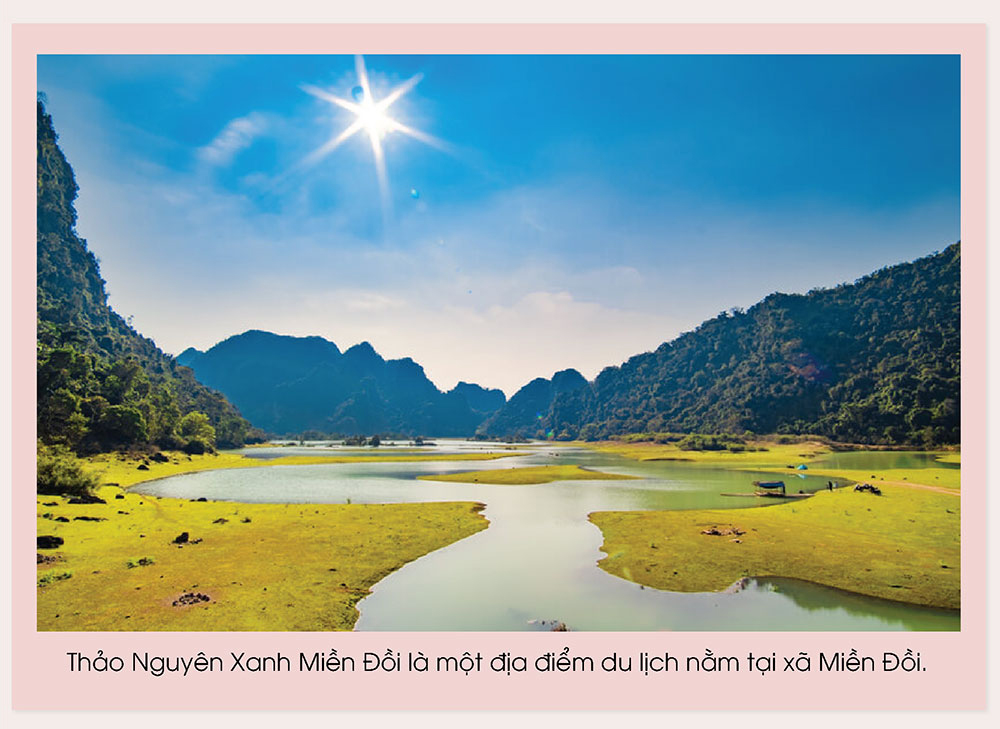
Many district, inter-commune, and village roads have been concreted, making it convenient for tourists to visit. As a result, natural, eco-tourism, and community tourism destinations in the area, such as Mu Waterfall in Tu Do commune, Bai Bui beach in Ngoc Lau commune, Muong Flower Garden in Vu Binh commune, and terraced rice fields in Quy Hoa and Mien Doi communes, are attracting more and more tourists.
Besides developing tourism infrastructure and facilitating the organization of festivals in localities, the district focuses on promoting tourism while preserving cultural identity. Various forms of communication and promotion are employed, such as: exhibition booths; collaboration with the Department of Culture (Ministry of Culture, Sports and Tourism) and central press agencies to produce films and documentaries about local culture and tourism, highlighting unique destinations; and cooperation with media outlets to publicize and introduce scenic spots, historical and cultural relics, and traditional festivals of the locality.
In Lac Son district, there are currently 2 star-rated hotels, 24 accommodation establishments, and 17 community guesthouses. Several tourist areas and attractions have been invested in with modern infrastructure, such as: Mu Waterfall (Tu Do commune); Coi communal house relic (Vu Binh commune); Khoi communal house (An Nghia commune); Cay Si temple (Vu Ban town); the relic of the 52nd Tay Tien Regiment (Thuong Coc commune); Khenh communal house (Van Son commune)... In addition, the postal and telecommunications system, information technology, and broadcasting stations cover all historical sites and tourist areas, ensuring convenient communication and information retrieval.
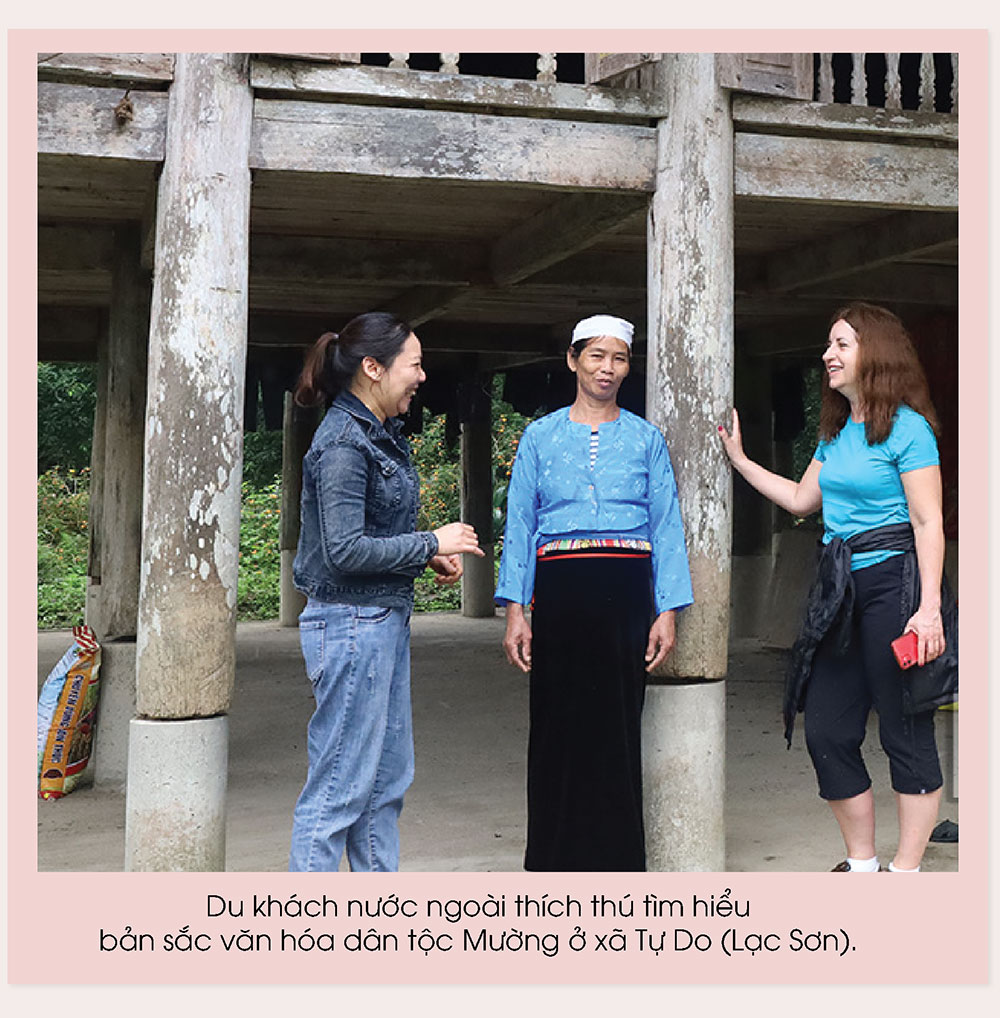
According to Bui Van Kia, Standing Deputy Secretary of the Lac Son District Party Committee and Chairman of the Lac Son District People's Council: after more than three years of implementing Resolution No. 06-NQ/HU, dated July 26, 2021, of the Lac Son District Party Committee aimed at making tourism a key economic sector, local tourism activities are thriving, with an increasing number of visitors. Every year, in addition to domestic tourists, several community tourism destinations belonging to the two tourism branches in Tu Do and Quyet Thang communes attract thousands of international visitors.
The district aims to become one of the leading high-quality tourism, resort, and healthcare centers in the region and the country by 2030, based on its potential for high-quality hot springs, beautiful natural landscapes, clean environment, the largest artificial freshwater lake in the North, and unique cultural identity; tourism activities will create jobs for 2,400 workers, including 800 direct employees. Accordingly, the district will focus on implementing solutions to promote its tourism potential, prioritizing creating favorable conditions for businesses to invest in tourism development with a focus on eco-tourism and community tourism; and strengthening linkages between localities and businesses to build attractive tourism products.
15:15 22/12/2024
Source: https://kinhtedothi.vn/khai-pha-mo-vang-du-lich-lac-son.html


![OCOP during Tet season: [Part 3] Ultra-thin rice paper takes off.](/_next/image?url=https%3A%2F%2Fvphoto.vietnam.vn%2Fthumb%2F402x226%2Fvietnam%2Fresource%2FIMAGE%2F2026%2F01%2F28%2F1769562783429_004-194121_651-081010.jpeg&w=3840&q=75)




Comment (0)