

Tet Nguyen Dan (Lunar New Year) has long been a sacred occasion, deeply ingrained in the spiritual and cultural life of the Vietnamese people.
However, in the highland villages, the Central Highlands, or the plains, Tet is not only associated with the familiar images of banh chung, banh tet, pickled onions, or fatty pork, which are common in Kinh culture.
For ethnic minorities, each New Year's feast contains dishes with distinct characteristics, reflecting the historical imprint, geographical features, beliefs, and unique lifestyle of each community.
Exploring these unique Tet dishes not only provides an opportunity to access a treasure trove of distinctive cuisine , but also opens up a deeper perspective on the cultural diversity and multifaceted beauty of a multi-ethnic and multi-flavored Vietnam.
1. Smoked meat - the Tet (Lunar New Year) flavor of the Thai and Hmong people in the vast mountains.
Smoked meat, a dish deeply rooted in the Tet (Lunar New Year) traditions of the Thai, Hmong, and other ethnic groups in the Northwest highlands, is a distinctive cultural symbol amidst the vast mountain forests.
If sticky rice cakes (bánh chưng) are considered the soul of Tet (Lunar New Year) for the Kinh people, then smoked meat is an indispensable part of the New Year's feast for the people here. The uniqueness of this dish lies in its traditional preparation method: buffalo, beef, or pork is marinated with salt, mắc khén (a type of spice), and hạt dổi (a type of seed) and then hung in the kitchen loft for many months.
Over time, each piece of meat darkens, becomes firm, and exudes a rich, smoky aroma from the wood-fired stove – a distinctive flavor found only in the mountainous regions.
During the Lunar New Year, Thais often take down the smoked meat, briefly grill it over charcoal fire to enhance its aroma, then slice it thinly to offer to guests. Diners will experience the distinctive spicy flavor of mắc khén (a type of spice), a hint of smoky sweetness, and the rich aroma of the meat that has been "aged" over time.
Smoked meat is not only a traditional dish but also holds deep memories for the community: memories of the cold winter, moments of gathering around the fireplace, or the food preservation habits of people in the rugged mountainous regions.
2. Unique dishes of the Hmong people - naturally frozen meat and festival rice cakes.
As Tet approaches, highland regions like Ha Giang and Lao Cai enter the coldest period of the year. This is also when the Hmong people prepare naturally frozen, smoked meat – a very special method of food preservation.
After slaughter, the pork is hung on the porch or roof, where the temperature is only around 0 degrees Celsius. The natural cold causes the outer layer of fat to freeze, forming a thin layer of ice like armor.
During Tet (Vietnamese New Year), the meat is taken down to be processed into soups or boiled dishes, resulting in a sweet and delicate flavor that is completely different from meat frozen in industrial freezers.
Besides meat dishes, sticky rice cakes are also an indispensable part of the Hmong New Year celebration. These cakes are made from finely ground glutinous rice, with a smooth white color, symbolizing the Moon and the Sun – two sacred symbols representing the source of life and abundant harvests.
During the Lunar New Year, the Hmong people make sticky rice cakes to offer to their ancestors, praying for favorable weather and abundant harvests. The image of people gathering around a mortar to pound the rice, the sound of the pestles echoing throughout the mountains and forests, has become an unmistakable characteristic, bringing a distinctly highland New Year atmosphere.
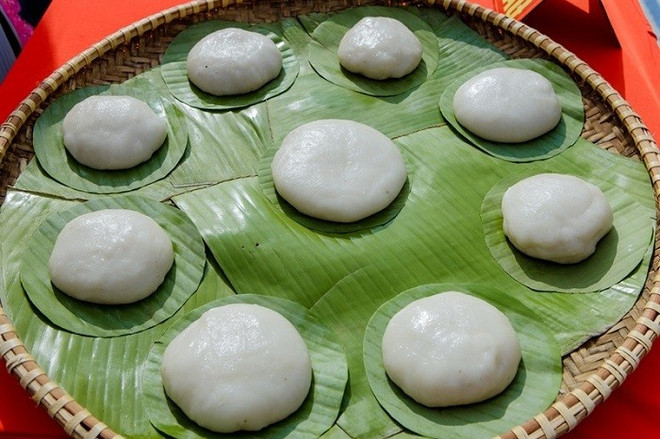
3. Rice flour cakes and dried rice noodles - sweet and savory dishes for the Cao Lan, Tay, and Nung ethnic groups during Tet.
The Lunar New Year celebrations of the Cao Lan, Tay, and Nung ethnic groups are characterized by dishes deeply rooted in their culture and traditions, most notably banh khao (rice flour cakes) and dried pho noodles.
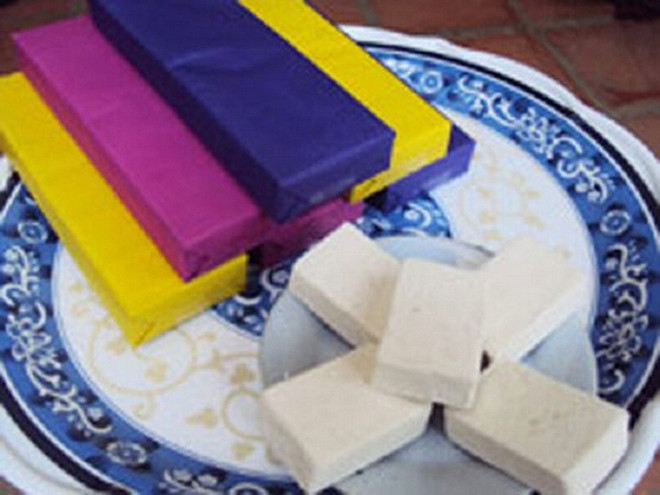
Bánh khảo is a special food made from glutinous rice flour that is pressed into a mold, resulting in a crispy texture and a subtle sugary aroma.
The fascinating aspect of making banh khao lies in its meticulousness and sophistication: glutinous rice must be dried in the dew for three nights to absorb the air, then roasted until golden brown and finely ground. The resulting powder is then mixed with ingredients such as sugar, peanuts, and sesame seeds, pressed into square or rectangular shapes, and wrapped in brightly colored paper.
When eaten, the cake instantly melts in the mouth, leaving a delicate, light flavor that is distinctly different from the chewy and rich taste of traditional banh chung.
Besides bánh khảo (a type of rice cake), the Tay and Nung people also introduce dried pho noodles during Tet (Lunar New Year) to entertain guests. Unlike the dried pho noodles of Gia Lai , the dried pho noodles from the northern mountainous region are made from fresh pho noodles that are then dried into hard sheets. When using, simply dip them in water to soften them, then cook as usual.
This dish often appears in traditional New Year's meals, symbolizing family reunion and representing abundance and the wish for a prosperous New Year: "eat until you're full."
4. The Cham people and the Ramadan festival - dishes associated with Islamic beliefs.
For the Cham community who follow the Baha'i religion, the New Year is marked by the Ramuwan festival, which features dishes that are distinctly unique and different from those of many other ethnic groups.
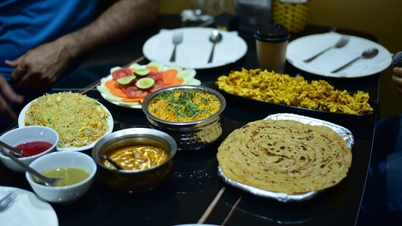
Based on the rules of Islamic law, the Cham people abstain from pork, so their Tet feast mainly consists of dishes such as goat or chicken curry, prepared with coconut milk, turmeric, and aromatic herbs. Another characteristic dish is "com ni" - a golden rice dish with a light buttery flavor and vibrant color from turmeric. Accompanying it is sakaya cake, a soft, smooth sweet cake made from eggs, sugar, and coconut milk.
Cham cuisine, though somewhat elaborate, clearly reflects the community's philosophy of life: a focus on purity, simplicity, and understated elegance, emphasizing the balance between material and spiritual aspects.
This is what gives Ramuwan Tet its unique character – a festival deeply rooted in the culture of Ninh Thuan, a land of sunshine and wind, where the essence of desert culture converges.
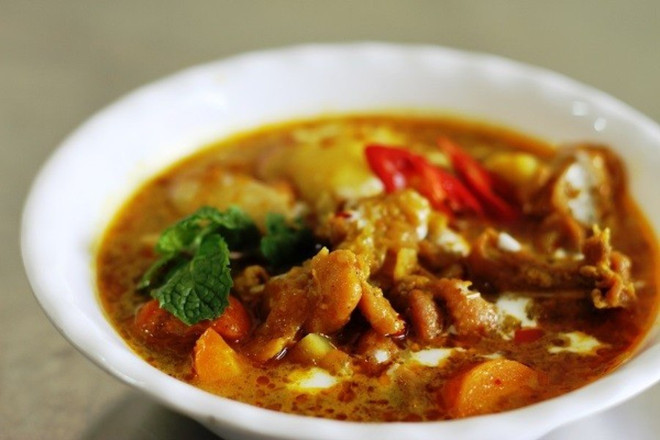
5. The New Rice Festival - rice wine, stewed soup, and dishes "grown with the forest"
The Ede people, along with other ethnic groups in the Central Highlands such as the Ba Na and Gia Rai, possess a diverse and rich cultural heritage, clearly reflected in their unique festivals. For them, Lunar New Year is not necessarily the most important holiday.
Instead, the New Rice Festival – marking the end of the harvest season and expressing gratitude to the rice god – is the most profoundly meaningful event. However, when the New Year arrives, the Ede people still prepare a unique feast as a way of sharing the joy with nature and the community.
Among the signature dishes, the highlight is "canh thut," a unique traditional dish showcasing the creativity of the local people. Cooked directly inside bamboo tubes, "canh thut" offers an unforgettable, authentic mountain flavor.
The main ingredients include chicken, taro leaves, and carefully selected fresh bamboo shoots from the forest. All are placed in bamboo tubes and then subjected to a special "stemming" process – a technique that helps the ingredients blend together, creating a smooth, creamy texture and a perfect harmony of flavors. When the tube is opened, the steam rises along with the subtle aroma of burnt bamboo and roasted bamboo shoots, creating an unmistakable culinary experience.
The New Year's feast of the Ede people becomes even more vibrant and meaningful with a jar of rice wine placed in the center, where everyone gathers to drink together in their characteristic longhouses. Rice wine is not only a beverage but also a symbol of unity and close bonds among community members.
In addition, dishes from the mountains and forests, such as grilled meat in bamboo tubes, steamed stream fish wrapped in leaves, or sticky rice from the fields, also contribute to highlighting the harmonious beauty between humans and nature. Each dish, each flavor, is a reminder of the interdependence and harmonious combination between human life and the vast mountain and forest landscape of the Central Highlands.
With its unique customs and distinctive culinary culture, this festival not only holds religious significance but also serves as a gathering that brings people closer together, while simultaneously expressing reverence for nature – the source that has sheltered and nurtured them for generations.
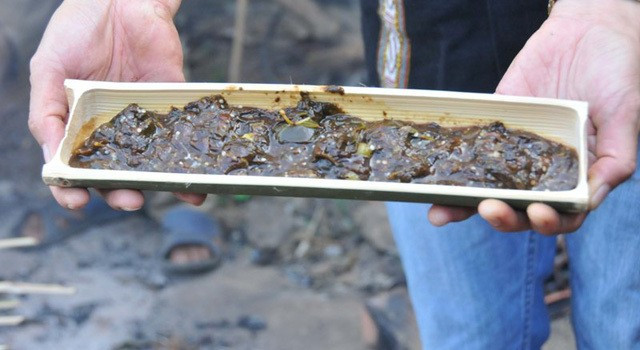
6. Khmer New Year - a harmonious blend of sweet and sour flavors in the Chol Chnam Thmay meal.
The Khmer New Year, Chol Chnam Thmay, is one of the interesting cultural events that takes place in April every year.
This is not simply a traditional festival, but also a time for the Khmer people to express profound spiritual values through family feasts, highlighted by the subtle blend of diverse Indian cuisine and the distinctive style of Southern Vietnam.
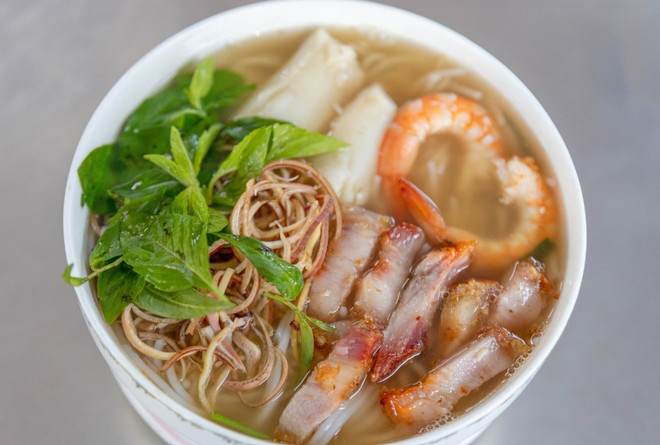
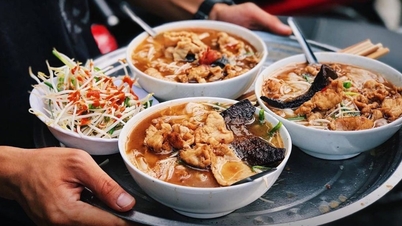
A special highlight on the Tet (Lunar New Year) feast table is Khmer noodle soup. This dish is uniquely prepared using pro-hok – a traditional fermented fish paste with a rich flavor – combined with fresh green wild vegetables, banana blossoms, and thinly sliced banana blossoms, creating a unique and distinctive taste.
Along with Khmer noodle soup, the Khmer people also prepare many other dishes that contribute to making the New Year's feast even more attractive. Typical examples include stir-fried tapioca dumplings with a harmonious sweet and sour flavor, or Tung Lo Mo – a special beef sausage seasoned with spicy spices that stimulate the taste buds.
In addition, bamboo tube rice and num-nom som – banana leaf-wrapped rice cakes filled with bananas – are also present as indispensable traditional choices for this important day.
All the dishes featured on a Khmer New Year feast not only offer a rich culinary experience but also skillfully paint a unique and colorful picture of the Chol Chnam Thmay festival in the Southwestern region of Vietnam. The harmonious combination of the simplicity and familiarity of local ingredients with the creativity of skilled chefs has created a remarkable and memorable culinary culture for every visitor who has the opportunity to visit this place.
7. The cultural values hidden behind unique and unusual Tet dishes.
The profound cultural values and meanings hidden within these unique Tet dishes not only make them appealing but also reflect a part of the cultural essence of ethnic minorities in Vietnam.
Although the ingredients may vary and the cooking methods differ from region to region, these Tet dishes still share interesting and meaningful commonalities that are worth discovering.
Showing harmony with the living environment
Each dish of the ethnic minority groups is a culmination of adaptation and harmony with nature, reflecting the close relationship between people and their surrounding environment. For example, people in the highlands often use smoked meat to preserve it for a long time in harsh weather conditions; families in the Central Highlands skillfully utilize bamboo to create dishes cooked in bamboo tubes, preserving the distinctive flavor while adapting to local ingredients. In Southern Vietnam, the creative use of fermented spices not only enhances the unique flavor but also addresses the challenges of the hot and humid climate. All of this demonstrates the ingenious adaptability and superior intelligence of the people in each region.
Rituals and spirituality
The dishes served during Tet (Lunar New Year) are not just ordinary food to enjoy; they often carry deep symbolic value, connecting people with spiritual and religious elements.
For example, the sticky rice cake of the Hmong people symbolizes unity, gratitude to heaven and earth, and ancestors; the rice wine of the Ede people is an indispensable part of community festivals or rituals praying for a bountiful harvest; and the curry of the Cham people is the soul of sacred sacrificial ceremonies.
These dishes not only recreate tradition but also convey messages of reverence and belief in spiritual protection, deeply ingrained in the hearts of each community.
A priceless treasure of Vietnam's culinary heritage.
Cuisine has always played an important role in cultural heritage, and the unique Tet dishes of ethnic minorities are precious gems that contribute to the colorful and soulful tapestry of Vietnamese cuisine, a cuisine renowned for its richness and diversity.
In the context of rapid modernization, these traditional values are facing the risk of disappearing. Preserving and promoting traditional dishes not only helps maintain distinctive cultural identity but also adds to tourism appeal and boosts local economic development.
Moreover, it's also a way to introduce the richness of Vietnamese culture and people to international friends through a culinary exploration.
Therefore, each unique Tet dish of the ethnic minorities is not simply a part of the New Year's Day meal, but also the crystallization of cultural values, a connecting thread between the past, present, and future, making them invaluable assets for every Vietnamese person.
Source: https://www.vietnamplus.vn/kham-pha-nhung-mon-an-tet-doc-dao-cua-cac-dan-toc-thieu-so-post1089110.vnp













































































Comment (0)