

An Giang is distinguished by the Thất Sơn mountain range – a chain of seven sacred and majestic mountains amidst the vast plains. This is not only a unique geographical feature but also a symbol of the cultural and religious beliefs of the people of An Giang. Among them, Mount Cấm (Thiên Cấm Sơn), with an altitude of over 700m, is the highest mountain in the Mekong Delta, known as the "roof of the West" or the "Da Lat of the delta". With its cool climate year-round, Mount Cấm attracts many tourists thanks to its natural forest ecosystem, Vạn Linh Pagoda, a giant Maitreya Buddha statue, and a cable car system serving visitors.
Located in the border city of Chau Doc, Mount Sam doesn't possess the same height or natural scenery as Mount Cam, but it's associated with the legend of the Lady of the Mountain, making it a popular pilgrimage destination in An Giang. Additionally, the Bay Nui (Seven Mountains) area includes Mount Dai, Mount Tuong, Mount Ket, Co To, and Mount Nho, forming a series of mountains and forests interspersed with rice paddies, ideal for trekking. Each mountain holds a folk tale, legend, or historical relic connected to the lives of the local people.
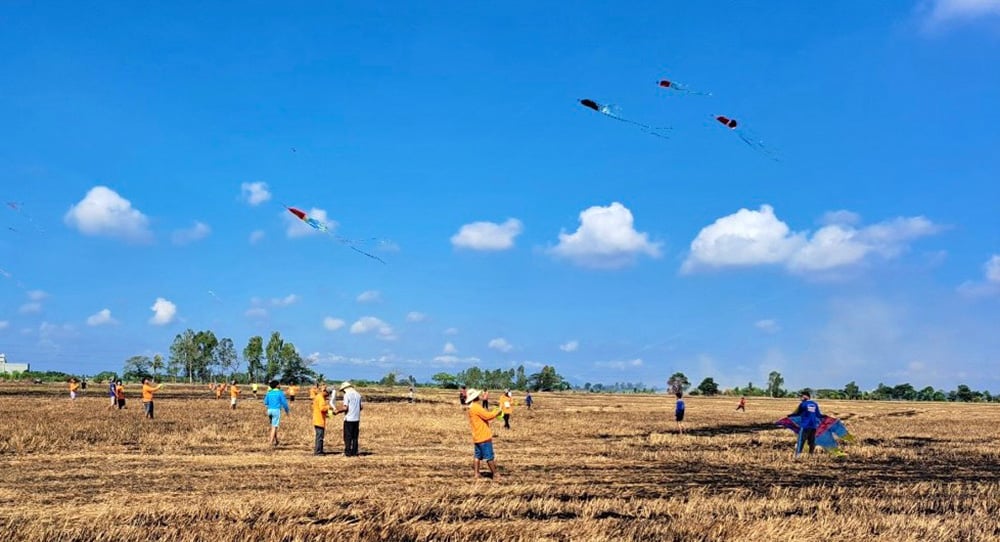
An Giang boasts a blend of natural beauty and diverse culture.
Located about 30km from Chau Doc City, Tra Su Melaleuca Forest (in Tinh Bien Town) is a characteristic wetland forest of the Mekong Delta. It is home to hundreds of species of flora and fauna. During the flood season (approximately July to October of the lunar calendar each year), the surface of the melaleuca forest is covered with lush green water hyacinths. Here, visitors can experience motorboat and rowboat rides through the forest, enjoying the pristine scenery, listening to the rustling of leaves, and appreciating the beauty of nature. In addition, Tra Su Melaleuca Forest also features a system of bamboo bridges xuyên the forest, creating a unique and attractive sightseeing space for tourists.
Every year during the flood season, the water from the upper reaches of the Mekong River overflows the fields and canals, and the people of An Giang live in harmony with the water, considering it a "season of blessings from heaven." The water carries silt to enrich the fields, and fish and shrimp follow the current into the canals. People take advantage of the opportunity to catch aquatic products, harvest water hyacinth flowers, etc., creating a vibrant ecological picture. This is also an impressive season of the year, worth exploring nature and immersing yourself in the life of the people in this riverine region. Ms. Nguyen Thanh Tam (from Ho Chi Minh City) shared: "I have been to An Giang twice during the flood season, and I am truly impressed with the rhythm of life of the people here during the months when the fields are flooded. Especially, the local specialties of the flood season are incredibly delicious. Anyone who has been there and experienced it will surely never forget it."
Located in Tri Ton district, Ta Pa Lake was formed from an old quarry, where over time, water accumulated to create a natural, deep, and incredibly picturesque lake. The calm surface reflects the surrounding hills and mountains, and the area around the lake is pristine. Not far away is Ta Pa Pagoda, a Khmer temple perched on a hilltop. The pagoda boasts unique architecture and stunning panoramic views of Tri Ton. This is an ideal destination for photography enthusiasts, nature lovers, and those seeking inner peace.
An Giang also boasts a complex network of rivers and canals, such as the Hau River, Tien River, Vinh Te Canal, and Tra Su Canal, serving not only as a means of transportation and goods circulation but also as a source of livelihood, water, and aquatic resources. For the people of An Giang, these rivers are not only a means of living but also a symbol of the close connection between humans and nature. Beyond its beautiful natural landscapes, An Giang possesses a unique culture with many impressive festivals, such as the Via Ba Chua Xu festival at Sam Mountain, the Bay Nui bull racing, the Sen Dolta festival of the Khmer people, and the Ramadan month of the Cham people. The diversity of ethnic groups – Kinh, Khmer, Cham, and Hoa – has created a unique cultural identity for this southwestern region of Vietnam.
An Giang boasts mystical mountains, lush green mangrove forests, crystal-clear lakes, and sprawling palm groves, weaving a serene and poetic natural landscape. It's an ideal destination for those seeking to escape the hustle and bustle of city life and find peace and tranquility, experiencing a fully authentic agricultural and ecological way of life. Whether during the dry season or the flood season, An Giang always offers something fascinating to discover.
Source: https://baoangiang.com.vn/kham-pha-thien-nhien-an-giang-a419086.html

![[Photo] The General Secretary attends the groundbreaking ceremony for the construction of the Truong Ha Primary and Secondary Boarding School.](/_next/image?url=https%3A%2F%2Fvphoto.vietnam.vn%2Fthumb%2F1200x675%2Fvietnam%2Fresource%2FIMAGE%2F2026%2F01%2F28%2F1769604498277_vna-potal-tong-bi-thu-du-le-khoi-cong-xay-dung-cong-trinh-truong-pho-thong-noi-tru-tieu-hoc-va-trung-hoc-co-so-truong-ha-8556822-jpg.webp&w=3840&q=75)


![[Photo] Commemorating the unwavering friendship between Vietnam and Laos](/_next/image?url=https%3A%2F%2Fvphoto.vietnam.vn%2Fthumb%2F1200x675%2Fvietnam%2Fresource%2FIMAGE%2F2026%2F01%2F27%2F1769518372051_ndo_br_1-jpg.webp&w=3840&q=75)


![[Photo] National Assembly Chairman Tran Thanh Man meets with former leaders of the National Assembly from various periods.](/_next/image?url=https%3A%2F%2Fvphoto.vietnam.vn%2Fthumb%2F402x226%2Fvietnam%2Fresource%2FIMAGE%2F2026%2F01%2F28%2F1769601014034_anh-man-hinh-2026-01-28-luc-18-50-04.png&w=3840&q=75)


![OCOP during Tet season: [Part 3] Ultra-thin rice paper takes off.](/_next/image?url=https%3A%2F%2Fvphoto.vietnam.vn%2Fthumb%2F402x226%2Fvietnam%2Fresource%2FIMAGE%2F2026%2F01%2F28%2F1769562783429_004-194121_651-081010.jpeg&w=3840&q=75)


![OCOP during Tet season: [Part 2] Hoa Thanh incense village glows red.](/_next/image?url=https%3A%2F%2Fvphoto.vietnam.vn%2Fthumb%2F402x226%2Fvietnam%2Fresource%2FIMAGE%2F2026%2F01%2F27%2F1769480573807_505139049_683408031333867_2820052735775418136_n-180643_808-092229.jpeg&w=3840&q=75)
![OCOP during Tet season: [Part 1] Ba Den custard apples in their 'golden season'](/_next/image?url=https%3A%2F%2Fvphoto.vietnam.vn%2Fthumb%2F402x226%2Fvietnam%2Fresource%2FIMAGE%2F2026%2F01%2F26%2F1769417540049_03-174213_554-154843.jpeg&w=3840&q=75)





Comment (0)