

New economic corridor - a strategic leverage for La Lay
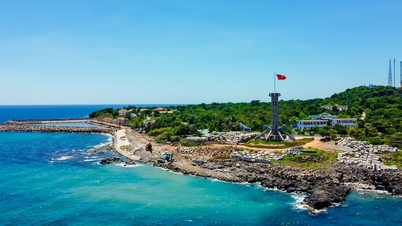
La Lay, with its advantageous geographical location, especially after being upgraded to an international border gate in 2014, became the 8th international border gate on the Vietnam-Laos border. One of the key factors creating breakthrough prospects for the La Lay international border gate area is the gradually developing National Highway 15D, the new East-West transportation axis of Quang Tri province. This road is approximately 92km long, directly connecting from My Thuy deep-water seaport, the Southeast Quang Tri Economic Zone, through Quang Tri industrial zone, to La Lay international border gate, connecting to National Highway 15B in Laos, and integrating into the transportation network of northeastern Thailand and Myanmar.
Upon completion, National Highway 15D will form a new economic corridor, helping to alleviate the congestion on the overloaded "single-lane" transportation route that has been in operation for many years, while opening up entirely new development opportunities for the southern region of Quang Tri province. This corridor is also considered the shortest route connecting the Indian Ocean to the Pacific Ocean , passing through Myanmar, northeastern Thailand, southern Laos, Vietnam, and out to the East Sea at My Thuy port.
 |
| La Lay International Border Gate - Photo: NTH |
This new economic corridor has the potential to attract large volumes of goods from the southern provinces of Laos, with a population of approximately 1 million, and the northeastern provinces of Thailand, with a population of over 21 million. These regions have great potential for the development of agriculture, mining, processing, and trade and services.
Direct connection to the My Thuy deep-water seaport significantly shortens logistics time and costs, creating a clear competitive advantage for cross-border import and export goods. Recognizing this strategic role, Quang Tri province has been requesting the central government to allocate funds for the comprehensive upgrading and construction of National Highway 15D from the My Thuy deep-water seaport to the La Lay International Border Gate, including sections funded by public investment and those under the public-private partnership (PPP) model.
Alongside transportation infrastructure, over the past 10 years, the La Lay International Border Gate area has received over 328 billion VND in investment for the construction of essential border gate infrastructure. Many commercial and service projects have been and are being developed, such as transshipment yards and conveyor belt projects for transporting coal from Laos to Vietnam via the La Lay International Border Gate… creating an important foundation for the development of logistics services, import and export, and transit of goods.
Leveraging the development advantages of border gate areas.
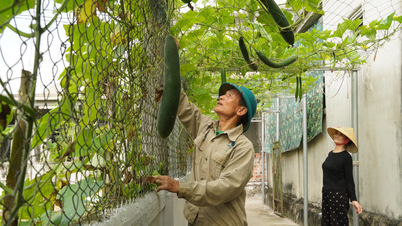
According to Pham Xuan Khanh, Secretary of the Party Committee and Chairman of the People's Council of La Lay commune, by the end of 2025, the average per capita income of La Lay commune will reach 28.2 million VND/year. The economic structure is shifting in a positive direction, with agriculture and forestry developing sustainably, linking household and cooperative economic models with key livestock such as cattle, goats, native pigs, and native chickens... Many scientific and technical advancements have been applied to production. Grain production reached nearly 2,700 tons, exceeding the plan by more than 55%.
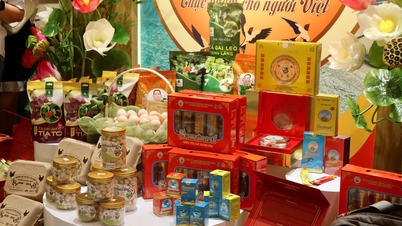
Forestry continues to be a strong economic sector, with forests and forest land accounting for nearly 78% of the natural area. In addition, distinctive products such as Ra Du rice, indigenous dwarf bananas, and traditional brocade textiles are gradually building brands and participating in the OCOP program, opening up new avenues for economic development linked to local cultural identity. Alongside production, trade and services in La Lay commune have also seen significant development. Currently, there are nearly 200 small-scale businesses and over 170 vehicles and machinery serving production and business. This is an important foundation for the commune to gradually develop service points, rest stops, and small commercial areas to support import, export, and transit of goods through the border gate.
Currently, La Lay is prioritizing the adjustment of agricultural production area planning, investing in essential infrastructure, and establishing service points at the La Lay intersection – where the Ho Chi Minh Highway and National Highway 15D meet at the La Lay International Border Gate. The goal is to gradually expand access to trade and services suitable to local conditions, such as rest stops, small-scale businesses, fuel supply, transportation, and agricultural product distribution.
"The aspiration to develop the La Lay International Border Gate area is not only about economic growth, but also about improving the lives of the people in the border region, narrowing the development gap between mountainous and lowland areas, and between the border gate area and major economic centers. The goal is to build the La Lay International Border Gate into a dynamic service center, forming the La Lay Border Gate Economic Zone, creating a strong impetus to promote socio-economic development of the locality and the southern mountainous region of Quang Tri," shared Pham Xuan Khanh, Secretary of the Party Committee and Chairman of the People's Council of La Lay commune.
Thanh Hai
Source: https://baoquangtri.vn/kinh-te/202602/khat-vong-la-lay-5854985/




































































Comment (0)