
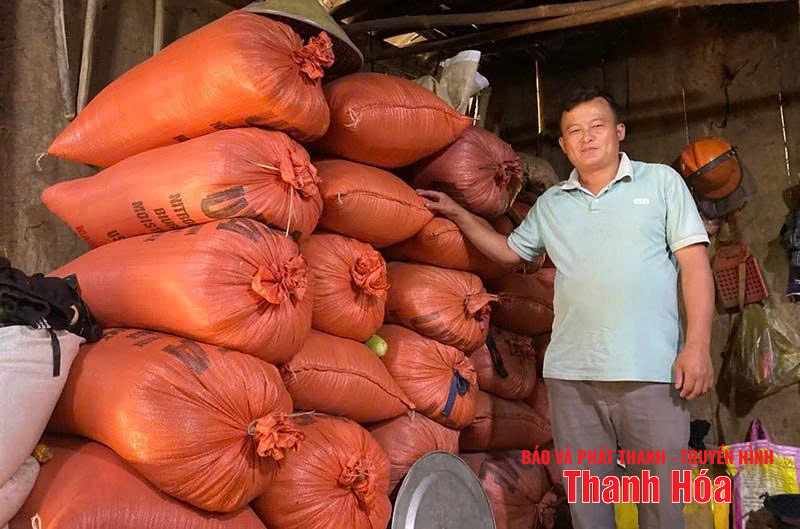
The family of Mr. Ho Van Thanh, in Ca Noi village, Pu Nhi commune, stores rice to meet their daily needs.
When villagers are given vocational training
(Baothanhhoa.vn) - Thanks to vocational training classes, many families in Mong ethnic minority villages in Pu Nhi commune have changed their mindset, applying the knowledge they learned to livestock farming and crop cultivation, thereby developing sustainable livelihoods, increasing income, and achieving sustainable poverty reduction.
 Báo Thanh Hóa•27/02/2026
The house of the village secretary and head of Cá Nọi hamlet, Pù Nhi commune, Hơ Văn Thành, was bustling with activity. He and his wife, along with a few neighbors, were preparing medicine and injecting their pigs. Previously, when their livestock had problems, Mr. Thành had to go to the neighboring hamlet to ask for help with the injections. Late last year, his wife, Thao Thị Cú, attended a training course on livestock farming and disease prevention and treatment, organized right in their hamlet. Since then, their family has become more proactive in their livestock management. According to Ms. Cú, in the past, the villagers had a habit of raising livestock in a "natural" way, with buffalo and cattle roaming freely on the mountains, making them susceptible to disease and death. After attending the course, the villagers learned to keep their buffalo and cattle in pens to control disease outbreaks and to vaccinate them properly to prevent illness.
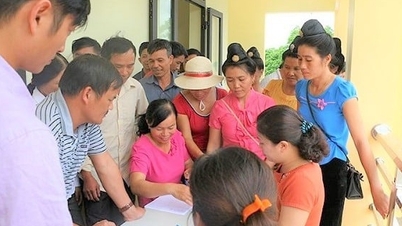
The livestock breeding and disease prevention course, offered by Thanh Hoa Agricultural College, provides short-term vocational training in livestock breeding techniques and disease prevention and treatment methods. The course is attended by 35 students, mainly from the Mong ethnic group in the villages of Ca Noi, Ca Top, and Pu Ngua in Pu Nhi commune. They are all from poor or near-poor households seeking to develop their economy through livestock farming. In each session, students learn about livestock development; how to design livestock barns; methods for selecting and breeding high-quality livestock breeds suitable for local production conditions and consumer demand; disease prevention procedures, environmental hygiene in livestock farming, vaccine use, and the use of veterinary drugs to treat common livestock diseases.
Based on the knowledge they gained, in early 2025, Mr. Thanh and his wife boldly borrowed capital to develop their business. Currently, their family is raising nearly 10 buffaloes and cows, 6 native pigs, and a flock of nearly a hundred chickens and ducks. Not only did they learn a trade to enrich themselves, but Mr. Thanh and his wife also support local people with veterinary care, animal care, and artificial insemination using proper procedures and techniques to help each other develop economically. “Participating in the vocational training class, we learned many things. If done correctly, farmers can save a lot of costs, reduce pests and diseases, and increase productivity and the value of agricultural products…” – Mr. Thanh emphasized.
The village of Cá Nọi currently has 124 households with 586 inhabitants, located about 5km from the center of Pù Nhi commune. The terrain is rugged, with many steep slopes and a harsh climate. Previously, it was a village lacking many things, with outdated customs and fragmented, small-scale farming practices. Thanks to the attention, investment, and support from the central and provincial governments, Cá Nọi village now has roads, electricity, a school, and a cultural center. In recent years, through national target programs, especially Project 5 on developing vocational education and job creation for ethnic minority and mountainous workers, under the National Target Program for socio-economic development of ethnic minority and mountainous areas giai đoạn 2021-2030, the villagers have had access to many new plant and animal varieties, and participated in vocational training courses on animal husbandry techniques, disease prevention and treatment for livestock and poultry, and intensive fruit tree cultivation techniques. Based on the knowledge they have acquired, the people have gradually reformed their production methods, actively transforming the structure of crops and livestock, planting and raising high-economic-value plants and animals, contributing to increased income and sustainable poverty alleviation.
According to Mr. Bui Thanh Linh, Vice Chairman of the People's Committee of Pu Nhi commune: "The question of what crops to plant and what livestock to raise to achieve economic efficiency has always been a concern of the local Party committee and government. In addition, with ethnic minorities accounting for 95% of the population, including the Mong ethnic group which makes up nearly 80%, the level of awareness among the people in the commune is limited and uneven. Therefore, vocational training courses on livestock breeding and disease prevention and treatment; techniques for planting and managing pests in rice and corn; intensive cultivation of fruit trees; and forest planting and harvesting are considered 'key' to poverty reduction in the locality. Many trainees, after completing the courses, have successfully applied their knowledge to practice to increase production, contributing to rapid and sustainable poverty reduction."
In the coming period, Pù Nhi commune will continue to promote awareness among the villagers about the importance of vocational training. At the same time, it will coordinate with vocational training organizations to assess the villagers' vocational training needs and guide them towards suitable occupations. This is one of the solutions for the locality to improve the quality of its human resources and effectively carry out sustainable poverty reduction.
Text and photos: Tang Thuy
Source: https://baothanhhoa.vn/khi-dan-ban-duoc-hoc-nghe-258842.htm
![[Image] Nearly 125,000 Hanoi students completed the Literature exam for the 10th grade entrance exam.](https://vphoto.vietnam.vn/thumb/1200x675/vietnam/resource/IMAGE/2026/05/30/1780117233041_ndo_br_thiet-ke-chua-co-ten-2-png.webp)





















































































Childhood is called happiness.

Before the Kareh ceremony

Comment (0)