

 |
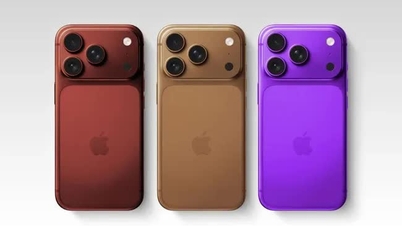
An illustration of a foldable iPhone. Photo: MacRumors . |
According to DigiTimes, citing supply chain sources, Apple is indeed developing a foldable iPhone. The device entered its first prototype development phase (Prototype 1 - P1) in mid-June.
If things go according to plan, the product could complete the prototype testing phase by the end of 2025, move to the EVT (Engineering Validation Testing) process, and pave the way for a potential launch in late 2026.
The development process of the foldable iPhone.
Rumors about a foldable iPhone have been circulating for years, although the specific timeline remains unclear. While many Android manufacturers are continuously launching foldable smartphones, Apple has remained relatively secretive.
Industry sources predict the company has been developing a foldable iPhone for over five years, going through more than 10 different designs.
Apple typically has product development processes that last for years, even canceling projects at the final stage if they don't meet internal standards. This also applies to the foldable iPhone, where the company has chosen a cautious approach, treating each stage as temporary.
Based on rumors, the foldable iPhone is currently in the P1 stage. According to Apple's process, the device needs to pass the P2 and P3 stages before moving to EVT.
Each prototype development phase typically lasts about two months. During this process, supply chain partners test the device's functionality before handing it over to Foxconn and Pegatron, who are responsible for evaluating its mass production feasibility.
 |
Users experience iPhones at an Apple store. Photo: Bloomberg . |
Apple is still opting for a traditional development process for the foldable iPhone. This means that after the P1 to P3 stages, the device will go through the EVT process, followed by DVT (Design Validation Testing) and MP (Mass Production).
For example, the iPhone 17 series completed its EVT phase in the second quarter of this year, preparing for the final stages before its launch in the fall.
Sources indicate that Apple was also researching a foldable iPad but has temporarily halted development. Industry experts believe this is due to manufacturing difficulties, increased costs, and insufficient consumer demand.
Previously, the rumored foldable iPad was said to have an 18.8-20.2 inch screen, using an OLED panel and a crease-free design. Initially, the product was expected to launch in 2026-2028, but the temporary halt in development may cause users to wait longer.
Apple's big ambitions
For the foldable iPhone, DigiTimes predicts initial production of 7 million units, although Apple may adjust this depending on market developments.
The arrival of the foldable iPhone comes amidst signs of declining market demand for foldable smartphones. Samsung, the dominant player in the segment, is expected to ship 8 million foldable devices in 2024, lower than its peak in 2021 (11-12 million units).
Next, Huawei still ranks second globally in foldable smartphone market share, despite increasing competitive pressure and somewhat declining user interest.
According to DigiTimes , global sales of foldable smartphones reached a record high in 2023 (21.2 million devices), but declined by 11.3% in 2024 (to 18.8 million units). This year, the market may experience a slight recovery with a 3.7% increase (19.5 million units).
Meanwhile, the smartphone market as a whole is on a downward trend, with sales falling from 1.317 billion units (in 2021) to 1.193 billion units (in 2024).
 |
Samsung Galaxy Z Fold6. Photo: Bloomberg . |
Both Apple and Samsung saw sales decline during the same period, but Apple maintained a stable market share. In the three years from 2021 to 2024, Apple's market share increased slightly from 18.2% to 18.3%, while Samsung's decreased from 20.6% to 18.8%.
Chinese brands such as Xiaomi, Transsion, Honor, Huawei, and Lenovo have all seen their market share increase, putting pressure on Samsung.
Before launching its foldable smartphone, Apple is expected to unveil the ultra-thin iPhone 17 later this year, hoping to revive the market. However, the lackluster sales of the Galaxy S25 Edge show that the demand for ultra-thin phones remains a major challenge.
With Samsung planning to lower its foldable smartphone sales target for 2025, this also raises questions about Apple's ambitions for a foldable iPhone.
Source: https://znews.vn/khi-nao-iphone-gap-ra-mat-post1565720.html







































































































Comment (0)