

Shopping and entertainment using... your phone.
Whether cooking, watching TV, or resting in bed, Mrs. Ha Thanh Thuy from Nam Dinh still can't do without her mobile phone. She proudly showed off her cool linen loungewear set, saying how cheap it was, only about 70,000 dong, whereas having it custom-made would cost several hundred thousand dong.

Watching livestreams too often can become an addiction.
The phone screen displayed a live stream of a clothing sale by an online account with hundreds of viewers. Ms. Thuy lay on the chair, her eyes half-closed, her phone on the bedside table. Occasionally, the phone would ring, "Ladies, place your orders now at surprisingly low prices!", and Ms. Thuy would startle awake.
"I buy things regularly, including household items. Some months I buy them 5-6 times in a row," said Mrs. Thuy.
Unlike Mrs. Thuy, who is addicted to online shopping on Facebook, Mr. Cuong, the husband of Mrs. Phan Thi Lan in Ha Nam, is "obsessed" with all the video content on Facebook Watch and YouTube. He has almost completely abandoned television to focus his attention on the 6.1-inch screen of his phone, which fits perfectly in the palm of his hand.
"He refuses to look after the child, always glued to his phone. He only sits down to eat after I have to call him repeatedly," Mrs. Lan said angrily.
It's clear that social media is no longer the exclusive domain of young people. More and more elderly people are online. They take photos, post their feelings on their personal pages, express their emotions, and comment on their friends' posts skillfully. They even connect online with their children and grandchildren more often than they communicate in person.

Not all older people are aware of the double-edged nature of social media.
Five years ago, Ms. Nguyen Thi Hanh from Bac Ninh bought her mother a smartphone and installed Wi-Fi at home. "It's very convenient; my mother and I see each other every day, we can communicate a lot without spending much. But once my mother became proficient with the phone and had social media accounts, she liked being online more and became addicted ," she shared.
Ms. Tran Thi Hoa, Hanh's mother, doesn't just have one phone. She uses two smartphones to facilitate her live streaming singing sessions.
"One is for livestreaming and the other is for playing music," she explained the function of each phone.
At 65 years old, Ms. Hoa is proficient in using social media platforms like Facebook and Zalo. She participates in many groups, including a group where they sing together every evening via livestream.
"I'm old now, I stay home to look after my grandchildren and don't go anywhere. In the evenings, I go online to sing or cheer for this team or that team," Mrs. Hoa said.
Older people find it even harder to "quit" the internet than younger people.
In 2018, eMarketer, a US-based market research company, announced that Facebook was gradually losing its appeal to young people, while the world's largest social network was gaining a wave of users over 55 years old.
Simply put, older people have more free time, and they need to connect with friends and share stories about their lives. Especially nowadays, multi-generational families are becoming less common, and children tend to move out and start their own families. Beyond simply alleviating loneliness, many older people are finding ways to make technology more interesting and meaningful.
The internet helps to bridge long-distance connections, but it is also demonstrating a loss of direct connection between people. "It's clear that children and grandchildren connect with their parents and grandparents online more often than they visit them in person ," said psychologist Le Thi Tinh Tuyet.
So now, families are no longer just comprised of young people glued to their phones; they now have an additional member: grandparents, the elderly citizens of the online world.
Psychologist Le Thi Tinh Tuyet warns that spending too much time on the internet increases the likelihood of insomnia, declining health, hearing loss, and a reluctance to connect with the real world for the elderly. More importantly, the elderly are easily swayed by advertisements and readily spend money on products that don't match their value.
Ms. Ha Thanh Thuy from Nam Dinh still spends eight hours a day watching livestream sales, using her phone while it's charging. No one needs to teach this retired teacher how to buy online; she learns how to contact suppliers and place orders herself, becoming as proficient as her children and grandchildren.
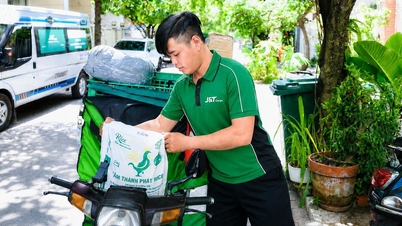
The delivery person in the commune where Ms. Thuy lives has become a regular customer. She admits that there have been many times when the goods she received were different from the pictures posted online, leaving her bitter and disappointed.
"If you're not satisfied, I'll pay for shipping," Mrs. Thuy didn't mind spending a few tens of thousands of dong on delivery.
"Elderly people tend to be somewhat conservative. They believe they have enough life skills, so when their children or grandchildren explain to them why they shouldn't do certain things, they will hide them from their children or grandchildren. They are at risk of being scammed financially," the expert analyzed.
Minh Khang (VOV2)
Source


































































































Comment (0)