|
| England had a disappointing draw against Ghana. |
In England's resounding victory over Croatia, there were only two notable flaws in the team's lineup: Anthony Gordon's inconsistent form on the left flank, and the lack of solidity in the central defensive partnership between Ezri Konsa and John Stones.
Even in the match against Croatia, coach Thomas Tuchel's changes proved effective, replacing Anthony Gordon with Marcus Rashford and bringing Marc Guehi in alongside Ezri Konsa to potentially replace John Stones in subsequent matches. These were all correct decisions, as Marcus Rashford immediately scored a goal, while John Stones proved more suitable as a substitute given his limited playing time last season.
It seemed as though these adjustments would be implemented immediately in the match against Ghana to secure another victory and thus advance to the next round. However, Thomas Tuchel made a series of changes before and during the match against Ghana, most of which were quite inexplicable in terms of their rationality.
 |
| Coach Thomas Tuchel made some controversial decisions in the match against Ghana. |
The first puzzling aspect was the starting lineup, with Anthony Gordon still being used despite his poor performance, and Djed Spence being deployed at left-back despite Nico O'Reilly's decent performance in the previous match. Only the decision to use the central defensive pairing of Marc Guehi and Ezri Konsa seemed logical, given their solid performance against Ghana.



The consequences of the decision to field Djed Spence and Anthony Gordon on the left wing quickly became apparent against Ghana, as Anthony Gordon was almost completely ineffective against Ghana's physically superior and agile defenders. As a result, England's left flank was neutralized, forcing their attacking options to focus almost entirely on direct attacks and runs down the right wing. Naturally, this made it much easier for Ghana to neutralize their attacks.
It seemed as though coach Thomas Tuchel would make changes at the start of the second half to try and score. However, he didn't make his first substitutions until the 65th minute, and these decisions continued to be puzzling. While bringing Nico O'Reilly on for Djed Spence was logical, moving Noni Madueke to the left wing to replace Anthony Gordon, with Bukayo Saka filling that position, raised questions.
 |
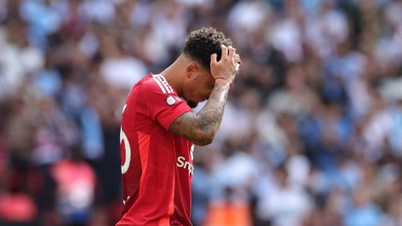
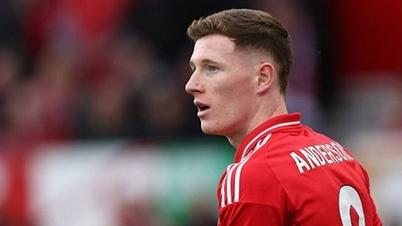
| Anthony Gordon performed poorly in both of England's matches at the 2026 World Cup . |
Why did Tuchel have to field Noni Madueke out of position on the left wing, only to later bring in Marcus Rashford to replace him due to the latter's ineffective performance, instead of directly replacing Anthony Gordon with Marcus Rashford? That's certainly something difficult to explain.
Despite some sensible changes, Thomas Tuchel's cumbersome substitutions and personnel arrangements were readily apparent. These inexplicable changes were the main reason England were held to a draw by Ghana, forcing them to wait until the final matchday to determine their qualification and Group L standings.
It's difficult to say that Thomas Tuchel is "holding back" or experimenting, because this is the World Cup, where mistakes can be very costly. Unreasonable decisions that put England in a precarious position in the final group stage match, potentially affecting their ranking and ultimately their opponents in the knockout rounds, will certainly be unforgivable. England needs to win against Panama in their final Group L match, and Thomas Tuchel must ensure that similar mistakes and questionable decisions don't happen again.

CAO DUY
Source: https://baokhanhhoa.vn/the-thao/the-thao-quoc-te/202606/kho-hieu-voi-tuchel-37c61bc/

![[Photo] General Secretary and President To Lam receives Palestinian Ambassador Saadi Salama](https://vphoto.vietnam.vn/thumb/1200x675/vietnam/resource/IMAGE/2026/06/25/1782365384740_a1-bnd-9423-8322-jpg.webp)
![[Image] Ho Chi Minh City: Ma Lang area, Chicken-Rice Market about to change its appearance](https://vphoto.vietnam.vn/thumb/1200x675/vietnam/resource/IMAGE/2026/06/25/1782377698627_ndo_br_m1-jpg.webp)

![[Image] Schools organize meetings and introduce teaching models to students admitted to grade 10.](https://vphoto.vietnam.vn/thumb/1200x675/vietnam/resource/IMAGE/2026/06/25/1782368077271_ndo_br_z7970052192242-1ec8daeb77a6eed1a4e9f58c564ddd3e-jpg.webp)