

Deposit and lending interest rates are not yet in sync.
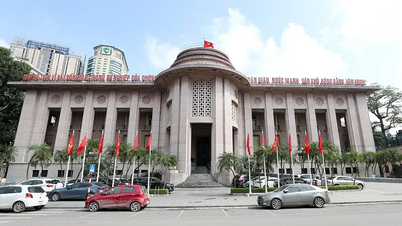
Following the meeting between the State Bank of Vietnam (SBV) and banks on April 9th, more than 30 banks have simultaneously reduced deposit interest rates, with common reductions ranging from 0.1% to 0.5% per year. During this round of interest rate cuts, some banks, such as Agribank and SeABank, have reduced rates twice.
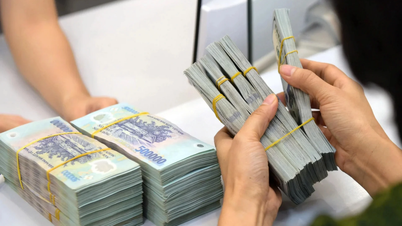
For terms under 6 months, most savings interest rates are capped at 4.75%/year. For terms of 6 months or more, interest rates remain quite competitive, commonly ranging from 5.3% to 6.8%/year. Some banks offer high rates above 8%/year, such as Cake by VPBank, which applies 8.5%/year for new customers depositing 100 million VND or more. Bac A Bank offers a 6-month term at 7.05%/year; VCBNeo offers 7%/year for online deposits; PGBank offers 6.9%/year… For terms of 12 months or more, deposit interest rates at banks range from 6.7% to 7.2%/year. Some banks mobilize large amounts of money with exceptionally high interest rates, such as PVCombank, which applies 10%/year for exceptionally large deposits. Cake by VPBank offers an interest rate of 8.7% per year.

Interest rate pressure remains high.
PHOTO: NGOC THANG
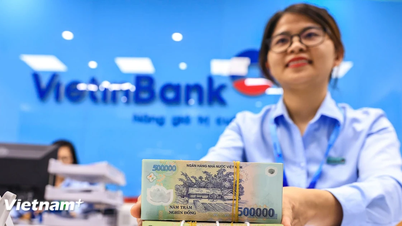
Meanwhile, lending interest rates remain unchanged. The average lending interest rate for Vietnamese Dong in March for state-owned and joint-stock commercial banks, for both new and existing loans with outstanding balances, was 7.4 - 9.7% per year. For customers borrowing to purchase real estate, interest rates of 12 - 14% per year persisted. If calculated individually for each customer, interest rates increased by approximately 1% compared to the early months of the year. Meanwhile, lending interest rates for USD loans, for both new and existing loans, remained at 4 - 5.3% per year.
KB Securities Vietnam (KBSV) believes that in the short term, the downward trend in interest rates remains unclear as liquidity stress issues are expected to continue in the second quarter. Furthermore, the net loan-to-deposit ratio (LDR) of banks remains high, nearly reaching the 85% ceiling set by Circular 22. The tendency to hold and trade cash in anticipation of tax policy changes continues to make fundraising difficult for banks. In addition, the lack of significant breakthroughs in public investment disbursement this quarter will likely lead to a continued budget surplus for the Treasury. Both of these factors will narrow the flow of funds back into the banking system. Moreover, the complex developments in the Middle East are creating double pressure on inflation and exchange rates, leaving the State Bank of Vietnam with limited room to provide liquidity support to the system.
According to data from the State Bank of Vietnam, as of the end of Q1 2026, credit growth had far exceeded deposit growth, with an increase of 3.18% compared to only about 0.55% for deposits. This significant difference reflects the continued liquidity pressure, forcing banks to maintain sufficiently attractive deposit interest rates to ensure funding. Furthermore, the recently published deposit and lending figures of banks show approximately equal amounts, indicating high capital pressure. For example, Vietcombank's lending in 2025 was nearly 1.7 trillion VND, while its deposits were also approximately 1.7 trillion VND.
Similarly, Vietcombank Securities Company predicts that in the second quarter, system liquidity is expected to continue to face pressure amidst a sharp increase in disbursement demand. The direction of lowering deposit interest rates may slow down the improvement of input capital at some banks, especially small and medium-sized banks or those with high credit growth. In addition, the volume of open market operations (OMO) maturing in April remains large. Therefore, liquidity is expected to be less abundant, and deposit interest rates will continue to remain relatively high in the coming period, especially for medium and long-term maturities.
Will interest rates decrease in the last two quarters of the year?
Interest rates were one of the issues raised by bank shareholders at recent general meetings. Mr. Nguyen Duc Vinh, General Director of VPBank, explained: Liquidity in the first quarter was relatively tight, leading to an upward trend in deposit interest rates at most banks. Currently, deposit interest rates are at their highest level in three years across all maturities. However, this trend will only remain high for a short time and will gradually decrease towards the end of the second quarter and the beginning of the third quarter. According to Mr. Nguyen Duc Vinh, the recent meeting between the new Governor of the State Bank of Vietnam and banks demonstrated a strong determination to control interest rates. Therefore, banks will maintain interest rates at a stable level, then reduce them, and eventually lower lending rates to support the economy.
Mr. Le Thanh Tung, a member of the Board of Directors of VietinBank, also acknowledged that interest rates have risen rapidly and remained high recently, mainly reflecting the system's liquidity balancing needs and increased competition, putting pressure on the cost of capital mobilization for banks. Interest rate trends depend on many domestic and global factors, especially the developments in the Middle East. In the baseline scenario, VietinBank believes that the cost of capital may remain high in the short term, but the rate of increase will slow down and gradually stabilize as market liquidity conditions become more favorable. However, if the oil price shock persists and the USD continues to strengthen, the pressure for rising interest rates could continue into 2026.
"Current system liquidity reflects the pressure caused by credit growth outpacing capital growth. To strike a harmonious balance between growth targets and macroeconomic stability, the State Bank of Vietnam (SBV) has flexibly implemented solutions to maintain system liquidity stability and interest rate stability. However, complex developments in the international market have created significant pressure on the SBV's monetary policy," Mr. Tung analyzed. According to VietinBank's assessment, the SBV will implement a comprehensive set of solutions to support system liquidity through operational tools such as exchange rates, interest rates, open market operations (OMO), refinancing, and credit limits. Banks also recommend considering loosening the method of calculating deposits at the State Treasury to reduce pressure on the Loan-to-Deposit Ratio (LDR). At the same time, the SBV will coordinate fiscal and monetary policies effectively.
KBSV expects a clearer downward trend in interest rates, with an average reduction of about 0.5-1% per year in the last two quarters of 2026, thanks to abundant capital from strong disbursement of public investment funds into the banking system; the easing of conflict in Iran, relieving inflationary and exchange rate pressures, thereby giving the State Bank of Vietnam room to support liquidity for the banking system; and many new policies will be introduced in the second half of the year by the Government and the State Bank of Vietnam to strive to achieve the 10% GDP growth target, including lowering interest rates. "Entering the second half of 2026, lending interest rates will show a clearer downward trend, similar to the decrease in deposit interest rates, in order to support economic growth. The downward trend in this period is likely to remain selective, prioritizing key sectors such as exports and industrial production," KBSV predicts.
Source: https://thanhnien.vn/khoang-trong-lai-suat-bao-gio-lap-day-185260426213351671.htm
































































































Comment (0)