


Lang Son is home to many ethnic groups, including seven main ones: Tay, Nung, Kinh, Dao, Hoa, San Chay, and Hmong. Over hundreds of years of history, these ethnic groups have created a unique, rich, and distinctive cultural landscape. From language, clothing, and cuisine to customs, traditions, and folk beliefs, everything blends together to create a unique "cultural tapestry" that is both diverse and unified within the overall Vietnamese culture.
A treasure trove of diverse heritage
Currently, the province has 420 historical and cultural relics and scenic spots that have been classified and inventoried; 280 traditional festivals and professional festivals, along with many unique forms of folk songs and dances such as: then, sli, luon, pao dung, lion dance, etc. Regarding intangible heritage, the province has 10 heritages inscribed on the national list of intangible cultural heritage and 2 intangible cultural heritages representing humanity: the then practice of the Tay and Nung people and the Tam Phu Mother Goddess worship of the Vietnamese people.
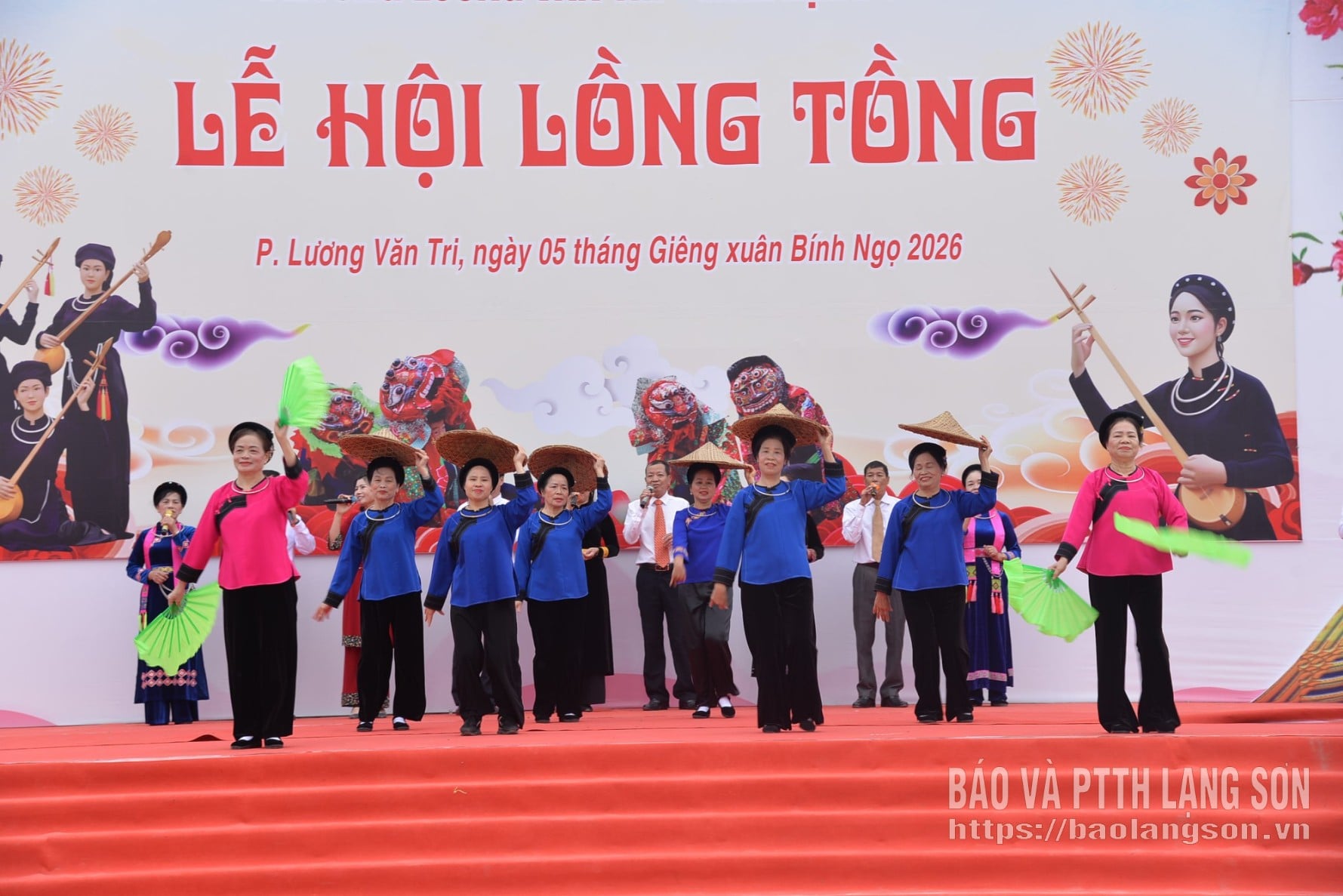
Dr. Hoang Van Pao, Chairman of the Provincial Cultural Heritage Association, stated: "Lang Son can be said to be a land rich in cultural heritage. While the Tay and Nung people are famous for their sweet then, sli, and luon melodies; the Dao people for their sacred initiation rituals and traditional Pao Dung dance; and the Hmong people for their smooth tu si na mieo singing… all contribute to the diverse cultural treasure of Lang Son. These values not only reflect the rich spiritual life of the community but also demonstrate precious folk knowledge accumulated over many generations."
The preservation, promotion, and exploitation of the cultural values of ethnic groups in the province have created unique tourism products, bringing direct income to the people, such as: festival tourism; community-based cultural tourism in the communes of Huu Lien, Bac Son, Vu Lang, Mong An, etc.
In Lan Chau village, Huu Lien commune, the traditional herbal medicine knowledge of the Dao ethnic group has become a health tourism product. Through guidance and infrastructure support from the commune government, households like that of Ms. Nguyen Thi Huyen have invested in herbal bath and foot soak services, serving an average of 30-40 customers per month, generating nearly 20 million VND in income.
“Lang Son is a land rich in cultural heritage. While the Tay and Nung people are famous for their sweet then, sli, and luon melodies; the Dao people for their sacred initiation rituals and traditional Pao Dung dance; and the Hmong people for their smooth tu si na mieo singing… all contribute to the diverse cultural treasure of Lang Son. These values not only reflect the rich spiritual life of the community but also demonstrate precious folk knowledge accumulated over many generations.” Dr. Hoang Van Pao, Chairman of the Provincial Cultural Heritage Association |
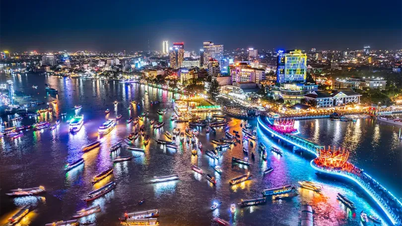
In urban areas, performances of Then and Sli folk songs, and lion dances in the Ky Lua pedestrian street have become a highlight attracting tourists, creating opportunities for artisans to showcase and promote their ethnic identity. This is also an occasion for folk artists to perform and show off the unique cultural identity of their ethnic groups. Ms. Vu Huong Giang, a tourist from Hai Phong, said: "Seeing the women in traditional costumes singing Then and Sli songs… and enjoying the local specialties made me feel very happy. Now, traveling to Lang Son is very convenient, so whenever I have free time, I bring my whole family here to visit."
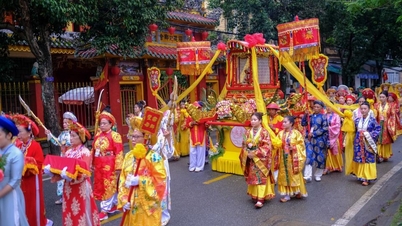
It can be affirmed that the traditional culture of ethnic minorities is a valuable resource for building sustainable tourism products that are deeply rooted in local traditions and have a strong ripple effect. A prime example is the Ky Cung – Ta Phu festival, which attracts approximately 1.5 million visitors thanks to its unique community activities and performances of traditional folk art from various ethnic groups.
The unique and enduring local cultural colors have become a powerful endogenous resource, enabling the province's tourism industry to achieve breakthrough results in the first few months of 2026. In the first three months of 2026, Lang Son is expected to welcome over 2 million visitors (a 10.5% increase compared to the same period in 2025), with total tourism revenue estimated at over 1,900 billion VND (a 21% increase compared to the same period in 2025).
Synchronized solution
To achieve these results, over the years Lang Son province has made many efforts to preserve and promote the cultural heritage of ethnic minorities in conjunction with economic and tourism development, ensuring a harmonious and reasonable balance between cultural heritage preservation and economic development requirements; creating momentum in the socio-economic development of the province.

Mr. Luu Ba Mac, Deputy Director of the Department of Culture, Sports and Tourism of the province, said: In recent years, the Department of Culture, Sports and Tourism has advised the Provincial People's Committee on developing programs, plans, projects and implementing activities to promote the value of cultural heritage. At the same time, it has guided localities to strengthen education and widely disseminate the content of legal documents such as: the Law on Vietnamese Cultural Heritage; the resolution on the preservation and promotion of cultural heritage of the province, and many other related documents to the community so that people understand their role and responsibility in the preservation of cultural heritage.
Accordingly, the Department of Culture, Sports and Tourism has actively advised the Provincial People's Committee to issue and implement many long-term plans and projects. Notable examples include Plan No. 117 on the implementation of the project "Preserving and promoting traditional costumes of ethnic minorities" with an estimated budget of 35.3 billion VND; the project "Preserving and promoting the value of the lion dance of the Tay and Nung ethnic groups in the period 2021 - 2030"; and Plan No. 42 on preserving folk songs and dances associated with tourism development with a total budget of over 80 billion VND.
In particular, Project 6 on “Preserving and promoting the fine traditional cultural values of ethnic minorities associated with tourism development” has created important resources for localities to implement activities supporting equipment, opening classes to teach embroidery, weaving, and singing skills to the younger generation. From 2020 to the present, the entire province has developed more than 450 cultural clubs with over 8,500 members, playing a core role in preserving heritage in the community.
In parallel, from 2020 to the present, the Department of Culture, Sports and Tourism has chaired and coordinated with the People's Committees of the former districts and cities, and communes and wards to organize training courses to disseminate and implement the Law on Cultural Heritage and related documents to thousands of people. In addition, relevant agencies have organized more than 20 workshops and training conferences on the management, protection, and promotion of the cultural heritage of ethnic groups in the province; and edited and published 5,000 news articles and reports on the preservation and promotion of the cultural heritage of ethnic groups.
The focus on preserving the cultural heritage of ethnic groups has significantly contributed to creating unique and distinctive tourism products, attracting visitors to Lang Son. This includes numerous cultural, sports, and tourism activities regularly organized annually throughout the province. From 2021 to the present, a series of major cultural and tourism events and festivals have been held, attracting a large number of tourists, such as: the Culture, Sports and Tourism Week, the Peach Blossom Festival, the Ky Cung - Ta Phu Temple Festival; the cultural festivals of ethnic groups in various communes and wards; the Bac Son Golden Harvest Festival, etc.
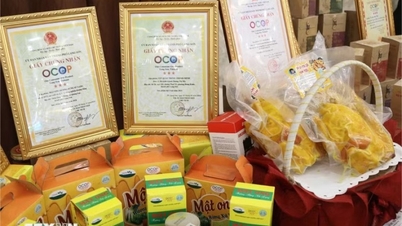
In each locality, depending on its unique cultural identity, models for preserving the cultural heritage of ethnic groups are being implemented in conjunction with tourism development and are proving effective. Ms. Hoang Thuy Ninh, Head of the Culture and Social Affairs Department of Ky Lua Ward, stated: “In our sustainable tourism development strategy, we identify the preservation and promotion of the cultural heritage of ethnic groups as the core foundation, with the people as the creative subjects. With the advantage of a large geographical area, the ward is implementing a plan to connect the bustling Ky Lua pedestrian street with long-standing traditional craft villages such as the Tham Chang and Bac Nga incense villages, and the Pho Ngau and Tan Lien dried bamboo villages. From the end of 2025, we have proactively coordinated with specialized agencies to develop a plan for recognizing craft villages associated with community-based ecotourism models. This is a way to awaken the hidden heritage values, transforming each citizen into a cultural ambassador, contributing to making ethnic identity an important socio-economic resource for the locality.”
Preserving and promoting the cultural heritage of ethnic groups is not only a responsibility to safeguard the past, but also the key to unlocking the future for tourism and the economy of Lang Son. With the coordinated efforts of the government and the dedication of each citizen – true "cultural ambassadors" – Lang Son's diverse heritage will continue to shine, becoming a powerful intrinsic resource for building a more prosperous, civilized, and distinctive homeland.
Source: https://baolangson.vn/khoi-nguon-van-hoa-cac-dan-toc-xu-lang-5087874.html

![[Photo] General Secretary and President visit the China-ASEAN AI Application Cooperation Center](https://vphoto.vietnam.vn/thumb/1200x675/vietnam/resource/IMAGE/2026/04/17/1776404277677_vna-potal-tong-bi-thu-chu-tich-nuoc-tham-trung-tam-hop-tac-ung-dung-ai-trung-quoc-asean-8706616-2286-jpg.webp)










![[Photo] National Assembly Chairman Tran Thanh Man attends the policy seminar to promote Vietnam-Türkiye cooperation.](https://vphoto.vietnam.vn/thumb/1200x675/vietnam/resource/IMAGE/2026/04/16/1776351415367_vna-potal-chu-tich-quoc-hoi-tran-thanh-man-du-toa-dam-chinh-sach-thuc-day-hop-tac-viet-nam-tho-nhi-ky-8705791-jpg.webp)





































Comment (0)