

In a recent assessment report, the Vietnam Institute of Directors (VIOD) stated that, despite many improvements, the picture of corporate governance practices in Vietnam still has many ambiguities when compared to other ASEAN countries. In the most recent ASEAN Corporate Governance Scorecard (ACGS) assessment (2024), the ASEAN Capital Markets Forum (ACMF) noted that, among the 250 ASEAN companies nominated as ASEAN Assets, Vietnam had no listed companies on the list.
The above facts show that, in order to narrow the gap between regulation and enforcement, the improvement of the legal framework for corporate governance needs to be strongly promoted. Accordingly, regulatory agencies need to continue updating and supplementing regulations to ensure transparency, clarity, and conformity with international practices, including regulations on monitoring related-party transactions, business ethics rules, mechanisms for reporting violations, and standards for disclosing sustainable development information…
Furthermore, the Code of Corporate Governance Practices (currently being updated in 2025) needs to be considered for legal codification and enforcement under the "Compliance or Accountability" principle to encourage substantive, rather than merely formal, improvements.
In conjunction with these efforts, in applying international financial reporting standards, regulatory authorities can develop a clear implementation roadmap, combined with technical support to help businesses transition smoothly, reduce pressure on financial and human resources, and enhance transparency in accordance with global standards.
For businesses and their Boards of Directors, long-term sustainable governance goals need to be integrated into their core strategies. This means businesses need to cultivate a transparent and efficient mindset, integrate corporate governance and ESG (Environmental, Social, and Governance) into their business strategies; pay dividends on time and disclose all necessary documents at shareholder meetings; build a professional Investor Relations (IR) department; and develop a corporate governance ecosystem closely linked to risk management. Alongside this, it is necessary to establish regulations and procedures for assessing ESG risks from the Board of Directors down to the various departments, thereby ensuring transparency and accountability.
Therefore, to improve its corporate governance ranking, both Vietnamese regulatory bodies and businesses must make significant efforts and undertake many tasks. This is also a crucial condition for Vietnam to meet MSCI's requirements when evaluating its stock market upgrade to emerging market status. Vietnam is on a path to improving the quality of its corporate governance with the aspiration of becoming one of the top 5 countries with the best corporate governance systems in the ASEAN region. This is not only an important goal and strategy, but also a foundation for Vietnam to enhance its competitiveness, attract foreign investment, and build a positive image in the eyes of the international financial community.
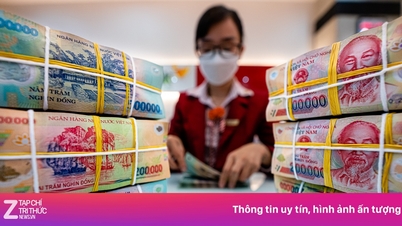
An upgraded stock market will be a huge opportunity for Vietnam to attract new, stable, and more sustainable capital. With sustainable capital, potentially reaching tens of billions of USD, investors are willing to invest more in businesses that practice transparent and efficient governance. While the number of businesses with exemplary corporate governance that meets the requirements of foreign investors on the stock market is still limited, only with a solid foundation of corporate governance can the Vietnamese market and businesses proactively enhance their competitiveness in attracting sustainable foreign investment.
Source: https://baodautu.vn/khoi-them-dong-von-ngoai-d450691.html

![[Video] Sunset at Lap An Lagoon – Where the sun sets over the fishing nets](https://vphoto.vietnam.vn/thumb/1200x675/vietnam/resource/IMAGE/2026/05/31/1780192137701_beach-landscape-sea-water-nature-grass-745871-pxhere-com.jpeg)
![[Image] A brilliant symphony and explosive power in the skies of Da Nang.](https://vphoto.vietnam.vn/thumb/1200x675/vietnam/resource/IMAGE/2026/05/31/1780193150738_anh-bia-copy-jpg.webp)



















![[Video] Sunset at Lap An Lagoon – Where the sun sets over the fishing nets](https://vphoto.vietnam.vn/thumb/800x450/vietnam/resource/IMAGE/2026/05/31/1780192137701_beach-landscape-sea-water-nature-grass-745871-pxhere-com.jpeg)










































![[Video] Sunset at Lap An Lagoon – Where the sun sets over the fishing nets](https://vphoto.vietnam.vn/thumb/402x226/vietnam/resource/IMAGE/2026/05/31/1780192137701_beach-landscape-sea-water-nature-grass-745871-pxhere-com.jpeg)


































Comment (0)