Learn from the West but understand our own people.
The era of integration has brought us many opportunities, but it has also created many challenges. In the increasingly deep interaction between cultures and between people, traditional cultural values and moral values have given rise to many issues that need to be addressed. The negative aspects of globalization, integration, and the market economy are having a detrimental impact on the culture, personality, and lifestyle of Vietnamese people, especially the younger generation, students, and schoolchildren.
With its role in training and shaping human character, the education sector is one of the leading sectors in this regard. In the current context of integration, the education sector has the task of training global citizens who are highly skilled in their fields and proficient in foreign languages, yet "integrate without being assimilated," in order to minimize the negative aspects of the integration process. The major task of the education sector is to develop character and ethics alongside the development of knowledge and expertise for the younger generation, students, and university graduates.
In that spirit, the curriculum is extremely important. According to Mr. Le Hoang Nam, representative of Dai Truong Phat Education Group: “The curricula and subjects in the education system in general, and foreign languages in particular, should not only provide knowledge but also contain many stories and lessons with educational value about Vietnamese traditional ethics and culture. This helps the younger generation to recognize and have a good and complete understanding of themselves, their country and people, the characteristics, differences and similarities between cultures… With such an educational program, students can use foreign languages to access and understand the characteristics of different peoples and cultures around the world , and they can also use foreign languages to describe Vietnam, its people and culture to friends from all over the world…”
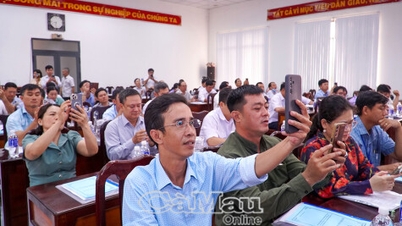
Recently, at the workshop "Receiving expert feedback on the i-Learn Smart World textbook series for secondary school," Associate Professor Dr. Nguyen Kim Hong (Ho Chi Minh City University of Education) stated: "A reality is that in Vietnam today there is no comprehensive English curriculum for English from primary school, junior high school to high school. Concerned about this, we have collaborated with Dai Truong Phat Education Joint Stock Company to compile the i-Learn Smart World textbook series..."
The i-Learn Smart World series is known to be a continuation of the achievements of the i-Learn Smart Start series. The compilation of the i-Learn Smart World series aims to ensure systematic content and materials during the transition between educational levels, adhering to the curriculum framework set by the education sector, meeting the output requirements of the Common European Framework of Reference for Languages and international examinations. Importantly, this series is specifically designed for Vietnamese teachers and students, using Vietnamese cultural elements as its foundation...



Towards an "open" educational approach.
In fact, many countries in the region have successfully focused on teaching English to students in a way that suits their age, psychological characteristics, and national culture. For example, Singapore, Malaysia, and the Philippines consider English as a second language alongside their mother tongue, making it compulsory in schools, and children learn English alongside their mother tongue from preschool. Children spend half their school time in English and the other half in their mother tongue.
The approach to second language development in preschool is either taught as a subject or integrated into diverse school activities. Children learn through play, developing language skills through singing, music, poetry reading, storytelling, games, and role-playing (often using storybooks, alphabet charts, and some software like Learning Media, Sunshine, Magic Box, etc.), with a relatively high amount of English learning time (3-5 hours per day). In addition, teachers regularly practice pronunciation with children and help them create learning corners in the classroom to support their second language development.
In Vietnam, with the goal of actively and comprehensively reforming foreign language teaching and learning in the national education system; implementing foreign language teaching and learning programs at all levels of general education; and with the desire to cooperate, invest, and contribute to the successful implementation of the Government's Foreign Language Teaching and Learning Project for the period 2008-2020, several educational enterprises have recently focused their resources on investing in the production of English teaching materials that are trusted and chosen by teachers, students, and parents.
Why are the aforementioned English language teaching curricula chosen by the education sector, parents, and students? The answer lies in the fact that the curriculum is well-suited to meet the criteria of the Ministry of Education and Training, facilitating teaching and learning for both teachers and students, and containing many lessons related to the moral values and traditional culture of the nation. From this program, cultural and historical values not only help students describe the culture, customs, and traditions of their country when interacting with international friends, but also create a solid cultural foundation for future generations. In addition, students also acquire a great deal of other knowledge through real-life communication situations conveyed through the lessons in the curriculum. This significantly improves students' learning effectiveness, combining theory with practice. This is the goal that educators aim for in training human resources to meet the demands of integration.
According to some experts, English programs, especially at the primary school level, do not need to rigidly adhere to a single textbook; teachers can choose from various textbooks based on a common curriculum framework. However, the inclusion of cultural education in English teaching programs needs to be selective and scientifically sound; otherwise, it will make the program too burdensome. According to Associate Professor Bui Manh Hung from Ho Chi Minh City University of Education: For primary school English textbooks, the integration of content reflecting Vietnamese culture into lessons must be carefully considered. If too much emphasis is placed on Vietnamese culture, it could inadvertently create gaps in the knowledge needed for international integration.
Educational programs and subjects in general, and foreign languages in particular, should not only provide knowledge but also incorporate stories and lessons that educate about Vietnamese moral values and traditional culture. This helps the younger generation to recognize and develop a good and comprehensive understanding of themselves, their country and people, the characteristics, differences, and similarities between cultures…
Mr. Le Hoang Nam - Representative of the Education Group

Dai Truong Phat
Source: http://laocai.edu.vn/chuyen-de-gddt/khong-chi-la-hoc-tieng-anh-274805





![[Image] Ho Chi Minh City: Ma Lang area, Chicken-Rice Market about to change its appearance](https://vphoto.vietnam.vn/thumb/1200x675/vietnam/resource/IMAGE/2026/06/25/1782377698627_ndo_br_m1-jpg.webp)



























![[Image] Schools organize meetings and introduce teaching models to students admitted to grade 10.](https://vphoto.vietnam.vn/thumb/1200x675/vietnam/resource/IMAGE/2026/06/25/1782368077271_ndo_br_z7970052192242-1ec8daeb77a6eed1a4e9f58c564ddd3e-jpg.webp)