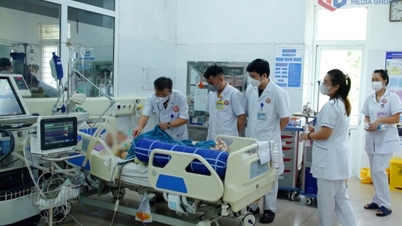
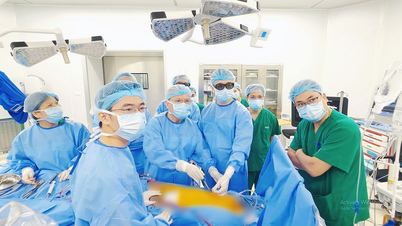
A seemingly insignificant episode of chest pain and shortness of breath plunged Mr. Hoang Van Kh. (73 years old, Hai Phong City) into a critical condition due to acute myocardial infarction. Upon arrival at the Vietnam-Sweden Uong Bi Hospital for emergency treatment, he was quickly examined and ordered a coronary angiography to assess the damage. Immediately upon reaching the intervention room, the patient suddenly lost consciousness and experienced cardiac arrest. The interventional cardiology team immediately performed resuscitation, external chest compressions, and then placed an emergency stent, restoring blood flow to the heart. Thanks to the prompt treatment, the patient overcame the critical condition, his health stabilized, and he was discharged from the hospital.
According to Dr. Hoang Minh Quang (Head of the Cardiology Department, Vietnam-Sweden Uong Bi Hospital), acute myocardial infarction is a particularly dangerous condition that can lead to cardiac arrest and sudden death if not detected and treated early. When symptoms such as chest pain, shortness of breath, sweating, and pain radiating to the left shoulder or arm appear, people should quickly go to a medical facility for timely emergency treatment.

Complications from poorly controlled underlying conditions are not only affecting the elderly but are also increasingly appearing in younger people. Ms. N. (35 years old, Quang Yen ward) suddenly experienced symptoms of facial asymmetry, difficulty speaking, and weakness on one side of her body, and was diagnosed with acute ischemic stroke. A CT scan did not reveal any brain hemorrhage, and the patient was quickly prescribed thrombolytic therapy within the "golden hour." After treatment, her weakness and paralysis improved significantly, and her mobility and communication abilities gradually recovered.

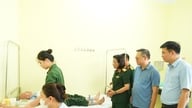

Medical history revealed that Ms. N. had a history of hypertension but did not take her medication regularly, being complacent because she thought she was still young. According to doctors, uncontrolled hypertension can silently damage blood vessel walls, increasing the risk of blood clots leading to stroke. Worryingly, stroke is no longer a disease only affecting the elderly, but is trending towards younger people with risk factors such as hypertension, prolonged stress, lack of exercise, smoking, or unhealthy lifestyles.

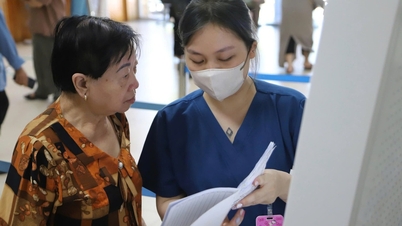
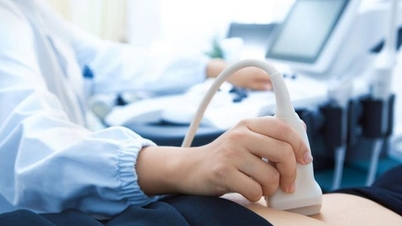
In addition, other chronic diseases such as diabetes, chronic obstructive pulmonary disease, asthma, chronic kidney disease, etc., are also placing an increasing burden on public health care. Many people only discover their illnesses when they go for a check-up due to prolonged fatigue, shortness of breath, chest pain, high blood sugar, or complications. Meanwhile, if they had regular health check-ups, monitored basic indicators, and adjusted their lifestyles early on, many risks could be better controlled.
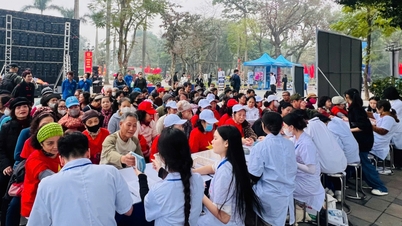
Along with improving emergency care and specialized treatment capabilities at provincial-level hospitals, the Quang Ninh Health Department regularly maintains screening, early detection, and management of non-communicable diseases at the grassroots level. For many years, the entire sector has implemented screening and management of hypertension and diabetes; and screening for breast and cervical cancer risk. Currently, the health sector is managing and treating approximately 75,000 people with hypertension and over 26,000 people with diabetes; while also maintaining screening for breast and cervical cancer risk, providing counseling and follow-up, and referring high-risk cases for further examination.
Notably, in 2026, Quang Ninh province will implement a plan for free periodic health check-ups and screenings for its residents. According to the plan, the province expects to provide check-ups for over 1.4 million people, prioritizing high-risk groups, the elderly, those with chronic diseases, workers, students, residents in remote areas, border regions, islands, and those eligible for social welfare programs. Through these check-ups and screenings, the health sector aims to detect diseases early, manage non-communicable diseases, occupational diseases, infectious diseases, and health risk factors to facilitate timely prevention and treatment.



The plan also aims for 100% of communes, wards, and special zones to organize regular health check-ups or screenings for residents; the results of the check-ups will be updated in the electronic health record, linked with the medical data system, and integrated into the VNeID application.
Source: https://baoquangninh.vn/kiem-soat-benh-tu-som-3410763.html


![[Photo] General Secretary and President To Lam receives Palestinian Ambassador Saadi Salama](https://vphoto.vietnam.vn/thumb/1200x675/vietnam/resource/IMAGE/2026/06/25/1782365384740_a1-bnd-9423-8322-jpg.webp)

![[Photo] General Secretary and President To Lam attends the 13th National Congress of the Ho Chi Minh Communist Youth Union](https://vphoto.vietnam.vn/thumb/1200x675/vietnam/resource/IMAGE/2026/06/25/1782356968989_ndo_br_1-jpg.webp)
![[Image] Schools organize meetings and introduce teaching models to students admitted to grade 10.](https://vphoto.vietnam.vn/thumb/1200x675/vietnam/resource/IMAGE/2026/06/25/1782368077271_ndo_br_z7970052192242-1ec8daeb77a6eed1a4e9f58c564ddd3e-jpg.webp)