Government Decree No. 207/2026/ND-CP, which details some provisions of the Construction Law on quality management, construction execution, and maintenance of construction works, has added more administrative procedures in construction project management.
A key highlight is the clarification of responsibilities for each entity involved in construction activities. The investor, design firm, construction contractor, supervision consultant, and operation management unit all have their respective roles and obligations defined at each stage. This is a crucial basis for limiting the shifting of responsibility when violations or construction incidents occur.
The decree also emphasizes the role of quality management. Construction documents, inspection results, monitoring, specialized testing, and acceptance documents are no longer merely procedural but become legal grounds for determining the quality of the project and the responsibilities of the parties involved. In the event of disputes or incidents, these will be important sources of evidence for inspection, investigation, and accountability.
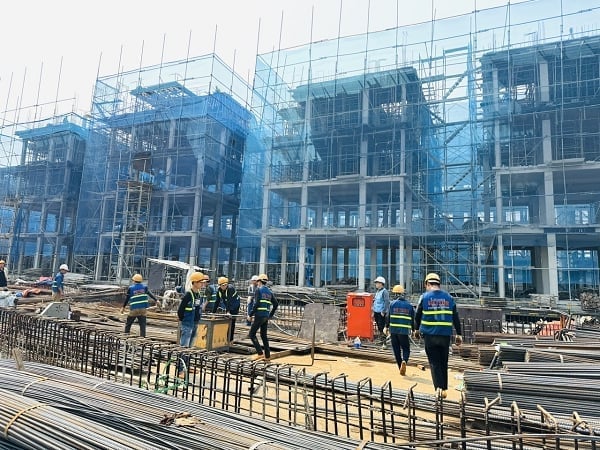
Construction records will be digitized for management purposes. (Illustrative image )


![[Infographics] Speech by General Secretary and President To Lam at the 13th National Congress of the Vietnam Youth Union](https://vphoto.vietnam.vn/thumb/192x108/vietnam/resource/IMAGE/2026/06/26/1782479426890_z7979437862237-1bf56c4cbf6df458db0e036ed1285414-jpg.webp)
Notably, regulations related to the assessment of structural safety and the handling of structures showing signs of safety issues are placed within a unified management framework. This reflects a shift in focus from addressing consequences to preventing risks. Owners and managers of structures will have to pay more attention to monitoring the technical condition, conducting periodic inspections, and maintaining structures according to regulations.
For individual houses, the requirements for quality management and construction safety are also more emphasized. This is an area where there has long been a gap between legal regulations and practical implementation. Enhancing the responsibility of homeowners from the construction phase is expected to contribute to reducing safety risks in civil construction.
Another noteworthy point is the trend towards digitizing construction records. Electronic data management for completed project records, operation and maintenance documents not only improves management efficiency but also contributes to increased transparency and information accessibility throughout the project's operation.
According to the Vietnam Real Estate Association, Decree 207/2026/ND-CP marks a shift in the state's thinking on construction management, moving from an approach focused on the construction phase to managing the entire lifecycle of a project. This not only contributes to improving the quality and lifespan of constructions but also creates a clearer legal basis to protect the legitimate rights and interests of entities involved in construction activities as well as the community using the structures.
When the decree takes effect, investors, contractors, consultants, and project owners will need to review their management processes, record keeping, and maintenance and warranty obligations according to the new regulations. In the context of increasingly high demands for safety and accountability, full compliance with legal regulations will become crucial to minimizing risks and ensuring the sustainable development of construction activities.



On June 22, the Ministry of Construction issued Circular No. 32/2026/TT-BXD detailing some provisions of Decree No. 207/2026/ND-CP. The Circular takes effect from July 1, 2026.
Source: https://nongnghiepmoitruong.vn/kiem-soat-chat-che-hoat-dong-xay-dung-d794676.html