

The Ho Chi Minh City Real Estate Association (HoREA) has recently submitted a document to the Prime Minister and the State Bank of Vietnam, outlining eight major obstacles in the real estate market and proposing several solutions regarding credit.
The main obstacle is the procedural hurdle of approving investment policies, along with approving investors for all social housing projects and even commercial housing projects where the investor already has "land use rights".
The second obstacle is the regulation on residential land or residential and other land, which requires commercial housing project developers to "have the right to use residential land." This regulation has caused significant difficulties for hundreds of commercial housing projects because developers have already spent money to acquire land but cannot proceed with the project.
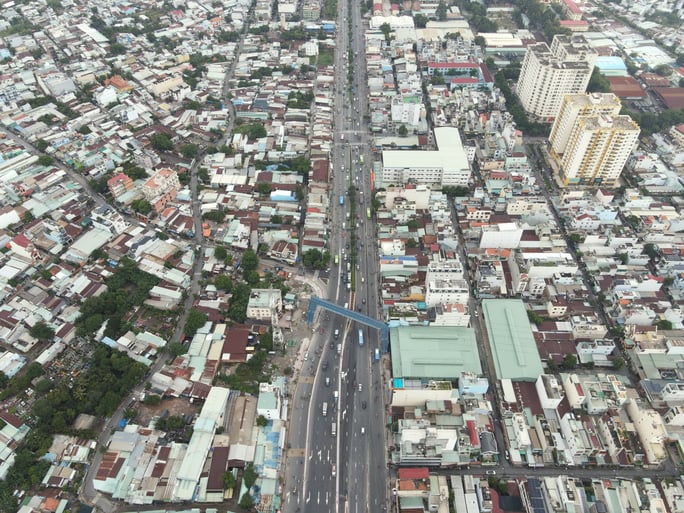
The real estate market in Ho Chi Minh City and across the country is awaiting the removal of obstacles to strongly recover.
Thirdly, the "adjustment of the 1/2000 scale zoning plan" is the responsibility of the competent state agency to provide a basis for businesses to develop detailed 1/500 scale plans for their investment projects.
The fourth obstacle is the specific land valuation procedure, land appraisal, and land price determination for calculating land use fees and land lease fees for real estate projects and commercial housing...
Fifth, the competent state agencies have been slow to issue regulations on handling the "land area managed by the State (public land) interspersed within commercial housing projects," resulting in many commercial housing projects being stalled for over six years due to procedures such as "approval of investment policy" or "specific land valuation, land appraisal, and land price determination" for calculating land use fees and land lease fees.
The sixth obstacle, Clause 2 of Article 49 of the 2014 Law on Real Estate Business, restricts the transfer of commercial housing projects or parts of projects by investors.
Regarding social housing policies, there are also obstacles related to creating land funds for social housing development; regulations requiring commercial housing project investors to allocate land for social housing construction are inadequate, unrealistic, or problematic due to procedural issues such as investment approval, "detailed planning approval at a scale of 1/500," or insufficient compensation and land clearance costs.
Finally, there is the issue of accessing incentive mechanisms for developers of social housing projects and buyers/renters of social housing...
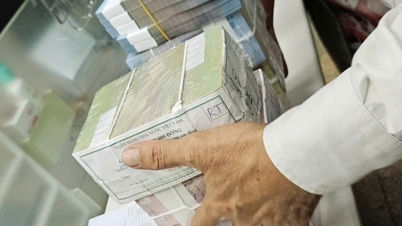
In addition to proposing that the Government and local ministries and agencies promptly resolve the aforementioned obstacles, HoREA recommends that the State Bank of Vietnam instruct commercial banks to accelerate the implementation of the 120,000 billion VND preferential loan program for the development of social housing, worker housing, and the renovation and reconstruction of old apartment buildings. At the same time, it suggests expanding the eligibility criteria for this 120,000 billion VND loan package to include developers and homebuyers in commercial housing projects with selling prices not exceeding 3 billion VND per unit, with priority given to first-time homebuyers.
Source: https://nld.com.vn/kinh-te/kien-nghi-mo-rong-doi-tuong-duoc-vay-goi-tin-dung-120000-ti-dong-20231118111335052.htm


























































































Comment (0)