

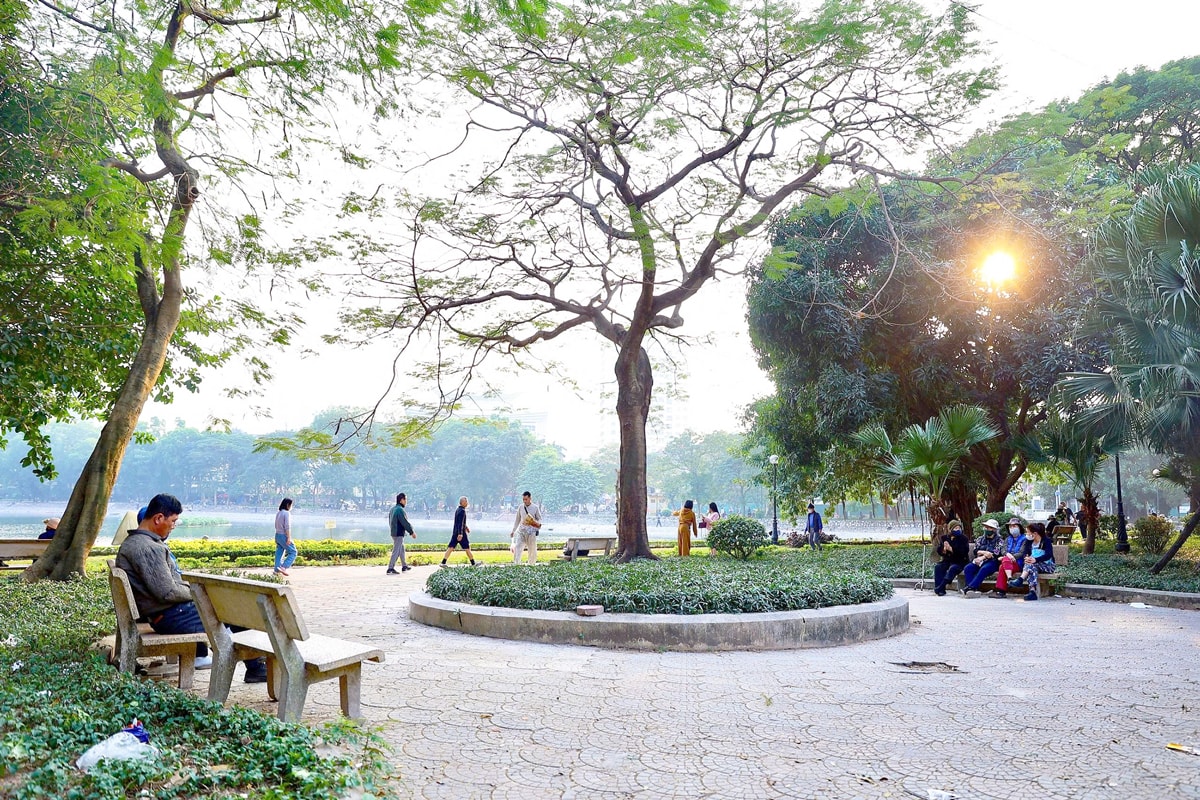
In implementing Resolution 02-NQ/TW on building and developing Hanoi in the new era, with the development orientation of Hanoi according to the criteria of "Culture - Civilization - Modernity - Happiness," the city is accelerating investment, renovation, and development of parks and gardens with a new planning mindset. Not only aiming to increase green space, the city also aims to create open, friendly, and distinctive public spaces, thereby improving urban quality and building Hanoi into an attractive destination and a desirable place to live for its people.
Expanding public spaces and improving the quality of urban life.
The rapid urbanization process over the past years has posed numerous challenges to the thousand-year-old capital city. The increasing population pressure is causing urban development space to become increasingly cramped. Hanoi not only lacks green spaces but also public areas for community interaction, playgrounds for children, and places for relaxation and exercise for the elderly.
Building upon the spirit of Resolution No. 15-NQ/TW of the Politburo on the direction and tasks for the development of Hanoi Capital City until 2030, with a vision to 2045, and Resolution No. 02-NQ/TW on building and developing Hanoi Capital City in the new era, the city is gradually realizing the development goals of "Culture - Civilization - Modernity - Happiness," "putting people at the center, subject, goal, and driving force of development," and "prioritizing space for public areas and green spaces"... Based on this orientation, the recent renovation and upgrading of the city's park and garden system is not simply about beautifying the landscape but also demonstrates a shift in urban development thinking.
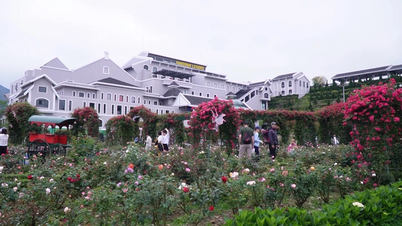
Many parks and gardens, after renovation, are gradually becoming true community spaces. Lighting systems, walking paths, benches, trees, lawns, children's playgrounds, and outdoor sports areas are being invested in comprehensively, creating open, friendly, and accessible green spaces for all ages. Yen So Park, Thu Le Park, Thong Nhat Park, West Lake Water Park, Bao Son Paradise... and many other green spaces have become familiar destinations for locals and tourists.
With a decisive and coordinated approach, Hanoi will continue to complete the renovation of 16 parks and gardens in 2025 alone. Among them, Dien Hong Garden – a public space deeply rooted in Hanoi's history – has been given a new look with a more open space and a well-maintained system of trees. Not only does it create a focal point for the city, but it has also become a highly attractive stop for residents and tourists.
Not far away, Ly Thai To flower garden continues to play its role as a cultural space in the heart of the capital, where cultural and artistic activities and community connections frequently take place. Meanwhile, flower gardens such as Bac Co, Co Tan, or the Thien Quang lake area are becoming valuable "breathing spaces" in the heart of the city.
In particular, the recent policy of removing fences from city parks demonstrates a people-centered approach to urban development, expanding public spaces and improving connectivity to better serve the community. From this perspective, parks are not only "green lungs" but also become places for fostering spiritual well-being, contributing to the creation of a livable and happy city.
Every morning and evening, thousands of people come to Thong Nhat Park to walk, exercise, cycle, and participate in cultural and sports clubs. Ms. Nguyen Thi Hoa (60 years old, Hai Ba Trung ward) shared: “After the park was renovated, the space is much cleaner and more beautiful. People have more exercise areas, wider walking paths, and better-cared-for trees. We feel that our spiritual lives have improved significantly.”
According to Ms. Do Phuong Nga, Vice Chairwoman of the People's Committee of Hai Ba Trung Ward, during the renovation of Thong Nhat Park, the local authorities identified the goal not only as beautifying the landscape but also as improving services for the people. All investment items were calculated based on actual needs, from benches, children's playgrounds, outdoor sports areas to lighting systems and environmental sanitation. "The park must be a place where people feel comfortable, safe, and welcomed. That is the measure of investment effectiveness," Ms. Do Phuong Nga emphasized.
Similarly, Cau Giay Park, with its spacious grounds and numerous outdoor exercise areas, has become a familiar destination for many young families. Mr. Nguyen Van Thang, a resident of Cau Giay ward, believes that parks and gardens are contributing to changing the living habits of urban residents. “Previously, children mainly stayed indoors or played in the streets, which was very dangerous. Now, with more green, clean, and beautiful spaces, families have the means to take their children outside to exercise and interact with nature more,” Mr. Thang shared.
The "happiness infrastructure" of the city
Affirming that Hanoi is making positive strides in urban development thinking, Associate Professor Dr. Nguyen Hong Tien, former Director of the Department of Technical Infrastructure (Ministry of Construction), commented: “While previously urban areas primarily prioritized technical infrastructure, the city now pays more attention to public spaces and the quality of life for its residents. Parks and gardens, after renovation, are playing the role of ‘happiness infrastructure’ for the city.”
According to Associate Professor Dr. Nguyen Hong Tien, a modern city is not only measured by its high-rise buildings or economic growth rate, but also by its ability to provide relaxation, satisfaction, and a sense of community for its residents. Developing green spaces, parks, and gardens not only contributes to improving the living environment but also helps shape the urban identity. However, to achieve this, Hanoi needs to ensure sufficient land is allocated for green spaces, preventing encroachment for other purposes.
Sharing the same view, Dr. Dao Ngoc Nghiem, Vice President of the Vietnam Urban Planning and Development Association, believes that Hanoi possesses a very unique system of rivers and lakes. If properly exploited and combined with green space planning and lakeside parks, it will create unique public spaces, contributing to enhancing the landscape value and improving the urban climate. In the process of urban development, Hanoi also needs to focus on connecting green spaces with the transportation system, cultural spaces, and historical relics to form a synchronized green network.
Today, green spaces are no longer merely an "auxiliary element" in urban planning but are becoming a crucial component of sustainable development. From small gardens in residential areas to large-scale parks, they all carry the mission of improving the quality of life and nurturing the spiritual well-being of the community. Hanoi's efforts in planning, renovating, and expanding its system of parks and gardens over the past years, along with the consensus of its citizens, are evidence of its determination to build a civilized, green, and sustainable city.
However, for each park and garden to truly become a highlight of a green urban environment and an attractive destination in a happy city, Hanoi still has much work to do. According to urban planning, architecture, and management experts, in the coming time, the city needs to continue promoting the renovation of parks and gardens in an open manner, increasing accessibility for citizens, while adding amenities to serve the community. This will gradually form a network of modern, humane, and highly connected green spaces.
In fact, parks and gardens not only create urban landscapes but also serve as places for interaction and connection among residents, contributing to the formation of identity and nurturing the quality of life in the city. From these "green lungs," the aspiration for a happy Hanoi – where people live in a green, civilized, and culturally rich environment – is becoming increasingly evident in the heart of the capital today.
Source: https://hanoimoi.vn/kien-tao-khong-gian-cho-thanh-pho-hanh-phuc-867171.html


























































Comment (0)