

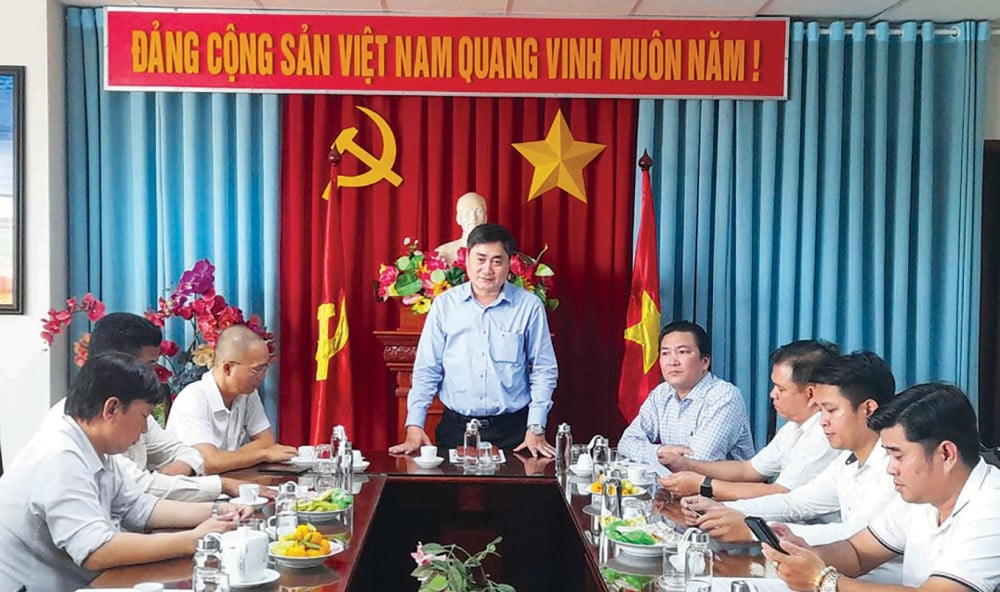
Deputy Editor-in-Chief of Long An Newspaper and Radio & Television Station, Chau Hong Kha, chaired a meeting with the Tan An City Young Entrepreneurs Association regarding coordination in propaganda efforts.
From challenging the mechanism of autonomy to the aspiration for breakthrough.
Having previously received state funding, in recent years, Long An Newspaper and Radio and Television Station have entered a phase of financial autonomy according to the general roadmap. The new mechanism empowers them with dynamism; at the same time, it also creates considerable pressure.
With rising operating costs, a significant decline in traditional revenue streams, particularly from print media, and competition from social media for television advertising, the economic challenges facing each media organization are no longer a matter of the future but a pressing issue today.
Currently, the unit's revenue mainly comes from propaganda activities, live television broadcasts, sponsorship contracts, advertising, infrastructure leasing, copyright sales, and print newspaper distribution, etc. Although the radio and television segment achieved revenue of approximately 45 billion VND in 2024 - a very encouraging figure - the print newspaper segment is facing many difficulties: circulation is stagnant, advertising is shrinking, while readers are increasingly shifting to digital platforms.
Newspaper economics: We can't wait.
We believe that if the mindset of relying solely on budget for journalistic work remains, without a focus on developing the economic viability of journalism, it will be difficult to survive in today's competitive environment. In short, the economics of journalism encompasses all activities that generate resources to sustain and develop a media organization. This includes not only money but also mechanisms, human resources, technology, and flexible, market-oriented operations while maintaining the political direction, principles, and objectives of the Party's media organization.
In reality, as print media shrinks and digital advertising becomes dominated by technology platforms, journalism will inevitably fall behind if it doesn't innovate its business thinking. Some content providers have excellent content but lack the resources to invest in technology and marketing, making it difficult to reach readers and markets.
It's time for journalism to be viewed as an economic sector: it has a product, a market, investment, and revenue. We call this "doing journalism as a specialized business."
Untangle the knot from the inside.
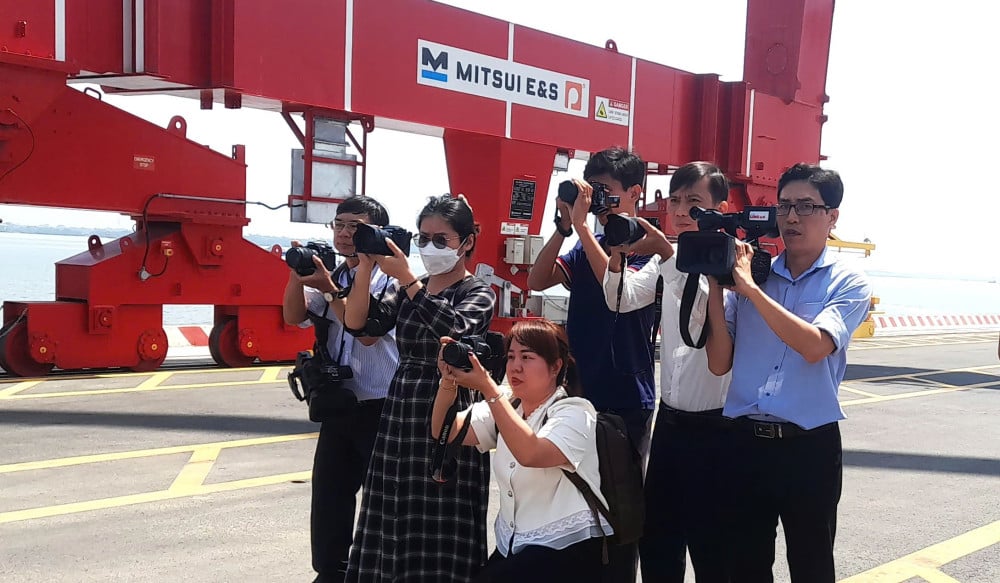
Reporters working in a digitized journalistic environment.
On its transformation journey, Long An Newspaper and Radio and Television Station began with the human element. A segment of the unit's journalists, reporters, and editors had not yet fully adapted to the digital media environment. The lack of skills in producing multi-platform content, storytelling through images and technology, along with the absence of a dedicated team for marketing and content business, were significant obstacles in the transformation process.
In terms of technology, the infrastructure still has many shortcomings: the converged electronic newsroom software is not yet synchronized (currently under investment), data analysis is limited, and the content distribution platform is still dependent on external sources. Furthermore, the organizational model after the merger is still "incomplete yet redundant," leading to delays in coordination and implementation of new ideas – digitizing publishing, broadcasting, and operational processes. It's also impossible to ignore the lingering "wait-and-see" mentality among some staff members – a challenge that any innovation must overcome.
Content as the foundation, creativity as the driving force.
In every genre of journalism, content remains the core. We believe that only high-quality, innovative, informative, impactful, relevant, and relevant content that truly addresses the needs of the people can retain the audience. Once we have good content, opportunities for advertising, revenue generation, or sponsorship become feasible.
Over the past period, the unit has organized many in-depth training courses for journalists, reporters, editors, and technicians, focusing on multimedia journalism skills, visual storytelling, social media usage, and digital content production thinking. The Editorial Board also encourages journalists and reporters to stay connected to reality, gather stories from the people, and serve the needs of local readers. We don't just do journalism to report news; journalism must also involve listening, sharing, and connecting – so that readers can see themselves in every news item, every film clip, and every story.
Connecting resources - Spreading value
In the development of a journalistic economic model, the collaboration of stakeholders is indispensable. First and foremost is the State, playing a crucial role in creating a favorable legal framework and policies to support the development and digital transformation of journalism. Next are technology companies and strategic partners providing infrastructure platforms and collaborating on content creation. And most importantly, loyal readers and information consumers are at the heart of all content innovation and business model development.
Only when the press creates genuine value for readers, convincing them to pay, will businesses be willing to sponsor it and a sustainable cash flow be established.
The future stems from our own inner strength.
Looking ahead, Long An Newspaper and Radio and Television Station are determined to continue promoting comprehensive digital transformation, from content production to operational models, from organization to tools. We will focus on in-depth content, multimedia products, new interactive platforms such as podcasts, short videos, personalized digital newsletters, content linked to reader data, connecting different types of media, etc., to better serve the public.
Our goal is to build a financially self-sufficient, professionally organized, technologically proactive, and creative journalistic model. Above all, we will uphold the identity of revolutionary journalism: the voice of the Party and government, and a "bridge" and forum for the people.
There is no fixed formula for the breakthrough of the economics of journalism, but one thing is certain: Journalism cannot continue to follow the old ways in a changed world. As technology changes and readers change, journalism must also change more dramatically, become more flexible, and be closer to the people.
Throughout the 100-year journey of Vietnamese revolutionary journalism, we are proud to be a small part of that great stream, striving every day to live up to the trust of the Party Committee, the government, and the people of Long An./.
Deputy Editor-in-Chief of Long An Newspaper and Radio and Television Station - Chau Hong Kha
Source: https://baolongan.vn/kinh-te-bao-chi-can-luc-day-de-but-pha-a197397.html


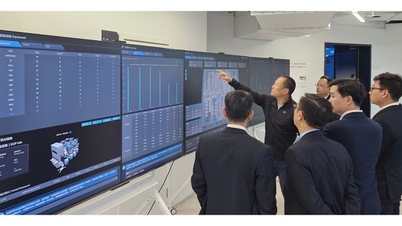
![[Photo] General Secretary and President visit the China-ASEAN AI Application Cooperation Center](https://vphoto.vietnam.vn/thumb/1200x675/vietnam/resource/IMAGE/2026/04/17/1776404277677_vna-potal-tong-bi-thu-chu-tich-nuoc-tham-trung-tam-hop-tac-ung-dung-ai-trung-quoc-asean-8706616-2286-jpg.webp)














![[E-Magazine]: Listening in silence to the changing seasons](https://vphoto.vietnam.vn/thumb/402x226/vietnam/resource/IMAGE/2026/04/17/1776436870717_e-magazine-lang-w1200t0-di2615d199d5160004t11920l1-lynkgm-017.webp)









![[Photo] National Assembly Chairman Tran Thanh Man attends the policy seminar to promote Vietnam-Türkiye cooperation.](https://vphoto.vietnam.vn/thumb/1200x675/vietnam/resource/IMAGE/2026/04/16/1776351415367_vna-potal-chu-tich-quoc-hoi-tran-thanh-man-du-toa-dam-chinh-sach-thuc-day-hop-tac-viet-nam-tho-nhi-ky-8705791-jpg.webp)


























































Comment (0)