|
The skies over Kyiv lit up at night amid a wave of Russian missile and drone strikes. Photo: Reuters . |
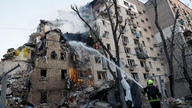
Just hours after Ukrainian President Volodymyr Zelensky warned that the Russian Federation was preparing to launch another large-scale attack on Ukraine, multiple waves of missile and drone strikes rained down on Kyiv on the night of July 1st and the early morning of July 2nd.
Kyiv Mayor Vitali Klitschko said it was “a terrible night for Kyiv” as “every district of the city was damaged,” describing it as the “largest-scale” attack on the Ukrainian capital since the conflict with the Russian Federation broke out in February 2022.
For its part, the Ukrainian air force said the Russian Federation launched 74 missiles and 496 long-range drones in the attack, mostly targeting Kyiv.
Air defense forces shot down or neutralized 48 missiles and 476 drones, but 25 ballistic missiles and 12 drones still struck 33 locations.
According to Ukrainian Air Force spokesman Yuriy Ignat, as many as 28 ballistic missiles were launched targeting Kyiv, a record high for a single attack on the capital.
By 7:00 a.m. local time on July 2, The Kyiv Independent reported that damage and destruction had been recorded at more than 30 locations across all districts of Kyiv.
In a related development, according to The Kyiv Post, during the Russian missile and drone attack on the night of July 1st and the early morning of July 2nd, nearly 52,500 people, including about 4,500 children, took refuge in Kyiv's subway stations.
This is the highest number of people using the subway system as a shelter since the Russia-Ukraine conflict broke out.
The Kyiv Post reported that the Kyiv metro system has 46 underground stations that are used as public shelters whenever there is an air raid warning.
All subway entrances were opened so people could disembark and take shelter, while subway staff continued to operate the system and assist thousands of people in finding safe places.
The Kyiv Metro Authority advises those planning to stay overnight in metro stations to arrive before the scheduled closing time, inform metro staff or police of their intention to stay overnight, and follow instructions regarding designated areas on the platform.
The Kyiv city authorities also recommended that people bring warm clothes, blankets, or sleeping mats, as temperatures inside the train stations usually only range from 17 to 18°C.
People are also encouraged to bring drinking water, essential medications, and personal hygiene items. Those traveling with pets are advised to bring disposable pet pads and waste bags.
Some subway stations in the city center are typically less crowded during air raid alerts, so they may offer more space for people to seek shelter when conditions permit.
Subway staff continued to maintain station operations throughout the night to ensure the system could resume normal service for passengers as soon as the air raid alert was lifted.
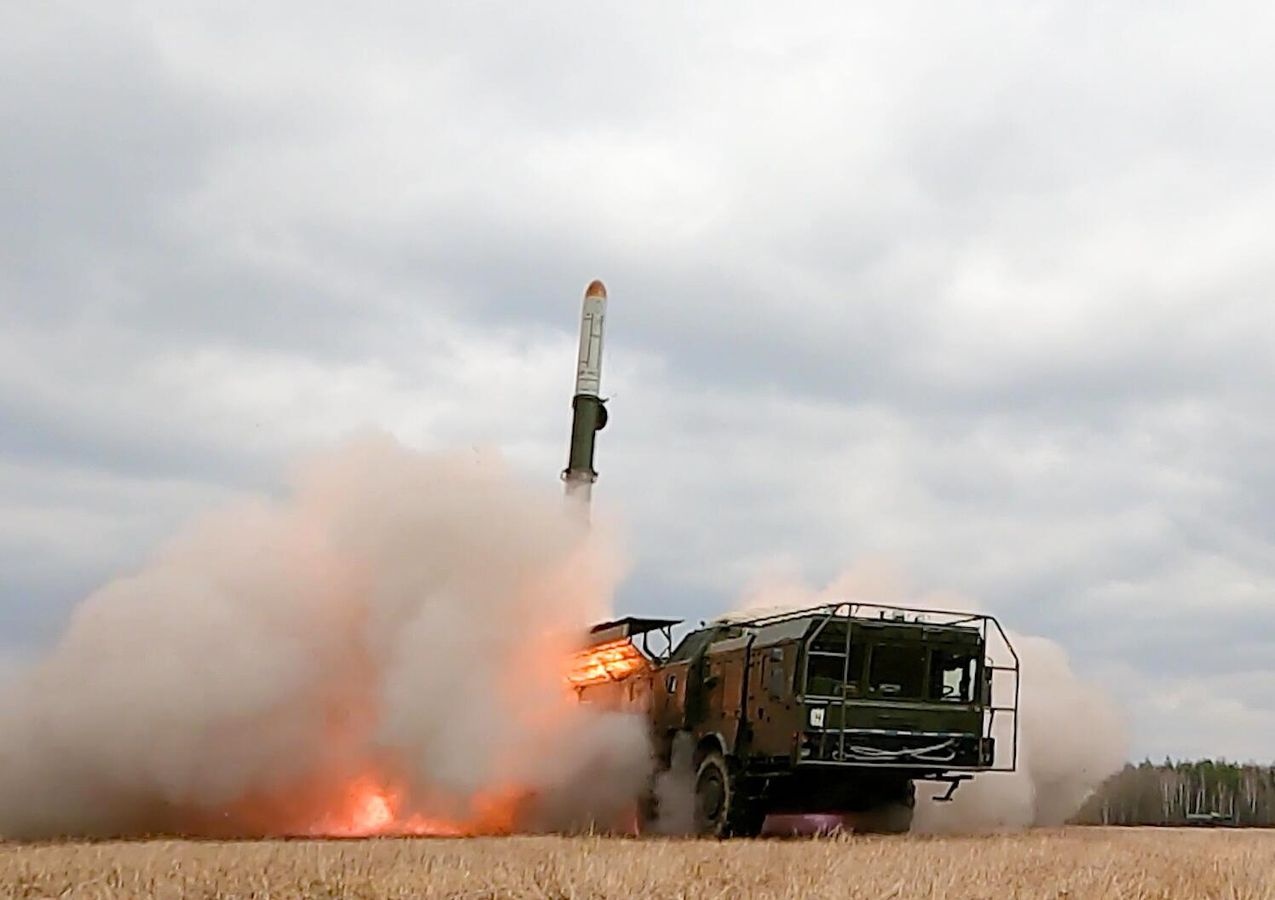
On the Russian side, on July 2nd, the Ministry of Defense announced that its forces had carried out a large-scale attack on numerous military and defense industry targets in Kyiv and the surrounding area, including a factory producing control systems for Flamingo and Fire Point missiles.



Sputnik , citing a statement from the Russian Ministry of Defense, reported that one of the targets attacked was the Radionix enterprise – a unit specializing in the production of components and assemblies in the field of radio electronics, and described as a key research and production facility for manufacturing control systems for the Flamingo long-range ground-launched cruise missile, as well as the Fire Point-7 and Fire Point-9 tactical missiles.
Additionally, the Russian Federation stated that the airstrikes also destroyed a fuel and lubricant depot used to supply diesel to Ukrainian troops stationed in Kyiv and enterprises belonging to the country's defense industrial complex.
According to the Russian Ministry of Defense, the attacks also targeted an assembly plant in Kyiv that supplies An-196 Liutii and Magura unmanned aerial vehicles (UAVs) to the Ukrainian army, as well as a facility for manufacturing and assembling missiles and components. This facility also handles the upgrading of targeting systems for armored vehicles and the production of components for UAVs.
The Russian Ministry of Defense added that gas distribution stations in Kyiv and the Kyiv region, which ensure the operation of enterprises belonging to Ukraine's defense industrial complex, were also among the targets attacked.
Source: https://znews.vn/kyiv-hung-dot-tan-cong-ten-lua-lon-nhat-tu-dau-xung-dot-post1665561.html