The goalkeeper from the stands.
In the eyes of many Democratic Republic of Congo fans, Michel Kuka Mboladinga is more than just a supporter. The 49-year-old is believed to have the ability to prevent his team from scoring through a bizarre ritual: standing motionless throughout the match.
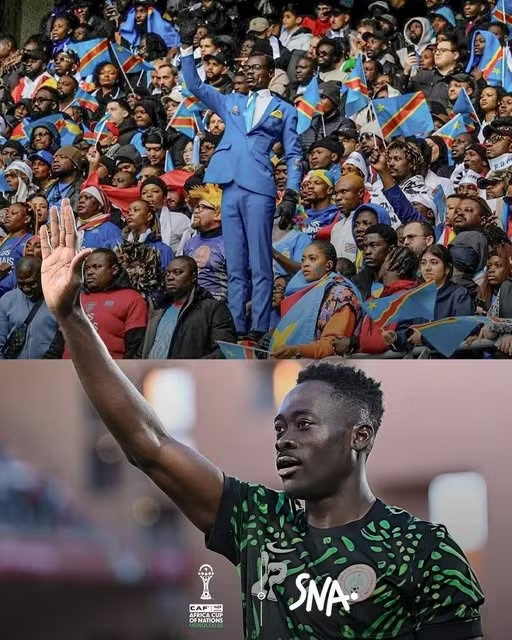
Whenever the national team takes to the field, Mboladinga appears in the stands in a neat suit, maintaining the same posture with his right arm raised and his gaze fixed on the pitch. For over 90 minutes, he barely moves.
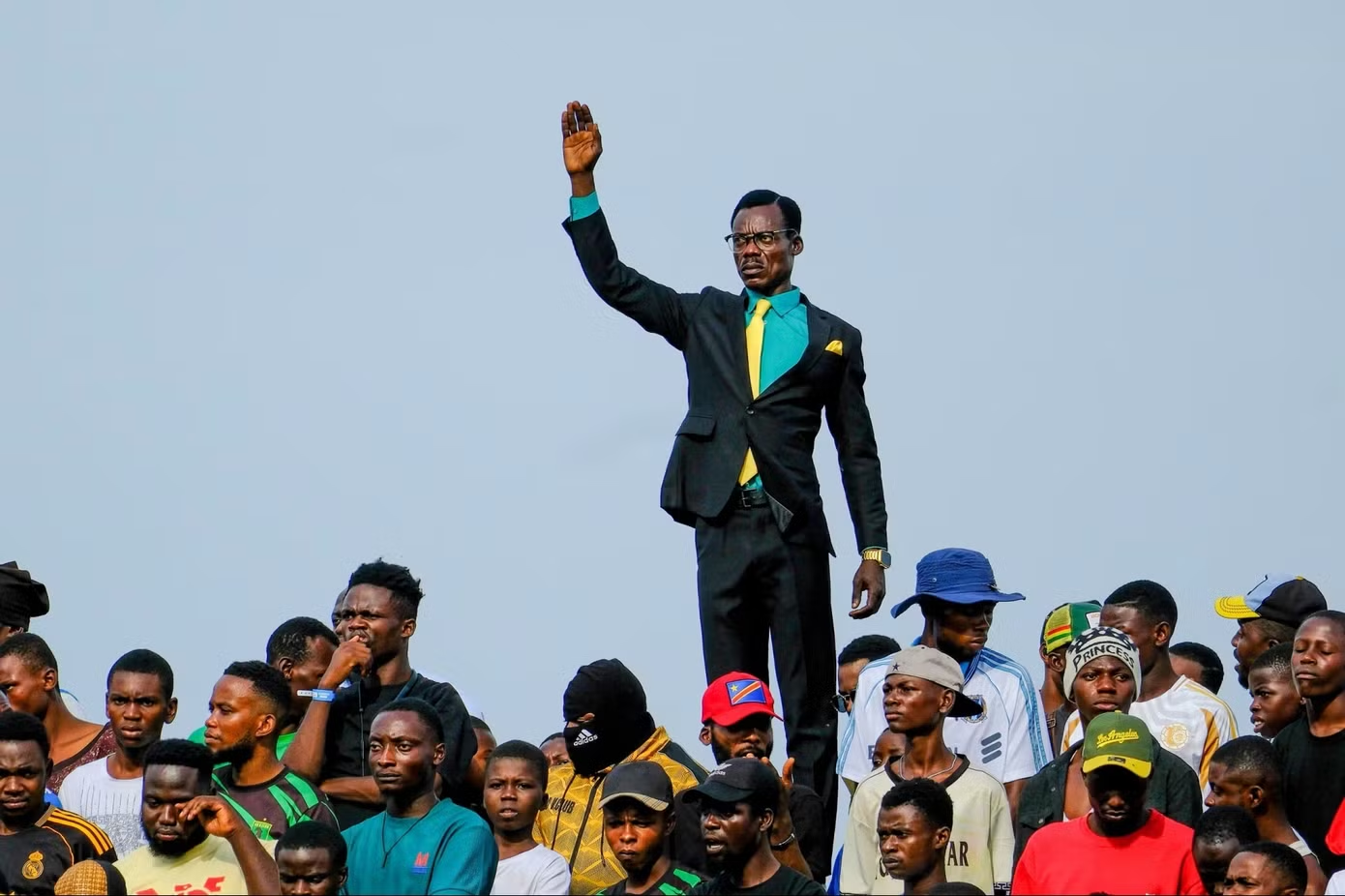
The ritual was no coincidence. Mboladinga performed the gesture mimicking the statue of Patrice Lumumba, the first prime minister of the Democratic Republic of Congo after it gained independence. Lumumba died in 1961 from assassination, but is still regarded by many Congolese as a symbol of patriotism and national struggle.
Therefore, Mboladinga is also known by the nickname "The Living Lumumba." Many people comment that he bears a striking resemblance to the late leader, from his hairstyle to his clothing style.
“I stood still because I believed it gave the team a mental boost,” Mboladinga told the Wall Street Journal. “Just as Lumumba sacrificed his life for his country, my small sacrifice was a way of showing my love for the team.”
Mboladinga's name truly exploded at the 2025 African Cup of Nations (AFCON) in Morocco. In every match for the Democratic Republic of Congo, the image of the man standing motionless amidst a sea of cheering fans constantly appeared on television and social media.
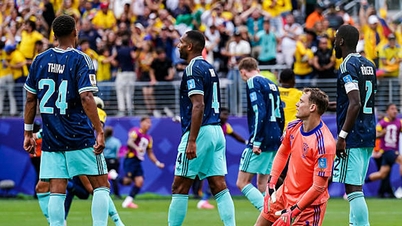
When his team was eliminated by Algeria after extra time, Mboladinga finally broke his usual pose. He burst into tears and fell into the arms of the surrounding fans. That moment quickly went viral on the internet.
Mboladinga must go to America, at all costs.
Mboladinga's popularity is so great that the national team players don't want to go to the 2026 World Cup without him in the stands. This has led to a remarkable story leading up to the tournament's start.
Amid the Ebola outbreak in eastern Democratic Republic of Congo, the United States implemented strict entry controls for its citizens. Players and coaching staff had to quarantine in Belgium before traveling to the US for the World Cup.
Meanwhile, thousands of Democratic Republic of Congo fans, despite having purchased tickets, were denied entry. Mboladinga faced a similar risk.
Not wanting to lose their "spiritual talisman," the players appealed to President Félix Tshisekedi to intervene. Ultimately, the Congolese leader decided to include Mboladinga in the official national delegation to the World Cup.
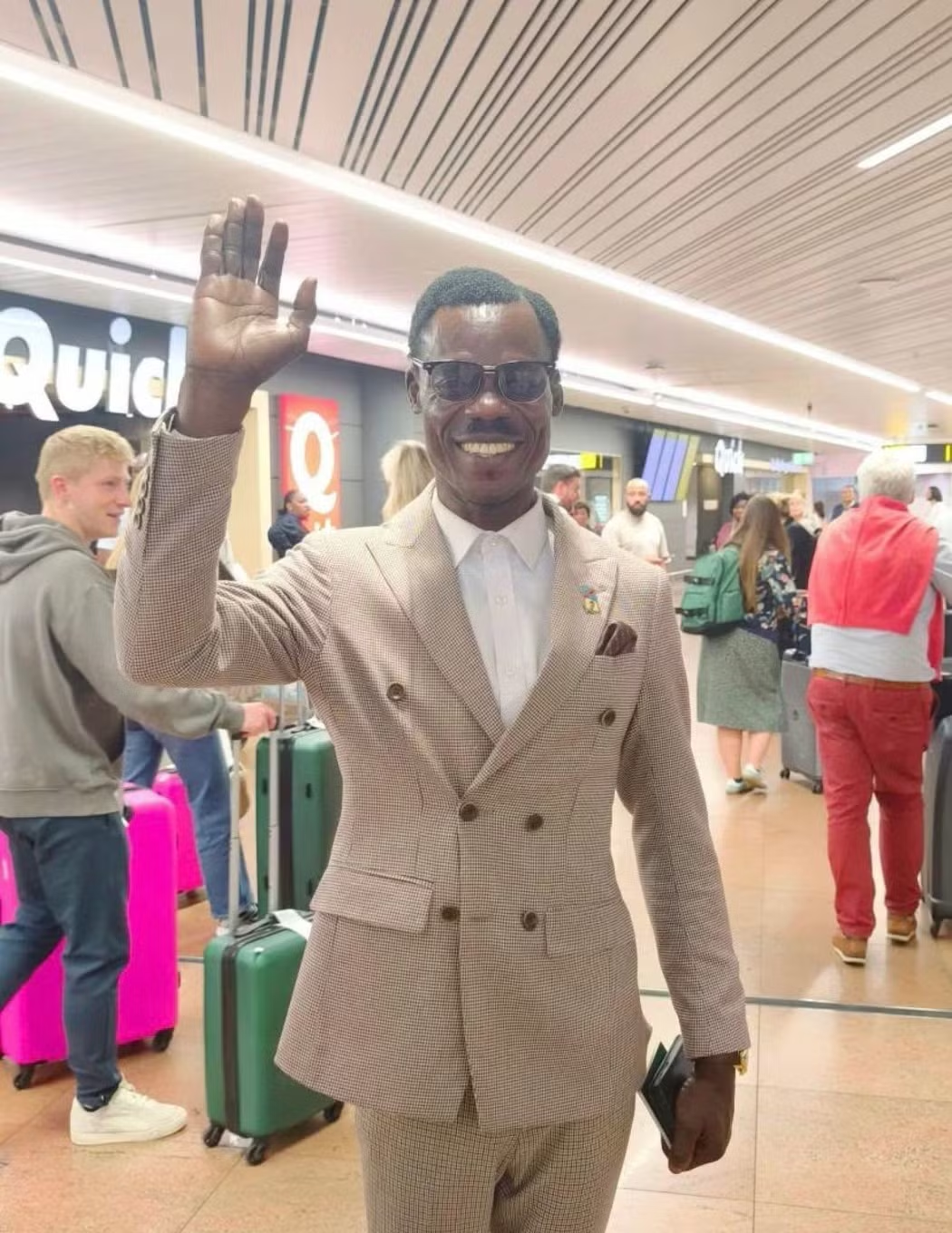
According to Véron Mosengo-Omba, president of the Democratic Republic of Congo Football Federation, Mboladinga is not only a famous fan but also a symbol of resilience and national pride.
In the US, Mboladinga's appearance was also highly anticipated. The Democratic Republic of Congo's ambassador to Washington, Yvette Kapinga Ngandu, said that the Congolese community in Georgia was eager to see Mboladinga perform the familiar ritual in person in the Atlanta stadium stands.
Even in a recent conversation, the Mayor of Atlanta took the initiative to inquire about this remarkable man.
A belief that always "stands firm"
Behind the somewhat mystical image lie significant challenges. Modern matches often last over 100 minutes, including extra time. This means Mboladinga has to maintain the same pose for a very long period.
He admitted that the match against Benin last December almost made him give up because he was so exhausted. To prepare for each appearance, Mboladinga regularly trains by holding a single pose for 30 to 40 minutes on days without a match.

Fame has also brought many changes to his life. Currently, Mboladinga has advertising contracts with several major businesses and has become a familiar face in the domestic media.
Earlier this year, President Tshisekedi even gifted him a luxury Jeep. Whenever he appears at shopping malls or markets in the capital Kinshasa, he is often surrounded by fans asking for photos and videos .
Nevertheless, Mboladinga insists that his greatest goal has never been fame. He wants to remind the Congolese people of the sacrifices of Patrice Lumumba and the spirit of national unity that this leader left behind.
For the players of the Democratic Republic of Congo, it was much simpler. They just hoped that when that motionless man appeared in the stands, their goal would continue to be protected by something that football sometimes always needs: belief.
Source: https://tienphong.vn/la-bua-dac-biet-cua-doi-tuyen-congo-post1851974.tpo
![[Image] Schools organize meetings and introduce teaching models to students admitted to grade 10.](https://vphoto.vietnam.vn/thumb/1200x675/vietnam/resource/IMAGE/2026/06/25/1782368077271_ndo_br_z7970052192242-1ec8daeb77a6eed1a4e9f58c564ddd3e-jpg.webp)
![[Image] Ho Chi Minh City: Ma Lang area, Chicken-Rice Market about to change its appearance](https://vphoto.vietnam.vn/thumb/1200x675/vietnam/resource/IMAGE/2026/06/25/1782377698627_ndo_br_m1-jpg.webp)




















![[Photo] General Secretary and President To Lam receives Palestinian Ambassador Saadi Salama](https://vphoto.vietnam.vn/thumb/1200x675/vietnam/resource/IMAGE/2026/06/25/1782365384740_a1-bnd-9423-8322-jpg.webp)