

In the glorious pages of our nation's history, La Son Phu Tu Nguyen Thiep (1723-1804) is immortalized for his valuable contributions in many fields such as education, politics , and literature. He is considered one of the outstanding figures of the 18th century. To this day, after three centuries, the legacy he left behind remains invaluable.
In the glorious pages of our nation's history, La Son Phu Tu Nguyen Thiep (1723-1804) is immortalized for his valuable contributions in many fields such as education , politics, and literature. He is considered one of the outstanding figures of the 18th century. To this day, after three centuries, the legacy he left behind remains invaluable.

Ha Tinh is renowned as a land of outstanding people and talented families, and Nguyen Thiep inherited the finest qualities of the famous Nguyen family in Can Loc. According to many historical sources, his ancestors were from Cuong Gian (Nghi Xuan). His grandfather, Nguyen Khai, took a second wife from Nguyet Ao village, Lai Thach commune, La Son district, Duc Quang prefecture, and they had children and established a branch of the Nguyen family there (now Luu village, Kim Song Truong commune, Can Loc district, Ha Tinh). His father, Nguyen Quang Trach, married a descendant of the famous Nguyen family in the old Truong Luu village. With his mother's attentive guidance and care for his studies, Nguyen Thiep absorbed the cultural essence of his family from a young age, showing a love of learning and reading. At the age of 19, he was sent to Thai Nguyen to live with his uncle, Doctor Nguyen Hanh (who was serving as the Inspector of Thai Nguyen), to study. Not only was he taught by his uncle, but he was also sent to study with the scholar Nguyen Nghiem (father of the great poet Nguyen Du). Perhaps these were the years when he accumulated the most knowledge, shaping the thoughts and mindset of a scholar.
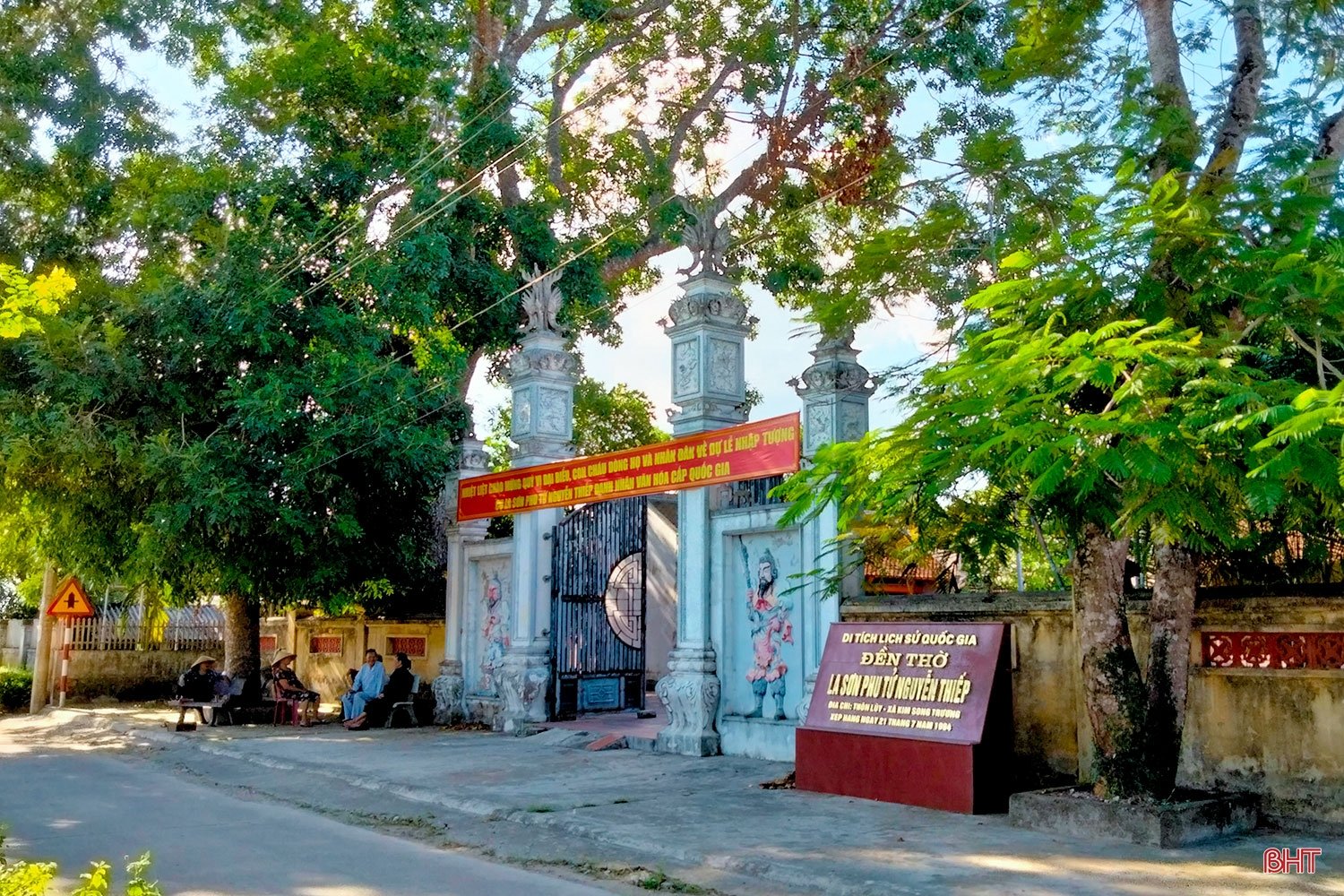
The temple dedicated to La Son Phu Tu Nguyen Thiep is now located in Luu village, Kim Song Truong commune (Can Loc district, Ha Tinh province), his hometown. Photo: Thien Vy
Although Nguyen Thiep participated in examinations and held minor official positions, that was not his greatest goal. What truly defined his name was the profound philosophical knowledge he accumulated and researched. He passed this knowledge on to many generations of students, applying it to his political and military strategies, as well as his literary works.
Nguyen Thiep passed the provincial examination in 1743 and then the national examination, passing all three levels. In 1756, Nguyen Thiep took up the position of instructor in Anh Do district (now Anh Son). In 1762, he was appointed district magistrate of Thanh Chuong (Nghe An). This was also the period when he witnessed the decay of the court, disgusted by the weakness and abuse of power by the Le kings and Trinh lords. He chose to leave officialdom and retire to teaching. In 1768, Nguyen Thiep resigned from his position and established Bui Phong camp on Thien Nhan mountain (Nam Dan, Nghe An) to begin teaching. Although he only taught in the Hong Lam region, his reputation spread throughout the country. He was renowned for his high moral character and profound knowledge. The whole country admired and revered him as a master. He advocated for studying elementary books first to build a foundation, then studying classics and stories to understand the subject matter; he always valued substance over quantity. He expanded the field of education to encompass all the children of the people, including the children of former officials, allowing them to study literature, martial arts, and other subjects in the former provinces, wherever it was convenient for them to attend school... His educational ideas and methods remain valuable to this day.
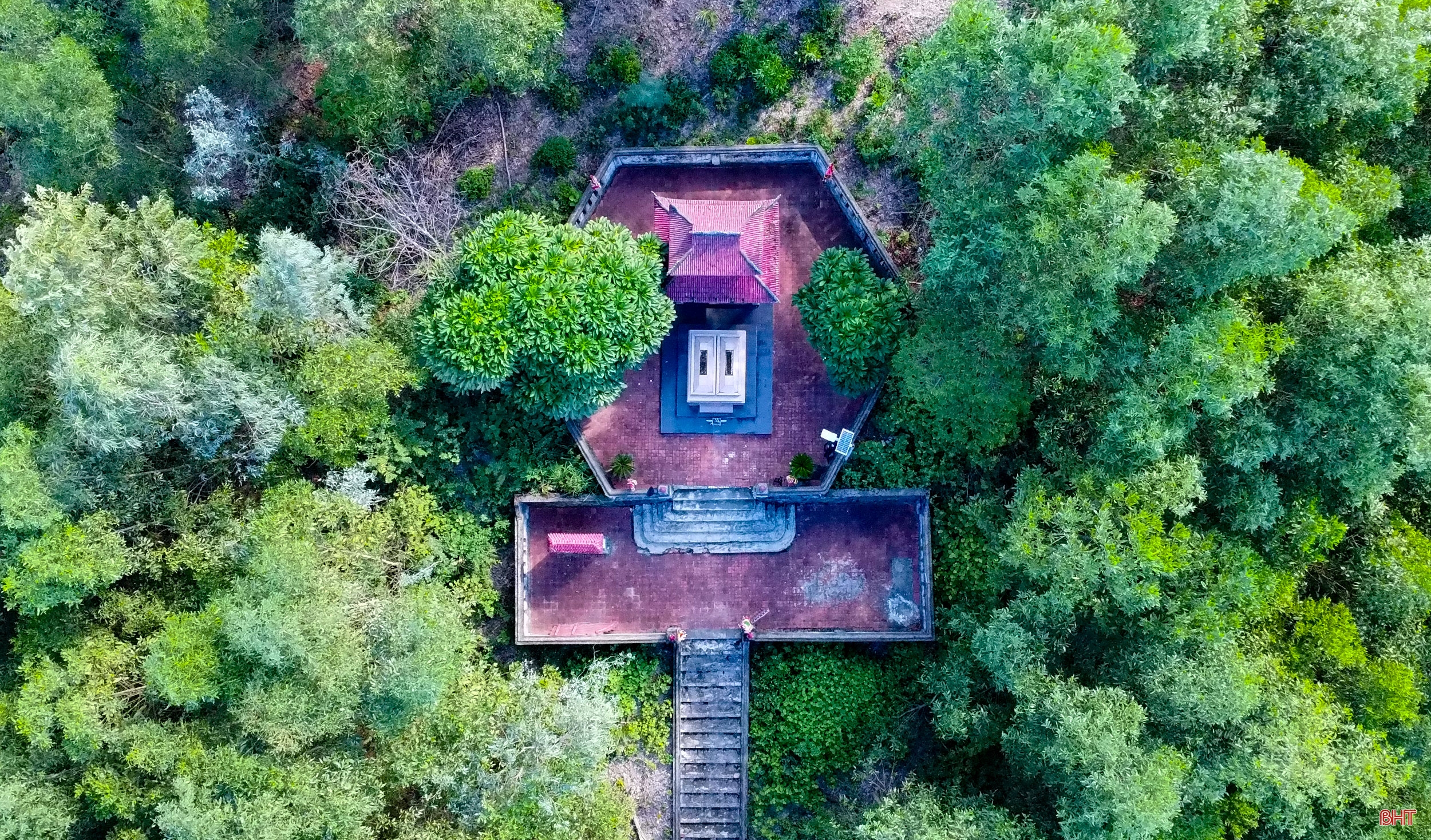
The tomb of La Son Phu Tu Nguyen Thiep and his wife, Dang Thi Nghi, is built on Bui Phong mountain (part of the Thien Nhan mountain range) in Nam Kim commune, Nam Dan district, Nghe An province. Photo: Duc Quang
In a reply to the Tay Son official Tran Van Ky about the talents of Hoan Chau, the scholar Nguyen Nghiem said: "For profound scholarship, there is Lap Phong Cu Si; for eloquent and disciplined writing, there is Tham Hoa Nguyen Huy Oanh; and for a young man with diverse talents and skills, there is only Nguyen Huy Tu" (Lap Phong Cu Si was actually Nguyen Thiep). Because of this "profound scholarship," even after leaving the officialdom, his reputation remained renowned. Nguyen Thiep was still a talented individual whom many emperors wanted to employ. However, he only accepted the offer to serve the country out of gratitude for Emperor Quang Trung's sincerity. He played a significant role in Emperor Quang Trung's victory in the spring of 1789 against the Qing invaders (China). However, what he valued most was education, and during his years alongside Emperor Quang Trung, he contributed greatly to the Tay Son dynasty's educational reforms.
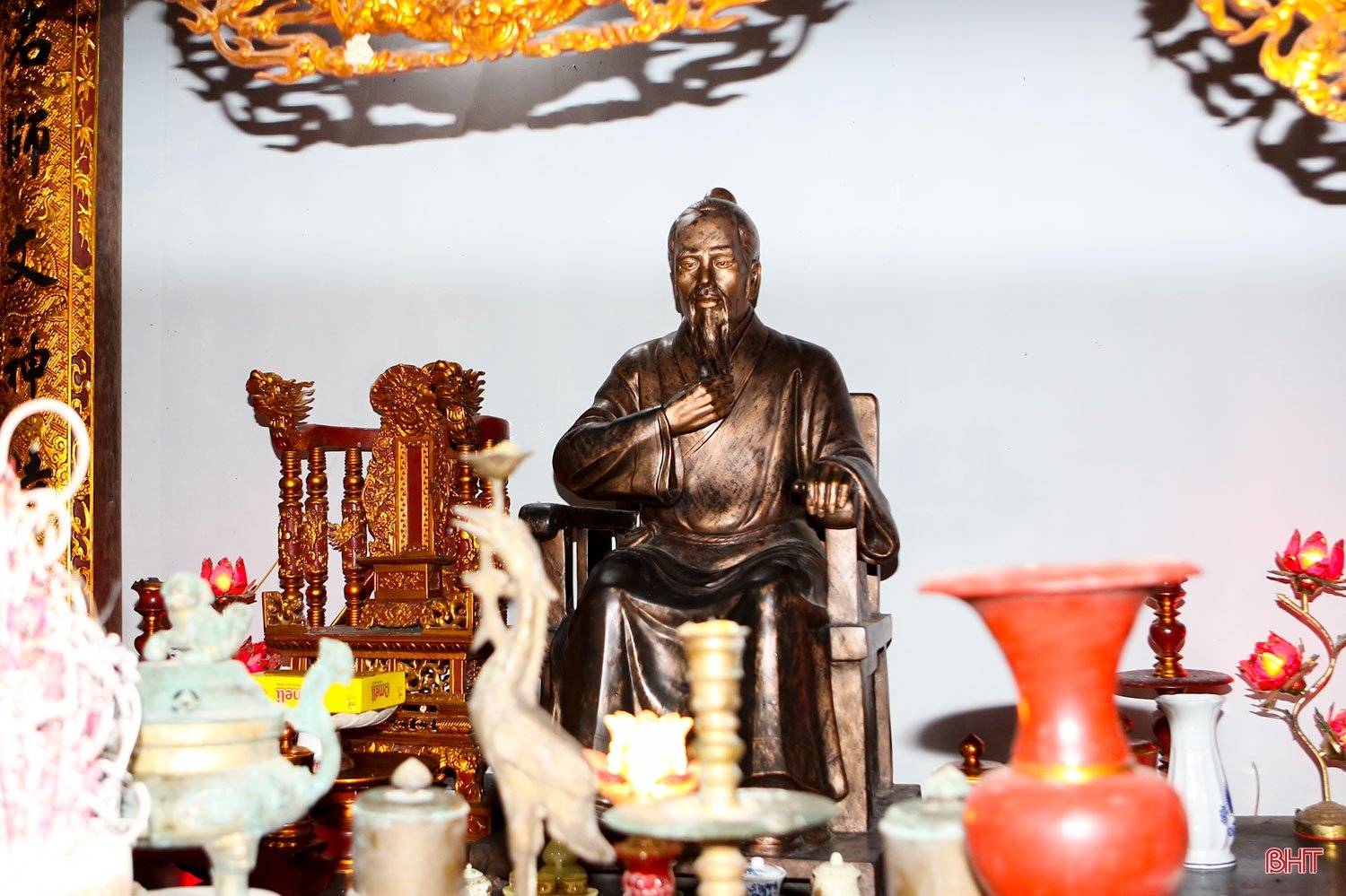
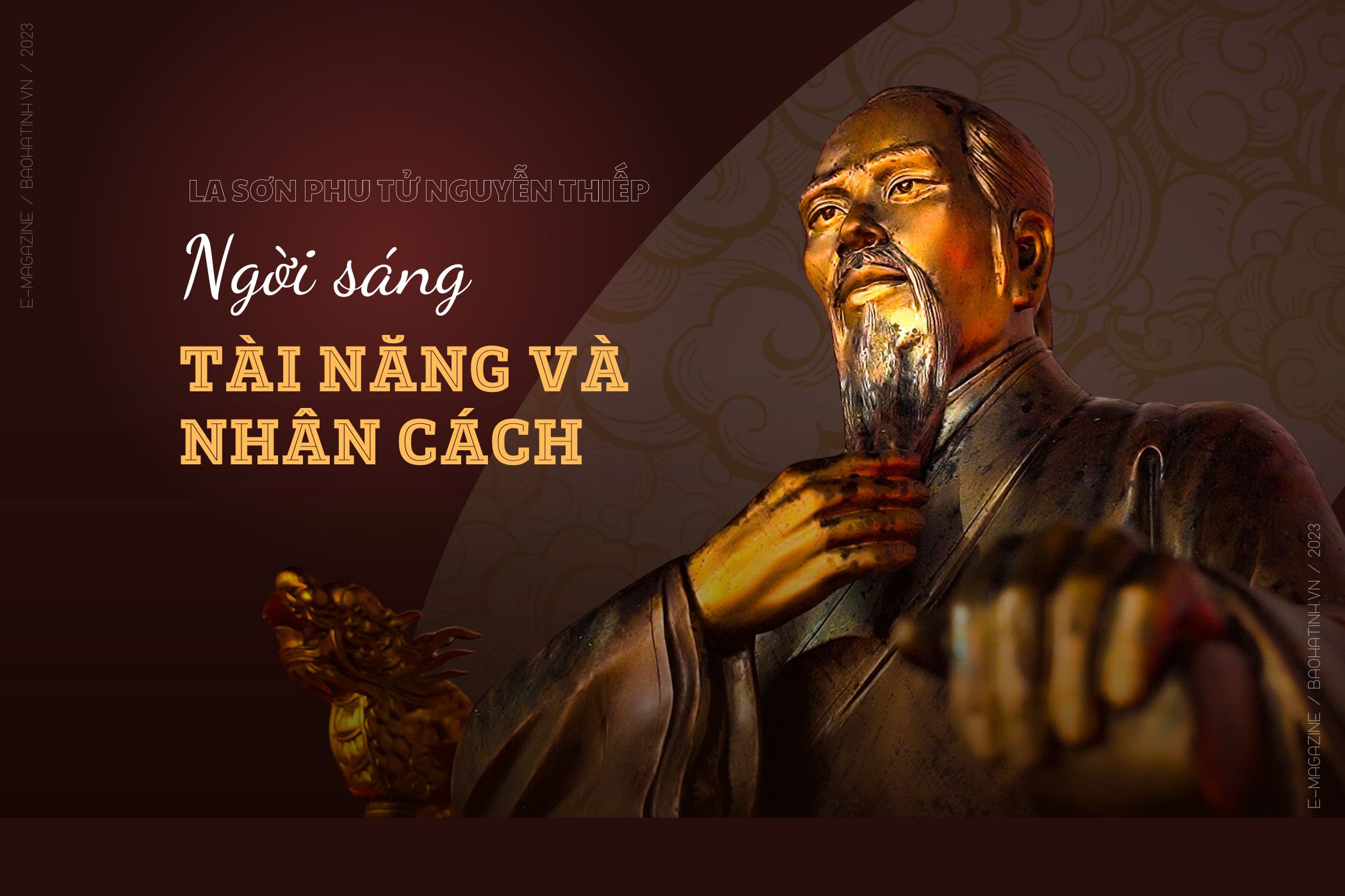
A statue of La Son Phu Tu Nguyen Thiep is placed at his temple in Kim Song Truong commune (Can Loc district). Photo: Thien Vy.
At the first provincial examination under the reign of Quang Trung, held in Nghe An in 1789, Nguyen Thiep was appointed as the chief examiner. In 1791, Emperor Quang Trung invited him to Phu Xuan to discuss state affairs. During this meeting, he presented Emperor Quang Trung with a memorial addressing three issues: firstly, "Ruler's virtue" (essentially advising the emperor to follow the teachings of the sages to govern the country); secondly, "People's hearts" (essentially advising the emperor to use benevolent governance to win the hearts of the people); and thirdly, "Education" (essentially advising the emperor to focus on education). Although these three issues were closely related, they were all based on the concept that "the people are the foundation of the nation."
Nguyen Thiep wrote: "The people are the foundation of the nation; only when the foundation is strong can the nation be at peace." These words were heeded by the king. In 1791, King Quang Trung issued a decree establishing the Sung Chinh Library, located in Vinh Dinh, on Nam Hoa Mountain, Nghe An province, where Nguyen Thiep was residing, and invited him to be its director. After establishing the Sung Chinh Library, Nguyen Thiep proposed concrete and scientific cultural and educational reforms. He wholeheartedly devoted himself to translating Chinese books into Nom script for teaching and dissemination among the people, implementing educational reforms and training talented individuals. The work of the Sung Chinh Library was of great significance in laying the foundation for the educational reforms of the Tay Son dynasty. Nguyen Thiep's greatest contribution was implementing King Quang Trung's policy of promoting Nom script, making it the official writing system of our country. He translated many important books from Chinese characters into Nôm script, such as the Elementary School, the Four Books (comprising 32 volumes), and the Book of Poetry, the Book of History, and the Book of Changes... into Nôm script to prepare for the new regulations on learning and examinations under the Tây Sơn dynasty.
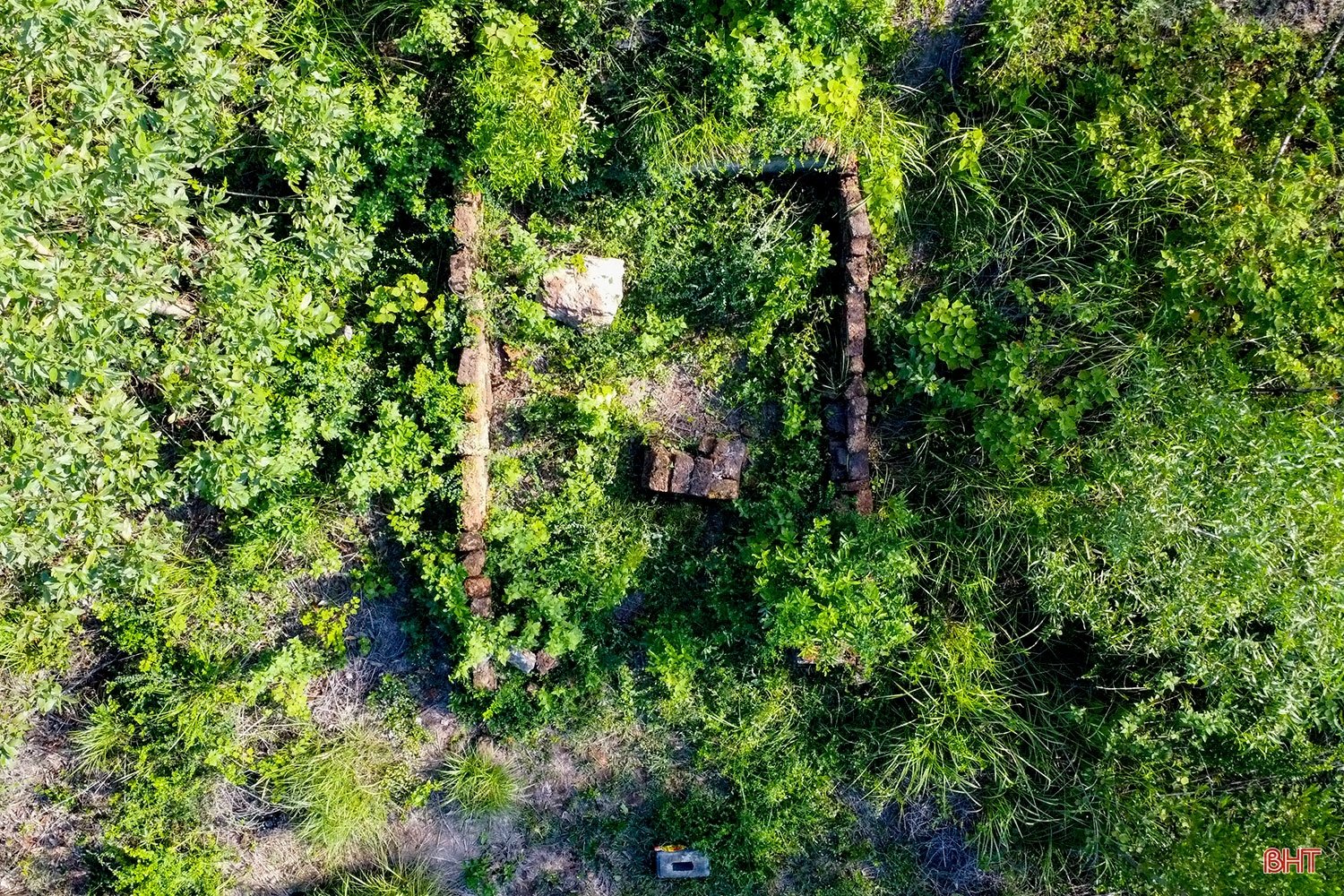
The remains of the old house of La Son Phu Tu on Bui Phong mountain (Nam Kim commune, Nam Dan district, Nghe An province), which was also the Sung Chinh Institute established by King Quang Trung and headed by Nguyen Thiep. Photo: Duc Quang
As a son of a land renowned for its literary and scholarly traditions, Nguyen Thiep also wrote literature. Although his body of work is not large, this is a field that marks his talent and character. According to author Hoang Xuan Han, Nguyen Thiep's poetry and prose include the collection Hanh Am Thi Cao, comprising 84 poems in Chinese characters. In addition, Nguyen Thiep also wrote the collection Hanh Am Di Van, containing several essays in response to, bidding farewell to, and expressing gratitude to Emperor Quang Trung. Nguyen Thiep's works express the thoughts and feelings of a scholar powerless in the face of the times, unwilling to pursue a life of fame and fortune amidst the power struggles of the ruling class and peasant uprisings. Although not numerous, the value of his poetry is still considered a significant contribution to Vietnamese Han-Nom literature of the 18th century.
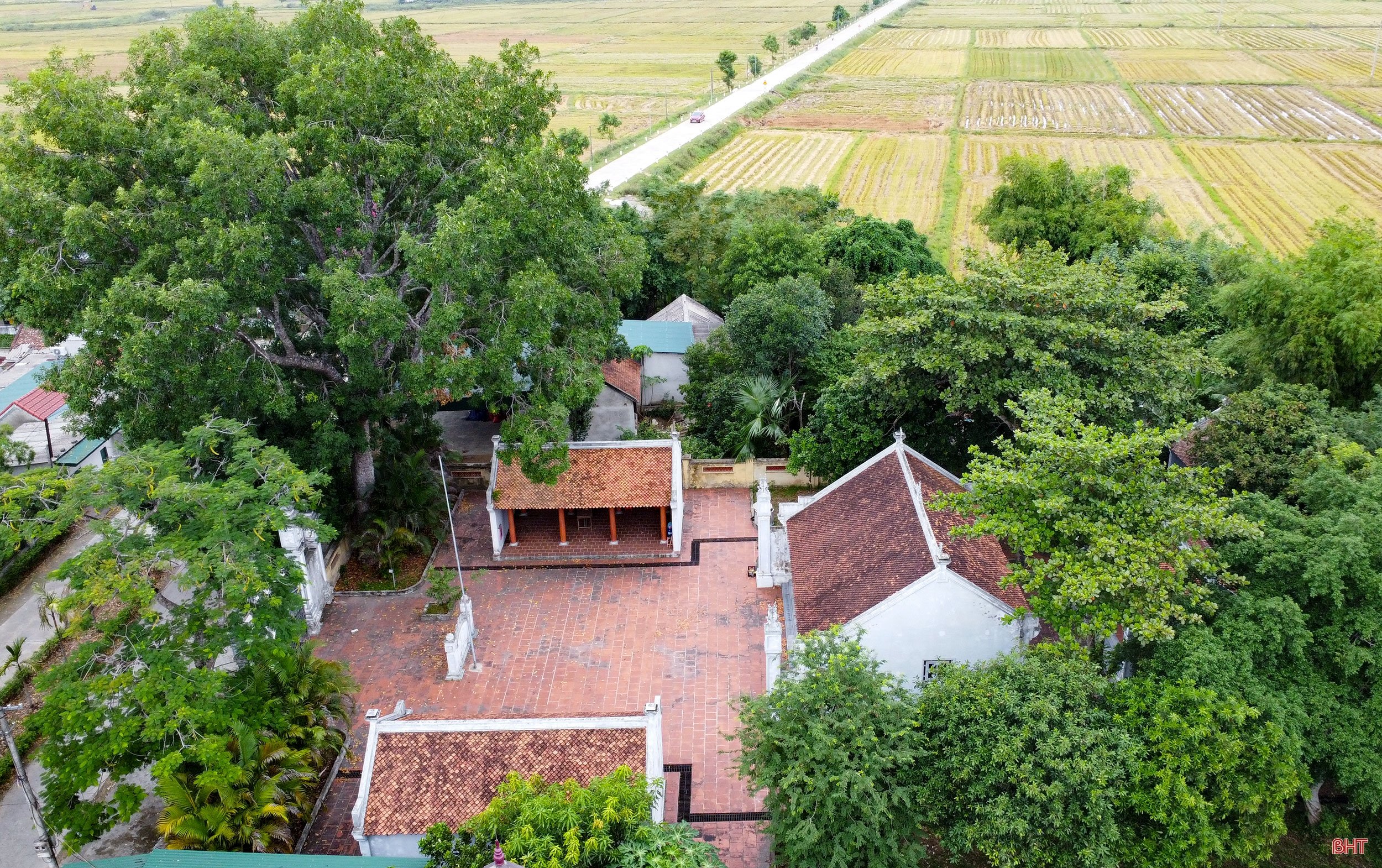
With its many historical and cultural values, in 1994, the temple of La Son Phu Tu Nguyen Thiep in Luu village, Kim Song Truong commune (Can Loc district) was classified as a national historical relic by the Ministry of Culture and Information (now the Ministry of Culture, Sports and Tourism). Photo: Duc Quang
Returning to Kim Song Truong commune amidst the bustling celebrations of the 300th anniversary of Nguyen Thiep's birth, we felt the spiritual essence of this land. The names of talented individuals such as Phan Kinh (Third-ranked scholar), Nguyen Huy Oanh (Third-ranked scholar), poets Nguyen Huy Tu and Nguyen Huy Ho, Doctor and Minister Duong Tri Trach, and Imperial Scholar Vu Diem... shone brightly in our minds. In the ancient Mat village, following the example of La Son Phu Tu, generation after generation, the descendants of the Nguyen family here have upheld the importance of learning, valuing morality, patriotism, and love for their people... Currently, many are studying and working in various fields and in many parts of the country. Among them are many professors, doctors, educators, military officers, and successful entrepreneurs... making significant contributions to their homeland and country. Every year, during holidays and festivals, they return to their ancestral home to remember their ancestors, to absorb the spirit of their homeland, and to nurture their aspirations for construction and development...
[embed]https://www.youtube.com/watch?v=tS5YbPOrFcc[/embed]
Video: Following in the footsteps of the sage Nguyen Thiep.
Content: Wind Chime
Photos and videos: Thien Vy - Duc Quang
Design: Huy Tung
6:21:10:20 23:05:05
Source








































































Comment (0)