

INVESTING IN EARLY CHILDHOOD EDUCATION IS VERY DIFFICULT
Ms. Kieu My Chi, Deputy Head of the Education and Training Department of Thu Duc City, Ho Chi Minh City, said that currently, many preschools are developing. Some preschools and classes are also posting information and introducing themselves to parents… however, enrollment has not met expectations.
Ms. Luong Thi Hong Diep, Head of the Preschool Education Department, Ho Chi Minh City Department of Education and Training, stated that investing in preschool education is very difficult and not simple. Investors should not invest indiscriminately, and should not simply rent any cheap land to open a school/classroom. Instead, they must survey the population density, the percentage of children attending school, and existing schools/classrooms in the vicinity. Otherwise, enrollment will be very difficult. Ms. Diep said that the Preschool Education Department will continue to listen to and incorporate feedback from relevant units to propose solutions to address difficulties, so that more units, teachers, and children can benefit from Resolution 27/2021/NQ-HĐND of the Ho Chi Minh City People's Council on policies for developing preschool education in industrial zones in Ho Chi Minh City.
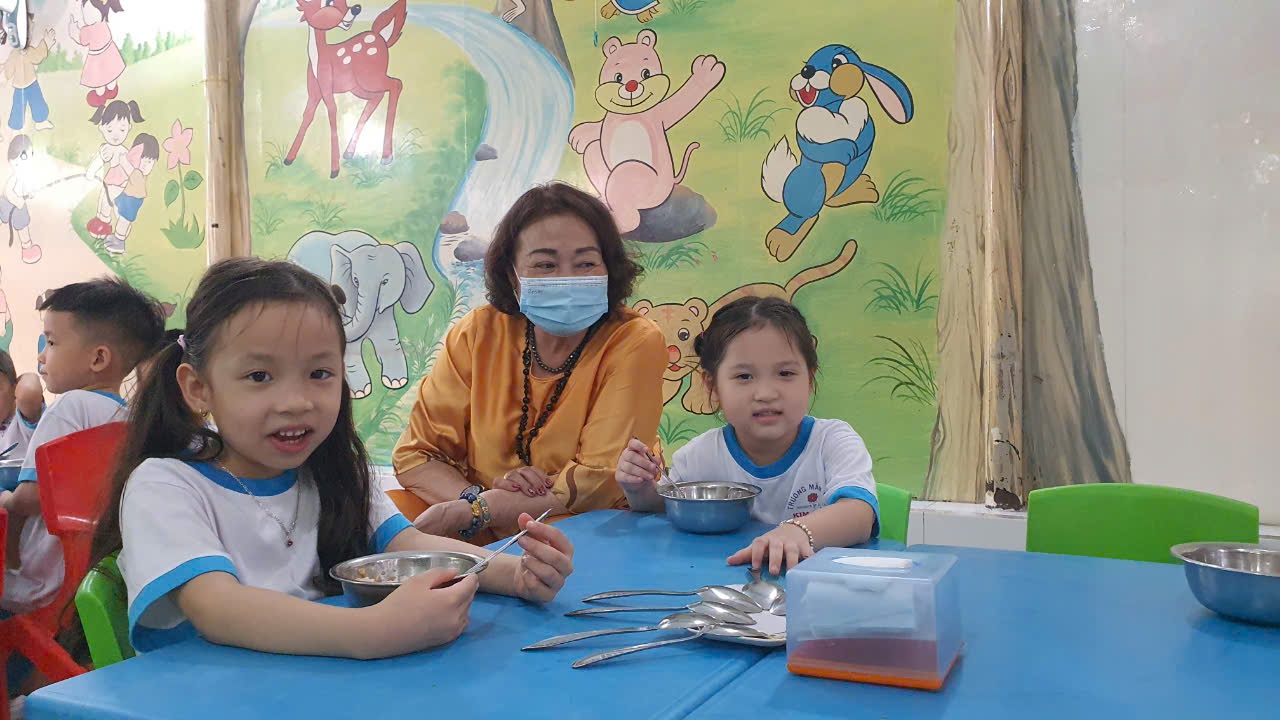
Children at Kim Dong Kindergarten, a private school that has been operating for 34 years in Binh Thanh District, Ho Chi Minh City.
IMPROVING QUALITY, STREAMLINING THE MODEL
In the current challenging context, Mr. TM, the owner of a preschool in Binh Thanh District, Ho Chi Minh City, believes that private preschools must save themselves by improving the quality of care and education, and enhancing their offerings. Specifically, this includes providing childcare services on Saturdays, developing more engaging curricula, increasing the quality of English language instruction with foreign teachers, and maintaining reasonable class sizes... in order to compete effectively with other schools.
Ms. Nguyen Thuy Uyen Phuong, founder of Faros Education & Consulting, a unit specializing in consulting for educational organizations, analyzes the current shift in the operating model of private preschools. Large schools in central districts require high operating costs (due to high rental costs), while having fewer children and facing greater enrollment difficulties. Meanwhile, smaller facilities such as preschool classes (complying with the regulations of Circular 49 of the Ministry of Education and Training) in districts with higher rates of population growth such as Tan Phu, Binh Chanh, Binh Tan, Thu Duc City, etc., are still operating quite well and have consistent enrollment. The operating costs of these facilities are lower than those of larger schools.
"I've noticed that when children are in preschool or kindergarten, the current trend among parents is to send them to preschools near their homes, right in their residential area or apartment complex, for convenience in dropping off and picking them up daily. Parents don't demand large, famous preschools, but simply want preschools that comply with legal regulations, are clean, safe, and have a reasonable class size, so that the children can receive thorough care from qualified and ethical teachers and caregivers," said Ms. Uyen Phuong.
"When I traveled to Europe, I noticed that in countries with extremely low birth rates, their preschools are also very small – you could call them 'micro schools,' with around 30-40 children – but the childcare conditions are excellent, the teachers are dedicated, and they provide specialized care for the children. Therefore, investors in the preschool sector in Ho Chi Minh City need to pay attention to surveying geographical locations before opening schools, streamline the model, and focus on specialized care to adapt to the current difficult circumstances," Ms. Uyen Phuong added.
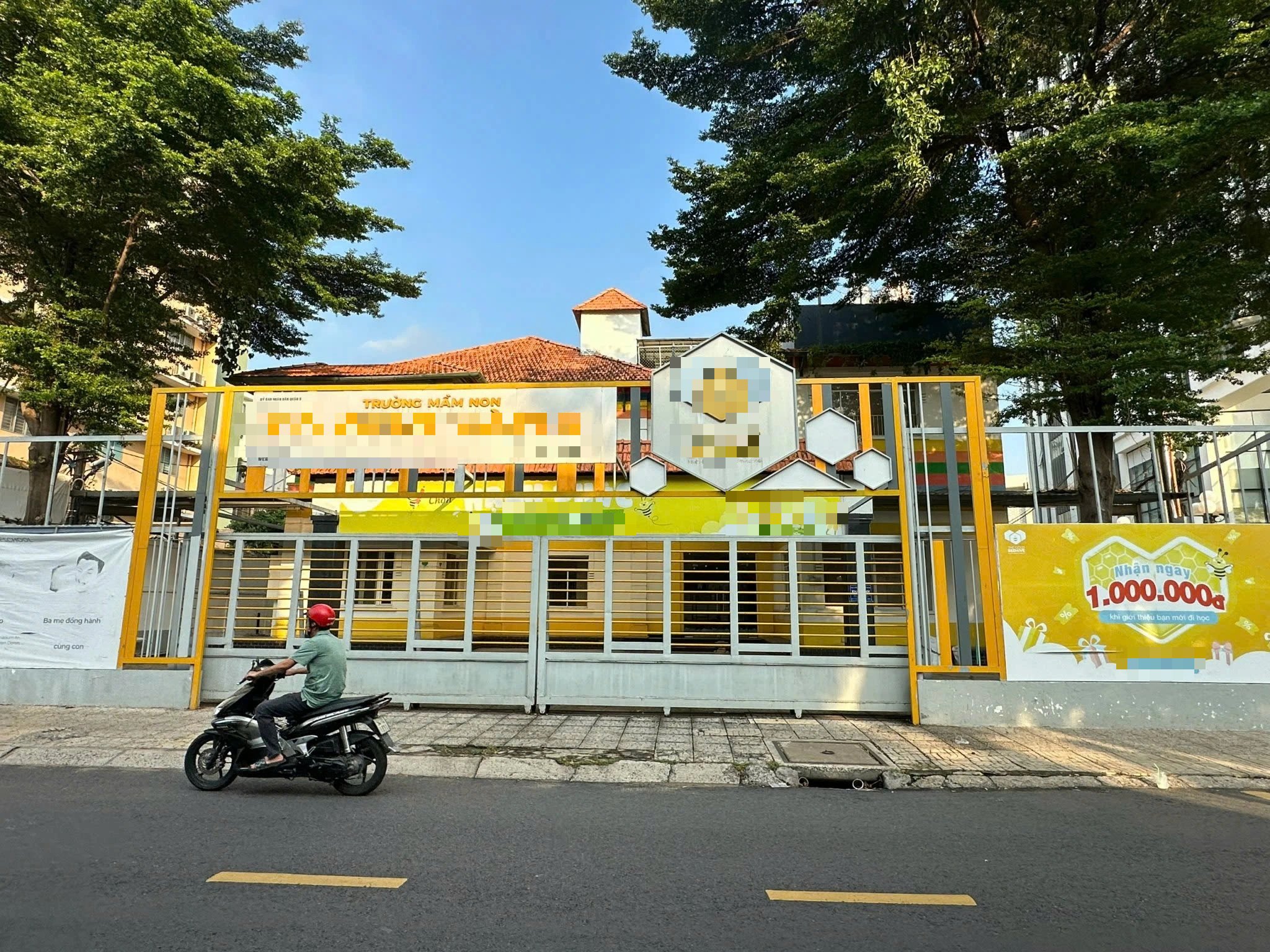
A private preschool on Tran Quoc Toan Street, District 3, Ho Chi Minh City, has closed down.
EXPECTATIONS OF INVESTORS IN PRIVATE PRESCHOOLS
Early childhood education investors are hoping and expecting that current difficulties will be resolved. Ms. Nguyen Thuy Uyen Phuong stated that the biggest annual cost of operating a private preschool is the rent for the premises. "We sincerely hope that education investors will receive preferential treatment in land rent when opening schools/classes, to help alleviate the burden during this extremely difficult period."
Ms. NP, an investor in the education sector, stated that the assessment and licensing process for a preschool class, as stipulated in Circular 49 of the Ministry of Education and Training, is complex and requires specific support and guidance from local agencies and departments. In Ho Chi Minh City, with its low birth rate, many education investors are concerned that enrollment will become even more difficult in the coming years. Therefore, research and specific policies for private preschool education in Ho Chi Minh City are necessary.
This investor also stated that many preschool/kindergarten owners have been struggling not only due to a lack of capital but also because of the fluctuating quality of preschool staff. Many staff members are changing jobs or quitting due to the significant pressure and stress of the profession. Therefore, she hopes for policies to provide material and spiritual support for teachers in private preschools.
"Many teachers at private preschools are monitored by parents via camera. Not to mention, in private preschools, parents have higher demands and expectations of teachers. Meanwhile, the income of private preschool teachers in Vietnam is still low. Many people can't bear it anymore and have quit," Ms. NP confided.
Ms. Ho Thi Thuong, the owner of Kim Dong Kindergarten in Binh Thanh District (Ho Chi Minh City), also expressed her hope for supportive policies and reduced rent in the current difficult economic climate, so that kindergarten/school owners have the motivation to continue operating private kindergartens. According to Ms. Thuong, with the diverse development of early childhood education in both public and private sectors, parents and learners will have more choices and a wider variety of options. Each type of education has its own advantages. For example, independent and private kindergartens can welcome children earlier, provide childcare later in the day, offer Saturday and holiday care according to parents' needs, offer specialized care, and conduct year-round enrollment so parents can send their children and work with peace of mind.
Specific incentive policies should be enacted for investors in the education and training sector.
A July 2024 report from the Ho Chi Minh City Department of Education and Training on the current state of preschool education in urban and industrial areas of the city, submitted to the Department of Preschool Education, Ministry of Education and Training, shows that, based on Government Decree No. 105/2020/ND-CP on policies for the development of preschool education, and Resolution No. 27/2021/NQ-HĐND of the Ho Chi Minh City People's Council on policies for the development of preschool education in industrial areas of Ho Chi Minh City, policies have been implemented to support non-public preschools.
From the 2021-2022 school year to the end of the 2023-2024 school year, 37 independent preschools received subsidies totaling VND 1,040,000,000; 15,735 children received subsidies totaling VND 12,602,050,720; and 492 teachers received subsidies totaling VND 2,622,400,000.
However, the leaders of the Department of Education and Training acknowledge that the number of children, teachers, and independent preschools receiving support from this resolution is still limited. The main reasons are the failure to meet the standard of 30% of children in each group/class being children of factory workers; and the fact that the teaching staff only have secondary-level preschool teacher training certificates, which do not meet the required training standards.
Therefore, the leaders of the Ho Chi Minh City Department of Education and Training proposed to the Department of Preschool Education, Ministry of Education and Training, to adjust and reduce the criterion for the percentage of children of workers and laborers working in industrial zones who are eligible for policies at preschools and support for preschool teachers in private preschools (from 30% down to 20%).
At the same time, to promote the socialization of education and the development of preschool education, the leaders of the Ho Chi Minh City Department of Education and Training also proposed the need to issue specific preferential policies for investors in the education and training sector. In reality, besides the relatively low corporate income tax rate applied to education projects, these projects have not received any special support during the investment process, such as support in finding locations or with procedures. There is a need for regulations that do not require the conversion of residential land to educational land to promote the development of non-public preschool education…
Source: https://thanhnien.vn/mam-non-tu-thuc-hut-hoi-lam-sao-de-but-pha-185240924182718951.htm
![[Photo] National Assembly Chairman Tran Thanh Man working with the Standing Committee of the Law and Justice Committee](https://vphoto.vietnam.vn/thumb/1200x675/vietnam/resource/IMAGE/2026/05/21/1779378929214_ndo_br_1-4610-jpg.webp)


![[Photo] General Secretary and President To Lam presides over a working session with the Central Policy and Strategy Committee on the development of the materials industry.](https://vphoto.vietnam.vn/thumb/1200x675/vietnam/resource/IMAGE/2026/05/21/1779359935432_a3-bnd-3129-1412-jpg.webp)








































































Comment (0)