Traditional craft villages along the river
Opposite the Old Quarter, across the Hoai River, lies Kim Bong carpentry village, with its distinct craft village culture in Quang Nam province. Kim Bong carpentry village is over 600 years old, dating back to the Vietnamese migrants who settled and cultivated the land in Cam Kim, Hy Giang district.
Through cultural exchange, Kim Bong carpentry village absorbed the carving traditions of many cultures. When Hoi An became a thriving trading port in Dang Trong in the 17th and 18th centuries, the craft village clearly developed into a guild, with Trung Chau and Phuoc Thang producing fine art wood products; Dong Ha and Ngoc Thanh specializing in boat building; and Trung Ha and Vinh Thanh becoming centers for household woodworking.
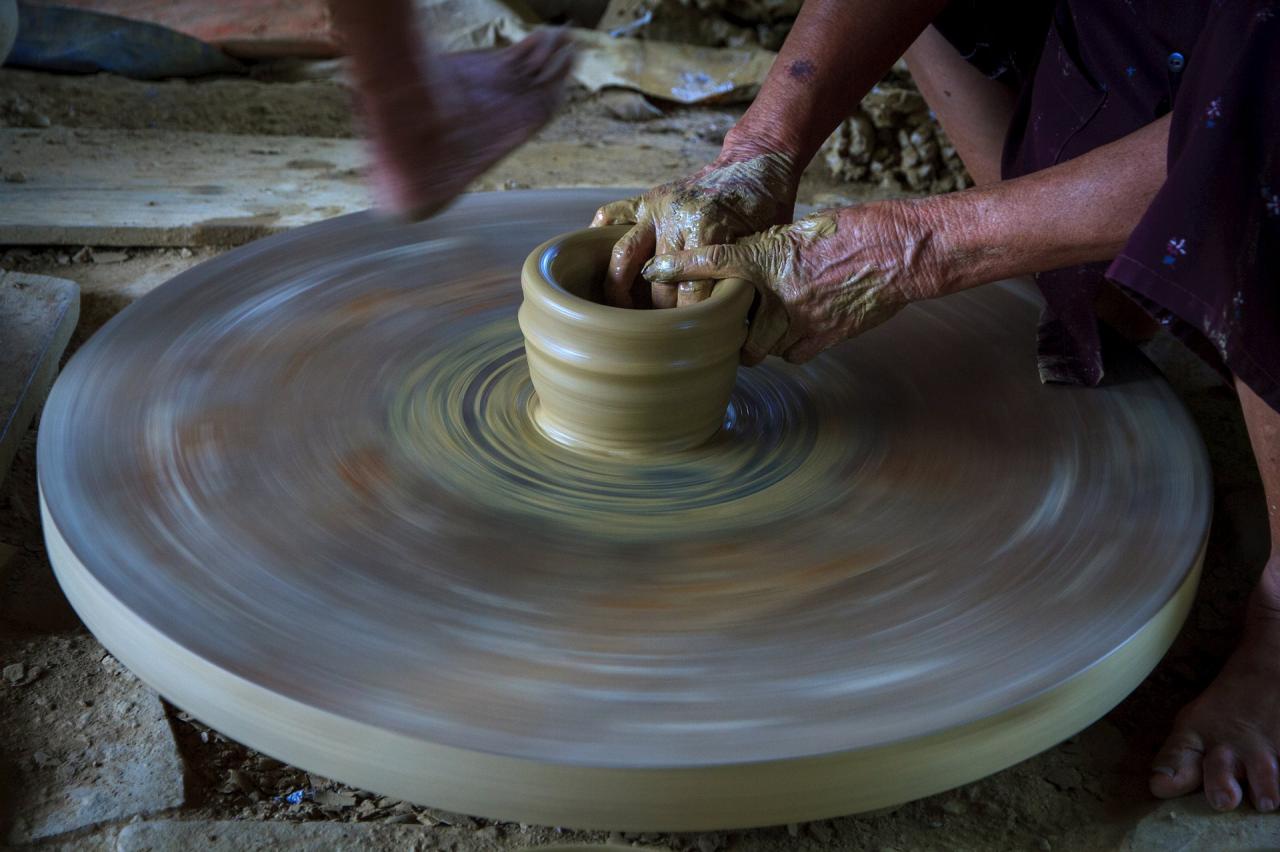
Located on the left bank of the lower Thu Bon River, Thanh Ha pottery village, with its production center in Nam Dieu hamlet, was established in the 16th century when migrants from Thanh Hoa province settled in Quang Nam province, choosing this area to make a living. Although the main raw material is still clay, Thanh Ha pottery is different due to its shaping method using a foot-operated potter's wheel and its unique firing techniques.
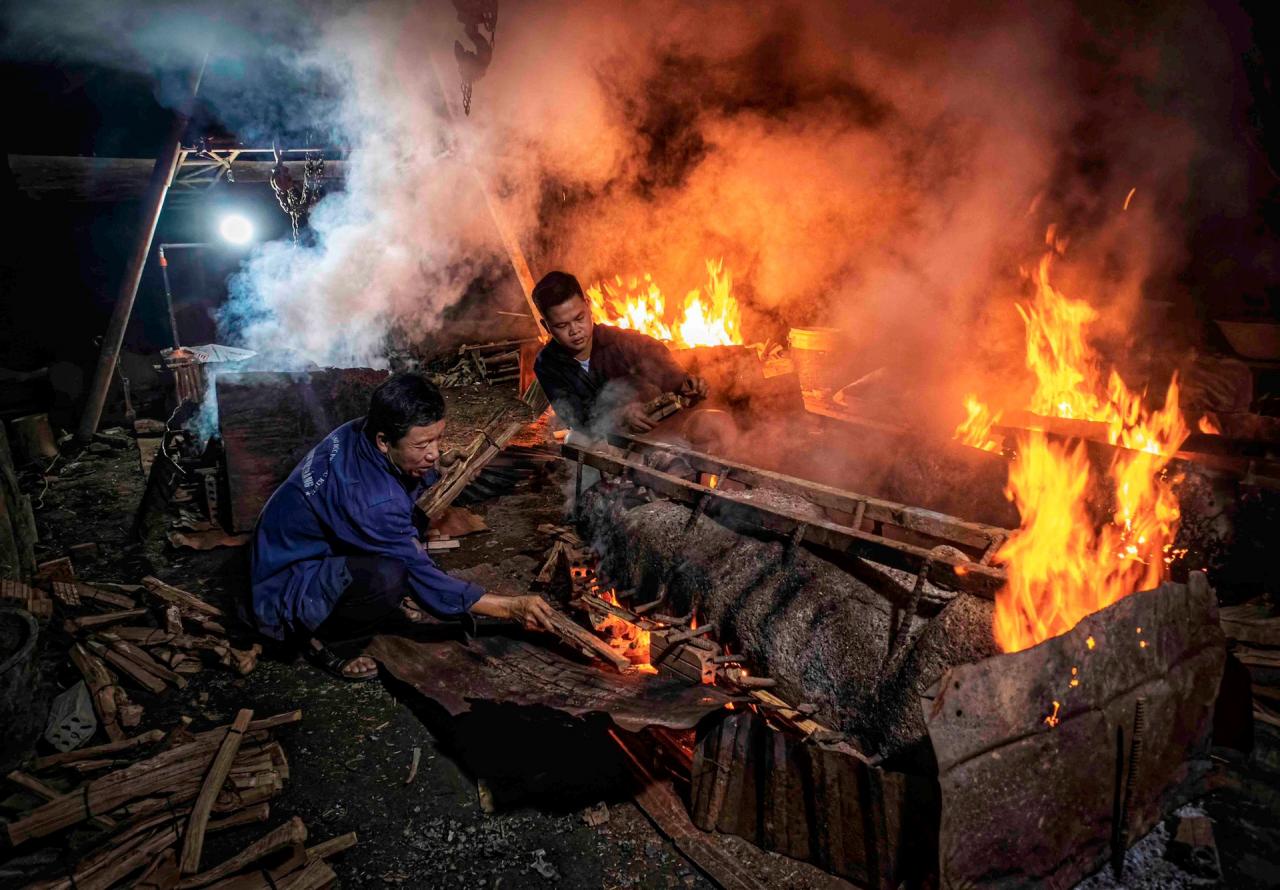
Stoneware is fired in a kiln, while stoneware kilns are called "green kilns" and pottery kilns are called "red kilns." In the past, the only fuel used was firewood from the forest, such as amaranth, chestnut, fig, and other similar trees.



Thanh Ha pottery artisans possess ancient secrets, and depending on their experience with firing time and temperature, they create a diverse range of colors from pink, rose-yellow to red, brick brown, and deep black. What's special is that when you tap a Thanh Ha pottery product, you'll hear clear, resonant sounds.
A vibrant imprint of the heritage region.
Located not far from Thanh Ha pottery village, which was once the capital of Quang Nam province, the Dien Ban area has been a focal point of cultural exchange and transformation for over 520 years. The Phuoc Kieu bronze casting village in Dien Phuong originated in the early days of establishing the Thuan-Quang region.
As the Nguyen lords expanded and stabilized the territory, the craft of bronze casting and household goods production flourished. Through generations of prosperity, Phuoc Kieu bronze casting village has accumulated a wealth of experience in meticulousness and skill, from kneading clay, making molds, carving designs, firing molds, and melting bronze...
The craft village also possesses the secret of alloying to create famous gongs and bronze bells. In particular, the artisans have a very refined sense of sound, understanding the timbre of each bronze musical instrument of the Kinh/Vietnamese people or ethnic minorities in the mountainous regions.
Located east of Duy Xuyen, a land once renowned for its bustling waterways, Ban Thach village has a waterway connecting it to Hoi An via the Thu Bon, Truong Giang, and Ly Ly rivers, leading downstream to Cua Dai.
In the early 16th century, clans from what is now Duy Vinh, originating from Thanh Hoa and Nghe Tinh provinces, migrated to the Thang Hoa prefecture to establish their livelihoods, transforming the alluvial plains along the river into sedge fields, thus creating the Ban Thach mat weaving village. From then on, this place became a bustling trading center in the Thang-Dien region, with large cargo boats supplying sedge mats to various places.



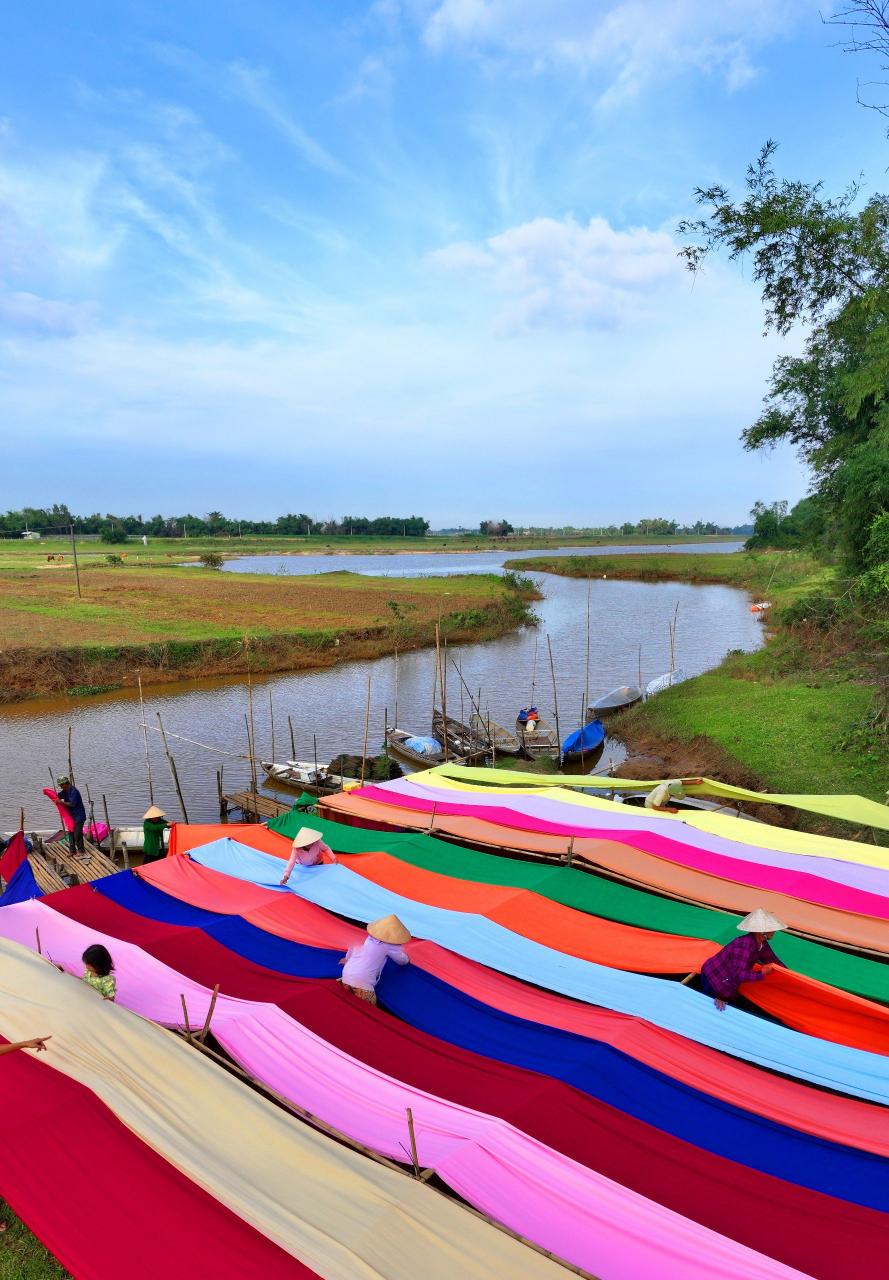
The final point on the heritage triangle route, next to the ancient capital of Tra Kieu, is the system of weaving villages of Ma Chau - Dong Yen - Thi Lai, which for centuries have been famous for their mulberry cultivation, silkworm breeding, silk reeling, silk weaving, and the production of brocade, satin, linen, and mattresses - products that were indispensable on merchant ships along the East Sea Silk Road...
The vibrancy of numerous traditional craft villages, with their rich traditions spanning over five centuries, creates a highlight along the heritage route. Through ups and downs, these villages are gradually reviving. Artisans practice and pass on their skills to younger generations, preserving the heritage. Many exhibitions and demonstrations of production techniques create unique experiences at these heritage destinations.
The lifestyles, customs, traditions, and festivals of the craft villages exist within the traditional village cultural space, strongly attracting tourists from near and far to experience the local culture along the Quang Nam heritage triangle.
Source: https://baoquangnam.vn/lang-nghe-tren-cung-duong-di-san-3140481.html