

 |
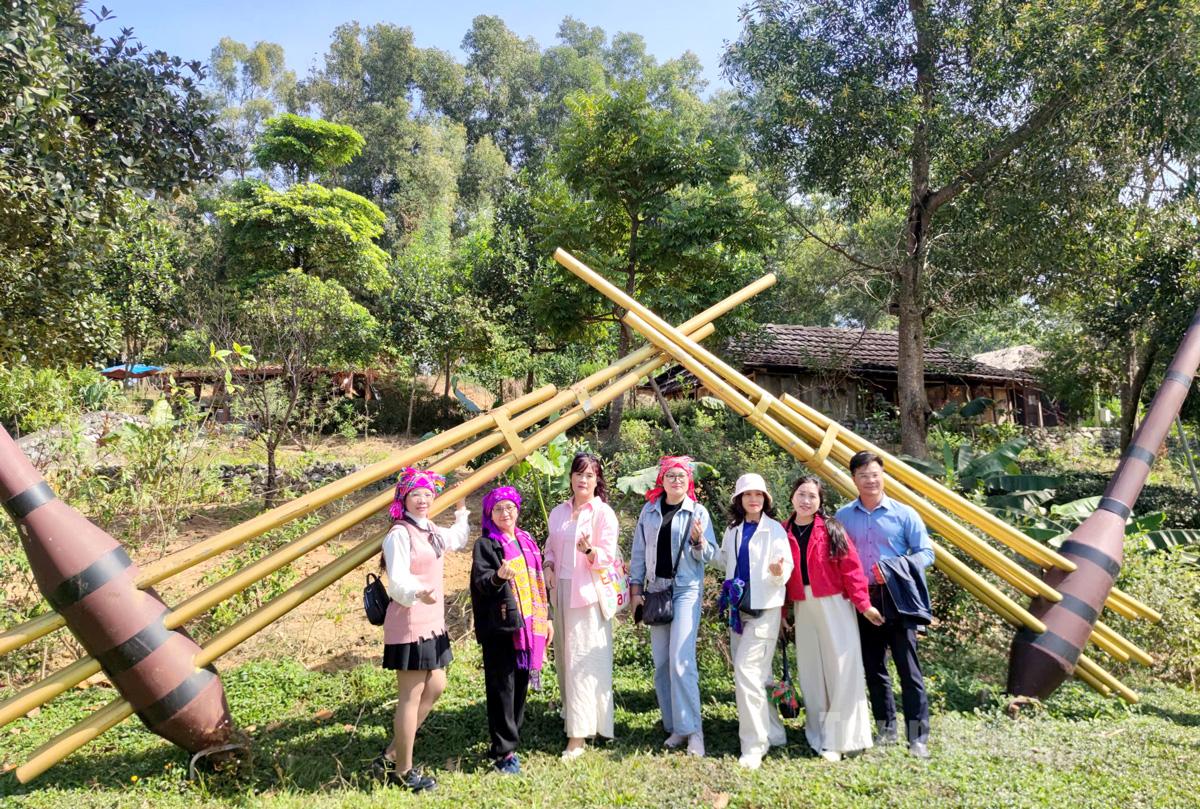
| Tourists visit and take photos next to a model of the Hmong flute at the Hmong Village in Dong Mo. |
Culture from traditional homes
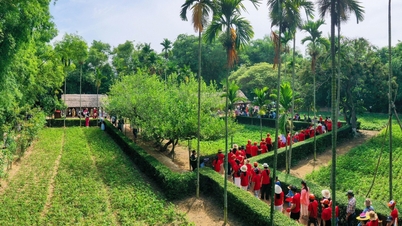
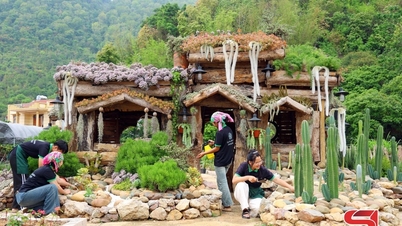
The Hmong village at the Vietnam Ethnic Groups Cultural and Tourism Village, built in 2010, covers an area of approximately 0.5 hectares and is nestled on a hillside, yet it encapsulates the most representative architectural features of the Hmong people in the far north. The complex has a total construction area of 270 m², including an earthen house with a tortoise-shell roof, an earthen house with a tiled roof, an earthen house with a wooden roof, and a livestock shed. The houses are not only meticulously restored but also inhabited, with warm hearths, voices, and laughter, making the Hmong culture feel warm and vibrant, just like in the highlands.
The earthen house with a tortoise-shell-shaped roof, a characteristic style of the Hmong people in the highlands, nestles on the hillside. The thatched roof, curved like a tortoise shell, has kept the Hmong village warm in winter and cool in summer for years. The house is made of wood and rammed earth, with few interior partitions, creating a cozy and intimate gathering space. From the door frames and walls to the wooden latches, everything bears the mark of diligent hands. Bamboo, reeds, wood, stone, rattan… seemingly simple materials, through the hands of Hmong craftsmen, are transformed into sturdy houses.
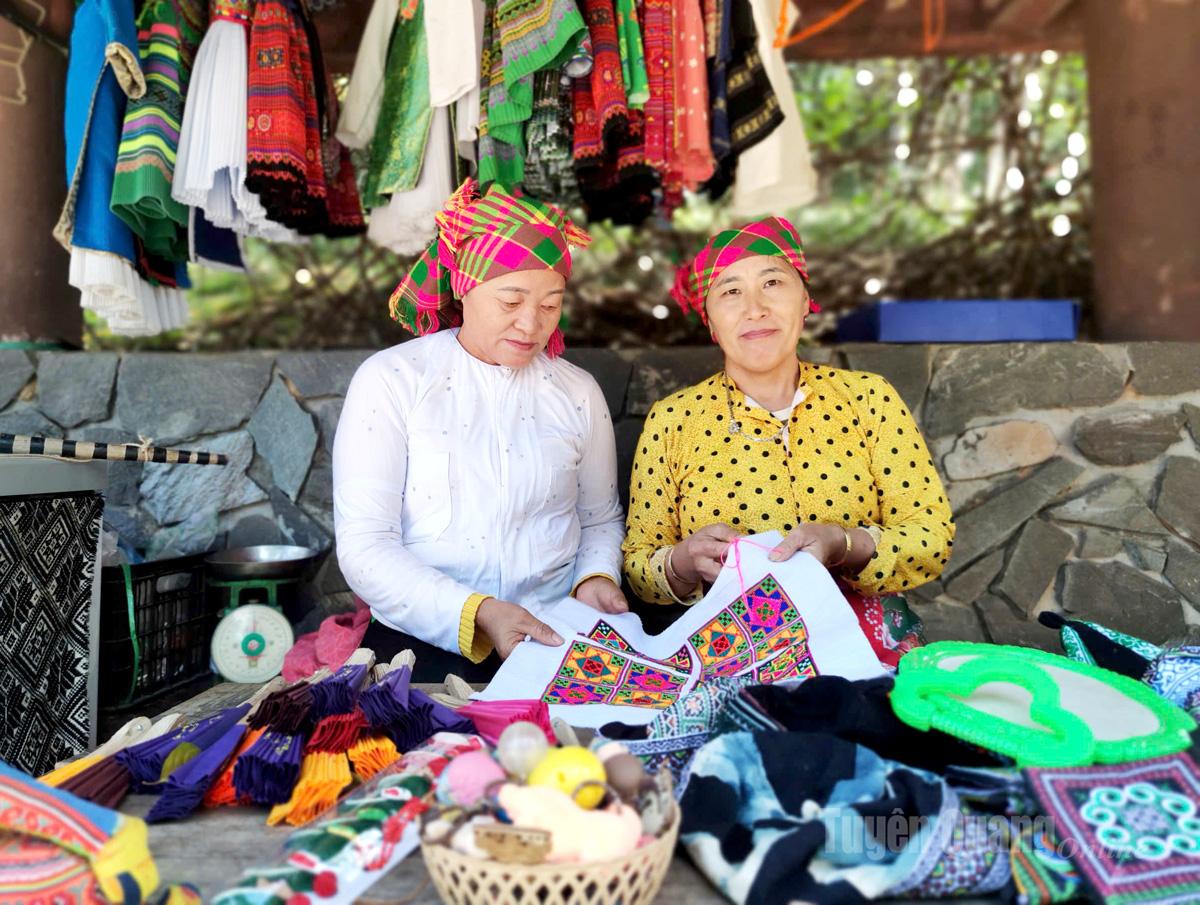 |
| Ms. Giàng Thị Má (left) and Ms. Má Thị Liên stand beside a booth showcasing Hmong brocade products. |
Another style of house is impressive, featuring a traditional earthen house with a yin-yang tiled roof. Rows of tiles are neatly arranged, embracing the house like interconnected waves. The yin-yang tiles allow for good ventilation and waterproofing, suitable for the rainy mountainous region; the thick rammed earth walls keep the house warm in winter and cool in summer. This type of house demonstrates a harmonious blend of tradition and practicality, between the durability of earth and stone and the ever-changing pace of life.
The weathered yin-yang tiled roofs, the cool, compacted earthen walls, the murmuring conversations by the fireplace, and the scent of wood smoke carried on the wind… all combine to create a vibrant picture. There, every sound and scent carries its own story. It is these simple things that create the soul of the Hmong village in Dong Mo, where visitors can not only see but also touch, hear, and experience the highland atmosphere right in the heart of the Doai region.
Continue the story of the mountains and forests.
Currently, the Hmong village in Dong Mo has 8 inhabitants, mainly from highland communes such as Dong Van, Quan Ba, and Vi Xuyen. The Hmong cultural space, from their language, clothing, customs, to their way of life, is consciously preserved by each person as a precious treasure of their homeland.
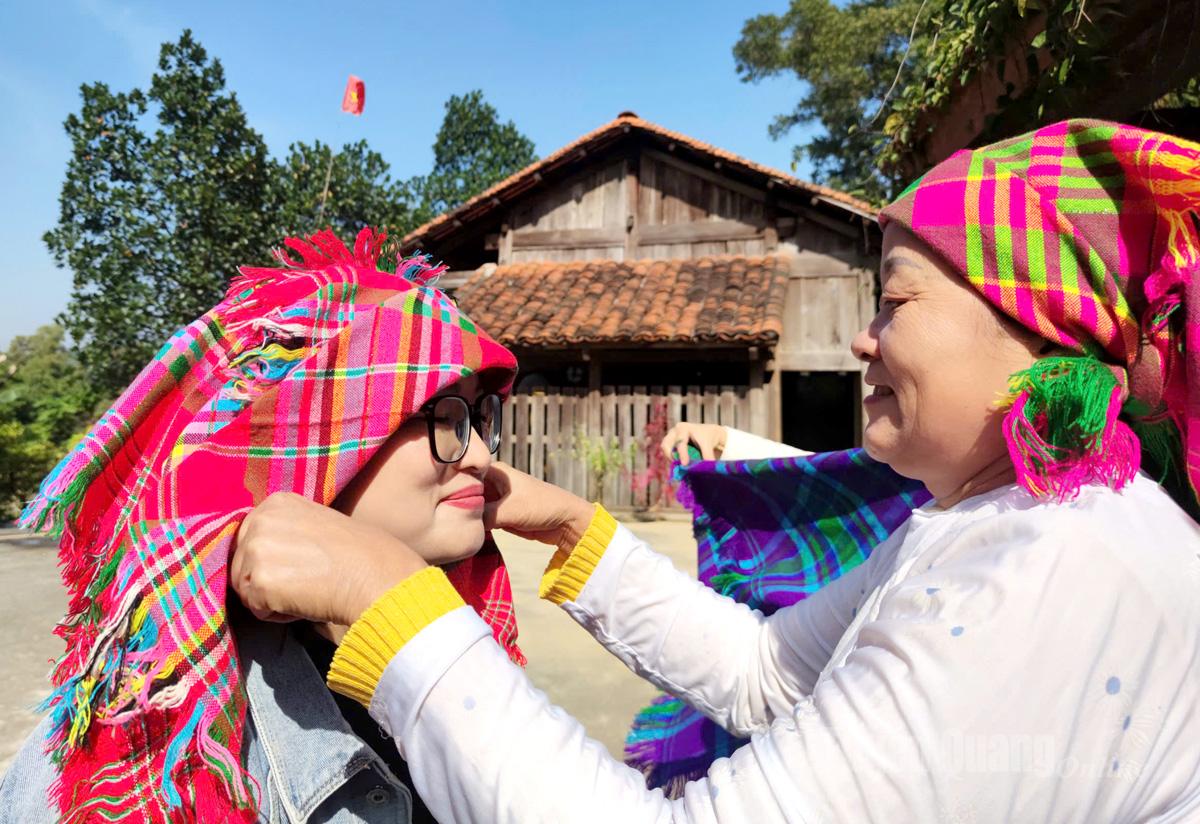 |
| Sister Má is showing tourists how to wrap the traditional Hmong headscarf. |
On the porch, Giang Thi Ma, a White Hmong woman from Dong Van, diligently embroiders a piece of brocade, as if pouring her memories of jagged rocks, mountain winds, and the old markets of the Dong Van plateau into every stitch.
The stitches running across the fabric are not just decorative patterns, but also stories of mountains, clouds, and the seasons of farming. Each dress, each shirt that Ms. Má makes is a piece of memory of the rocky plateau left behind here, so that anyone passing by can catch a glimpse of a Hmong village that is both far and near.
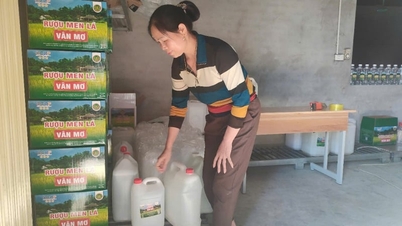
She said that brocade, corn wine, and the house are the soul of the Hmong culture that every Hmong person consciously preserves and passes on. Therefore, every day she diligently brews batches of corn wine with leaf yeast, so that there's always a jar of fragrant wine ready to offer guests. When there are no guests, she sweeps the yard and adjusts the traditional Hmong dresses hanging on the wooden wall.
I asked, "After being away from home for so long, do you miss the plateau?" She smiled gently and replied, "Of course I do. But every time a visitor comes to ask questions, and I tell them about the customs and about Dong Van, I suddenly feel like I'm coming home. The longing for the gray rocky land also eases a lot."
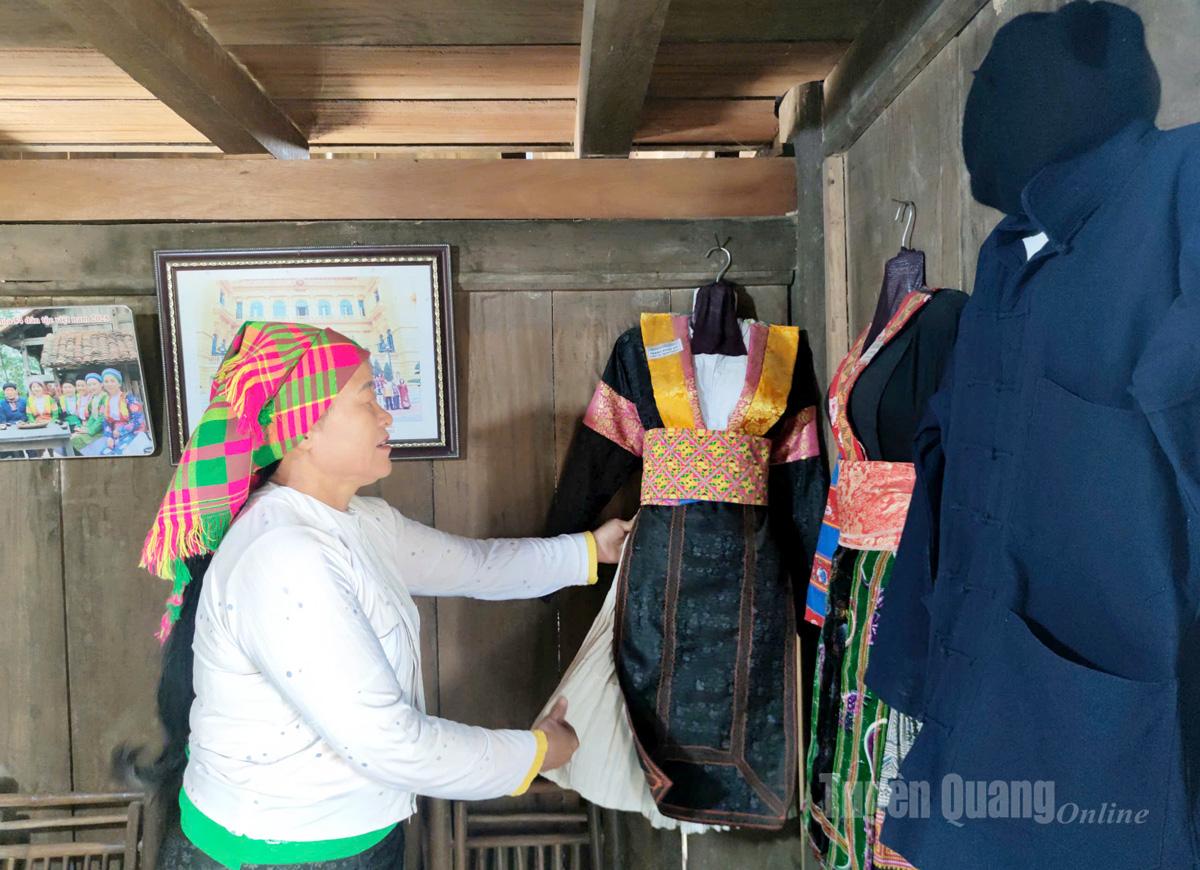 |
| Ms. Giàng Thị Má adjusts the traditional costumes of the Hmong people. |
Outside in the open field, the sound of Mr. Sung Chua Dinh's bamboo flute echoed, its melodies rising and falling like the breath of the mountains and forests. “When I left Vi Xuyen, I couldn’t bring much. But I absolutely had to bring my flute. Without it, it would be so sad… like not having my own voice,” he said, his eyes gazing into the distance. For the Hmong people, the bamboo flute is not just for dancing and singing, but also the spiritual essence of the community. The flute accompanies Hmong boys from the age of 13 to 15, through festivals, farming seasons, and even the final farewell at funerals.
On occasions when visitors arrive, the villagers tell them stories about the local market, the season of white buckwheat flowers blooming on the hillsides, and the Hmong New Year celebrations filled with smoke from cooking fires and laughter. They guide visitors in playing the flute, wearing headscarves, pounding rice cakes, and shaping corn. During major holidays, the village reenacts the Gau Tao festival along with many traditional games, allowing visitors not only to watch but also to immerse themselves in the festive spirit of the Hmong people.
Thanks to these simple yet culture-loving people, the Hmong village in Dong Mo is not just a static display model, but has become a vibrant Hmong village in the heart of the Doai region. There, the flame of Hmong culture continues to smolder, spreading warmth and pride, just like the majestic plateau itself.
Canh Truc
Source: https://baotuyenquang.com.vn/van-hoa/du-lich/202512/lang-nguoi-mong-giua-long-xu-doai-532476c/




![[Photo] General Secretary and President To Lam receives Amazon's Senior Vice President David Zapolsky](https://vphoto.vietnam.vn/thumb/1200x675/vietnam/resource/IMAGE/2026/05/22/1779466547770_a1-bnd-3513-6601-jpg.webp)

























































Comment (0)