

Representative Intangible Cultural Heritage of Humanity
On December 8, 2017, at its 12th session, the UNESCO Intergovernmental Committee for the Protection of Intangible Cultural Heritage officially removed Phu Tho Xoan Singing from the list of intangible cultural heritages under urgent protection and recognized it as a Representative Intangible Cultural Heritage of Humanity. This is the first and only such case in UNESCO's history, demonstrating not only the international community's recognition of Phu Tho province's commitment to protecting the heritage under urgent protection but also affirming the value, vitality, and widespread influence of Xoan Singing within the community.
In April 2018, the Phu Tho Department of Culture, Sports and Tourism, in coordination with the Viet Tri City People's Committee, officially launched the "Xoan Singing in Ancient Villages" tourism product, integrated with the daily Hanoi-Phu Tho tour. Since its implementation, the original Xoan singing villages have welcomed and served tens of thousands of visitors each year. Many travel companies have shown interest in developing tours linked to the Xoan singing program: Asia Experience Travel, Vietrantour, Saigontourist , Golden Tour, Neworient Tour, Newstar Tour, Nam Thanh Travel, Fivestar Tour, Vinatour, etc.
Through concrete and practical actions, the tourism industry in particular, and Phu Tho province in general, have transformed Xoan singing into a unique and distinctive cultural and tourism product that domestic and international tourists cannot miss. This is the foundation for Phu Tho Xoan singing – a representative intangible cultural heritage of humanity – to be preserved and promoted to the world .
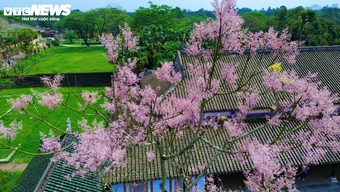
The ancient Xoan villages in the communes surrounding the Hung Temple historical site are prosperous and bustling areas, but not in the style of large resorts, high-rise hotels, or opulent villas with brightly lit gardens. Instead, visitors can participate in many activities such as admiring ancient spaces like Hung Lo communal house, Lai Len temple, and more than 200 ancient houses in Hung Lo commune; visiting traditional craft villages, and experiencing the process of making traditional banh chung and banh giay (traditional Vietnamese rice cakes).
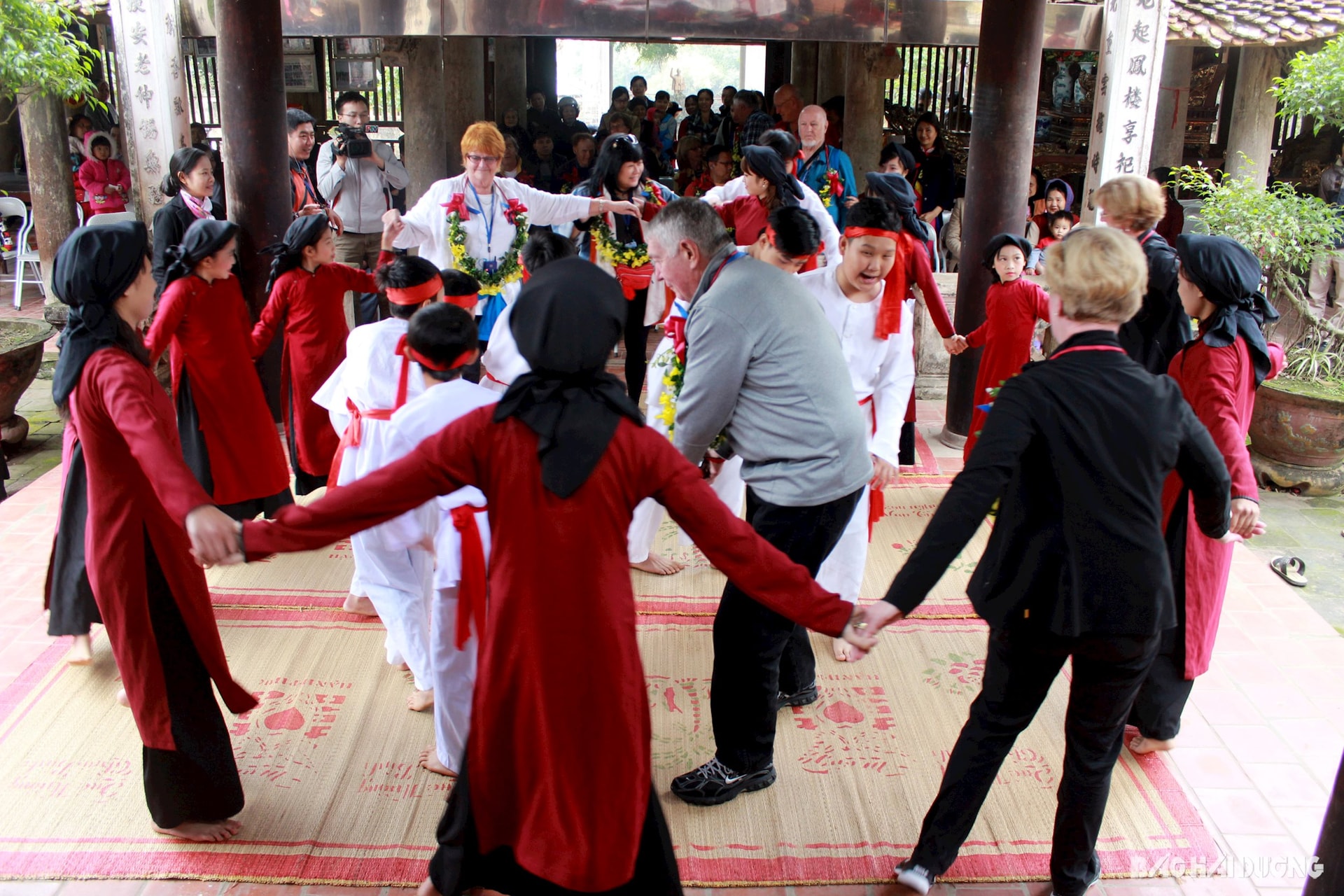
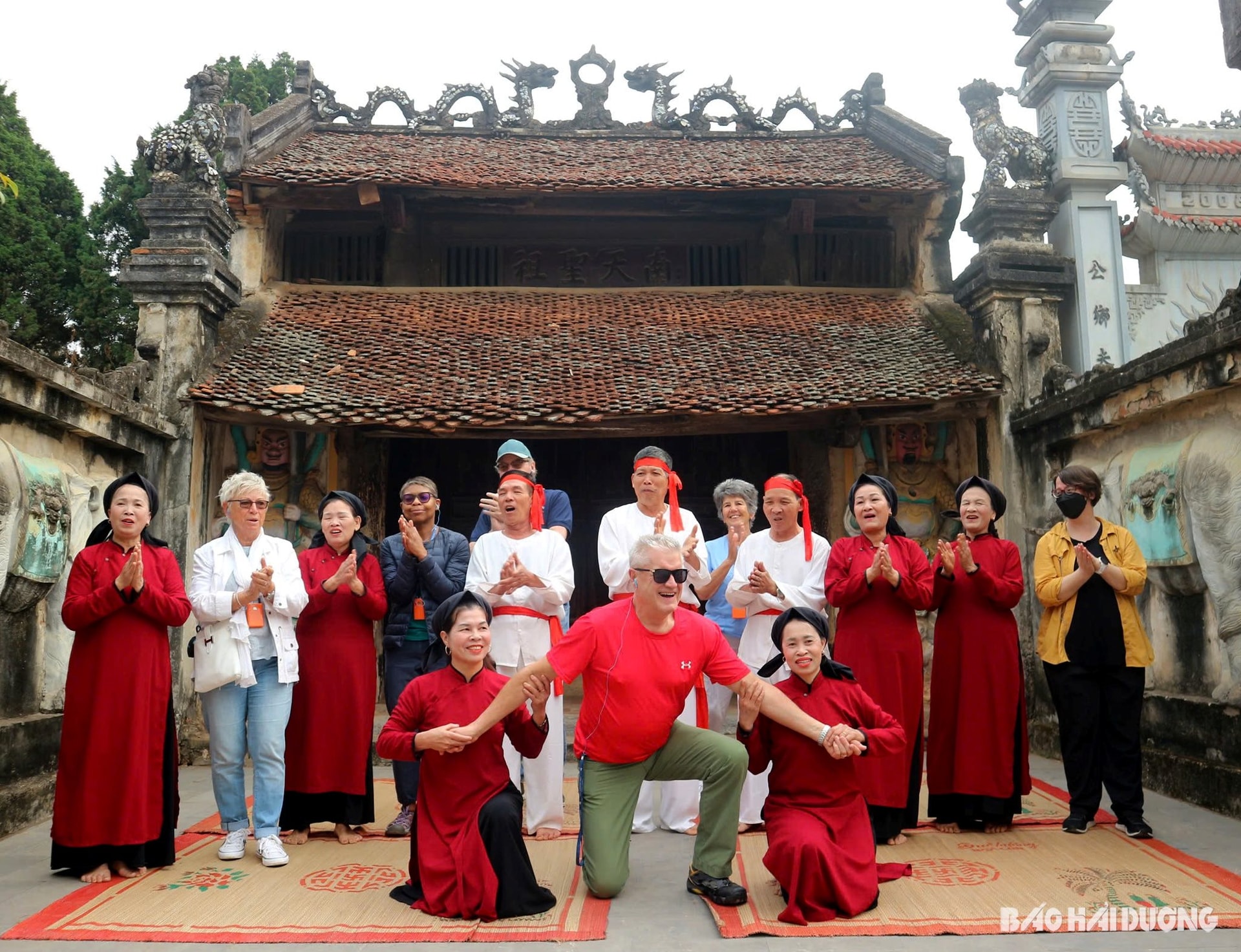
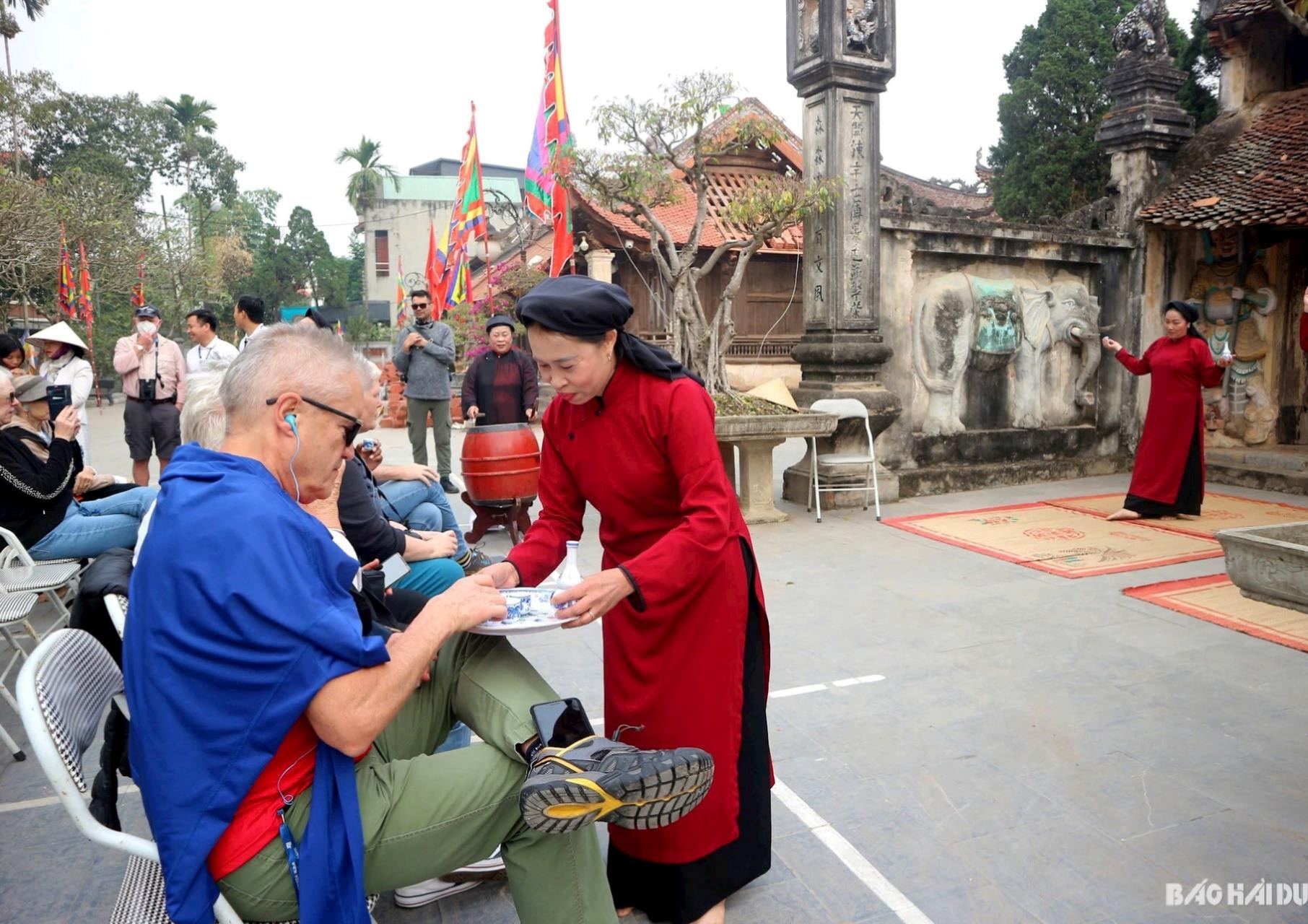
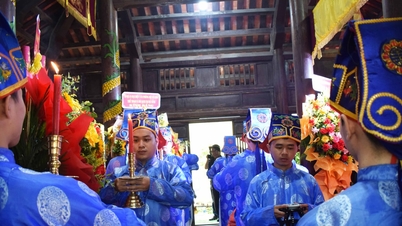
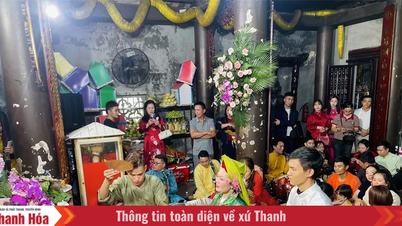
In particular, visitors can enjoy ancient Xoan singing at historical sites such as the Lai Len Temple, Hung Lo ancient communal house, An Thai communal house, and Kim Dai communal house (Viet Tri City), performed by artisans and members of the four original Xoan singing groups. Visitors, especially foreigners, will be guided and invited by the artisans to join in the Xoan singing. From enjoying a glass of wine during the devotional singing part, to the surprise and delight in the festive singing part with warm emotions, overcoming language and cultural barriers, only affectionate glances, friendly handshakes, and smiles remain. This further affirms that Xoan singing acts as an invisible thread, connecting the feelings of visitors from all over the world with Phu Tho, a sacred land and the cradle of the Vietnamese nation.
People's Artist Nguyen Thi Lich - Head of An Thai Xoan singing troupe, said: "I am very proud to perform Xoan singing for the people and tourists. This is my responsibility and dedication to preserving, spreading, promoting, and developing the value of Phu Tho's Xoan singing cultural heritage to people in the country as well as international tourists."
Spreading values
According to statistics from the Phu Tho Provincial Tourism Promotion Center, since their operation began, the "Ancient Village Xoan Singing" sites have welcomed over 14,000 tourists, the majority of whom are international tourist groups from countries such as the UK, France, the Netherlands, and the USA. In 2024 alone, 21 tourist groups with over 780 visitors came to enjoy and explore the ancient village Xoan singing sites. On average, Phu Tho province receives 2-3 foreign tourist groups each month as part of tours to visit and explore Phu Tho's unique traditional cultural heritage.
Visiting Phu Tho for the first time, Carole Moens, a tourist from Belgium, shared her joy at experiencing and exploring the cultural aspects of music, cuisine, and architecture that have existed for hundreds or thousands of years. "Especially, I not only got to listen and enjoy the performances but also directly participated in some simple movements of a Xoan dance. Through this, I felt the solemn atmosphere of the ritual of singing in honor of King Hung and understood more about the value of Phu Tho's Xoan singing heritage," said Carole Moens.
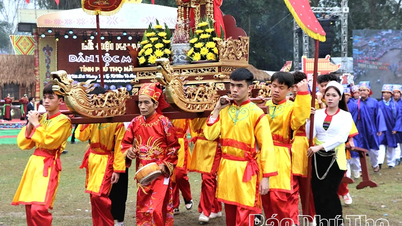
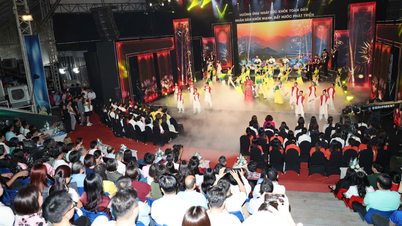
In the past, Xoan singing was only heard in ancient communal courtyards, but today, it resonates throughout the ancestral land of Phu Tho. Tourism in Phu Tho, combined with enjoying Xoan singing, has become an indispensable part of the itinerary for every tourist group visiting the ancestral land. Therefore, the performance space for Xoan is gradually expanding throughout the province. Xoan performances for tourists are not only held in the birthplace of Xoan, such as the Hung Lo Temple and Lai Len Shrine, but also at Dao Xa village communal house (Thanh Thuy) and several other ancient temples and communal houses in Phu Tho province. Xoan singing is also a special performance at many important cultural and political events at the provincial and national levels, such as the Vietnamese New Year and the International Tourism Fair.
LE HOANGSource: https://baohaiduong.vn/lang-xoan-don-du-khach-quoc-te-408335.html
![[Photo] Prime Minister Pham Minh Chinh receives the Chinese Ambassador to Vietnam](https://vphoto.vietnam.vn/thumb/1200x675/vietnam/resource/IMAGE/2026/04/05/1775397481797_ndo_br_dsc-5512-jpg.webp)

















































Comment (0)