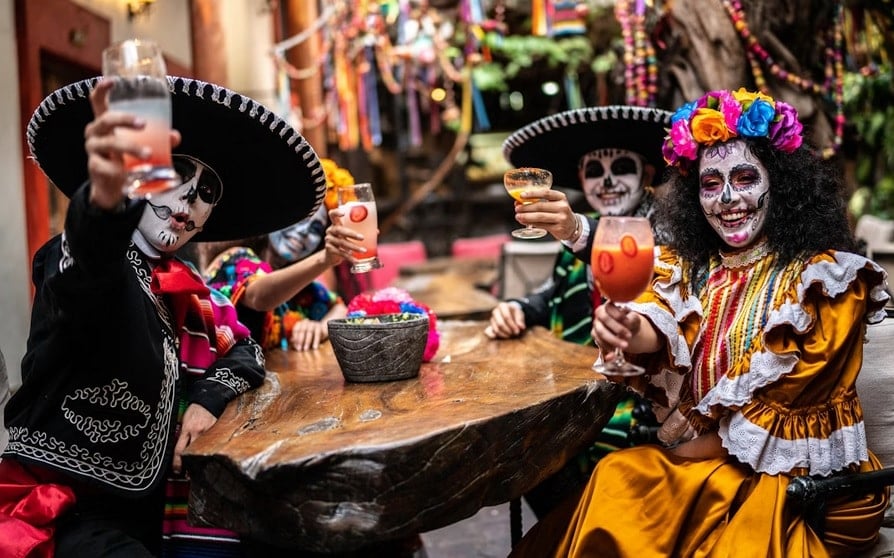
Hundreds of dancers in colorful folk costumes and with faces painted to resemble corpses paraded down the main avenues of Mexico City on November 2nd, marking "Day of the Dead," one of the most important spiritual festivals in Mexico and several Latin American countries.
Starting from the ancient Chapultepec castle area, dancers, escorted by giant skeleton models, parade along the more than 5-kilometer-long Reforma Avenue before stopping at the historic Reforma Square, creating a mystical yet captivating spectacle that attracts tens of thousands of capital residents and tourists.
This parade is the central event of "Day of the Dead - Día de los Muertos," a festival in which people throughout Mexico decorate their homes, streets, and the graves of loved ones with candles, colorful skull ornaments, and flowers, especially marigolds.
In addition, they bring the deceased's favorite belongings, food, and drinks to the grave and stay there overnight.



As an extended holiday, this is an opportunity for family and friends to gather to pay respects and remember deceased loved ones.
In Mexican folklore, people believe that the deceased remain members of the family and continue to exist in the memories of those who are left behind.
The time of the Day of the Dead is when they return to their families, so "Day of the Dead" is not tinged with mourning but carries the joyful atmosphere of reunion.
Starting in late October, many tourists flock to Mexico to participate in the colorful "Día de los Muertos" festival, immersing themselves in artistic street performances and masquerades.
Here, from paper toys and decorations to bread and candy shaped like skulls, everything looks so lively and cheerful, conveying the meaningful message that "Death is not something to be feared, but rather the beginning of a new life in another world ."


Although Halloween (October 31) and Día de los Muertos (November 1 and 2) are two completely different events, they have recently blended together, demonstrating Mexico's ability to adapt to foreign cultural elements without losing its own identity, and often incorporating distinctive Mexican touches into those elements.
With the humanistic values that this event brings, the "Día de los Muertos" festival was recognized by the United Nations Educational , Scientific and Cultural Organization (UNESCO) as an intangible cultural heritage of humanity in 2003.
Source: https://baohaiduong.vn/le-hoi-danh-cho-nguoi-chet-o-mexico-397146.html