

 |
Leicester themselves shattered their own fairytale. |
Some downfalls stem from professional failures. Some downfalls begin in the boardroom. Leicester City falls into the latter category.
Ten years ago, Leicester wrote the most beautiful fairy tale in English football history when they won the Premier League with odds of 5,000-1. They were once a symbol of intelligent management, astute recruitment, and team spirit.
Today, Leicester were relegated to League One after a 2-2 draw against Hull City. But relegation is just the tip of the iceberg.
Beneath the surface lies massive losses, an out-of-control payroll, future revenue pledged as collateral, and an operating model that has long since gone off track.
Leicester didn't collapse in one season. They wore themselves down over many years.
Live on the money of tomorrow.
Modern football allows clubs to borrow from the future to serve the present. Many teams do this. But the difference lies in the level of control. Leicester went too far.
According to financial reports, the club lost £71.1 million in the 2024/25 season alone. The total accumulated losses since 2019 have reached £375 million. That's an alarming figure for any team, especially one no longer in the Premier League.
To keep things running, Leicester borrowed at least £100 million from Australian investment bank Macquarie at an interest rate of 8-9%. They received advance payments from future player sales. They also received "parachute payments," the support funds provided to clubs relegated. Simply put, Leicester used money that hadn't yet arrived to pay today's bills.
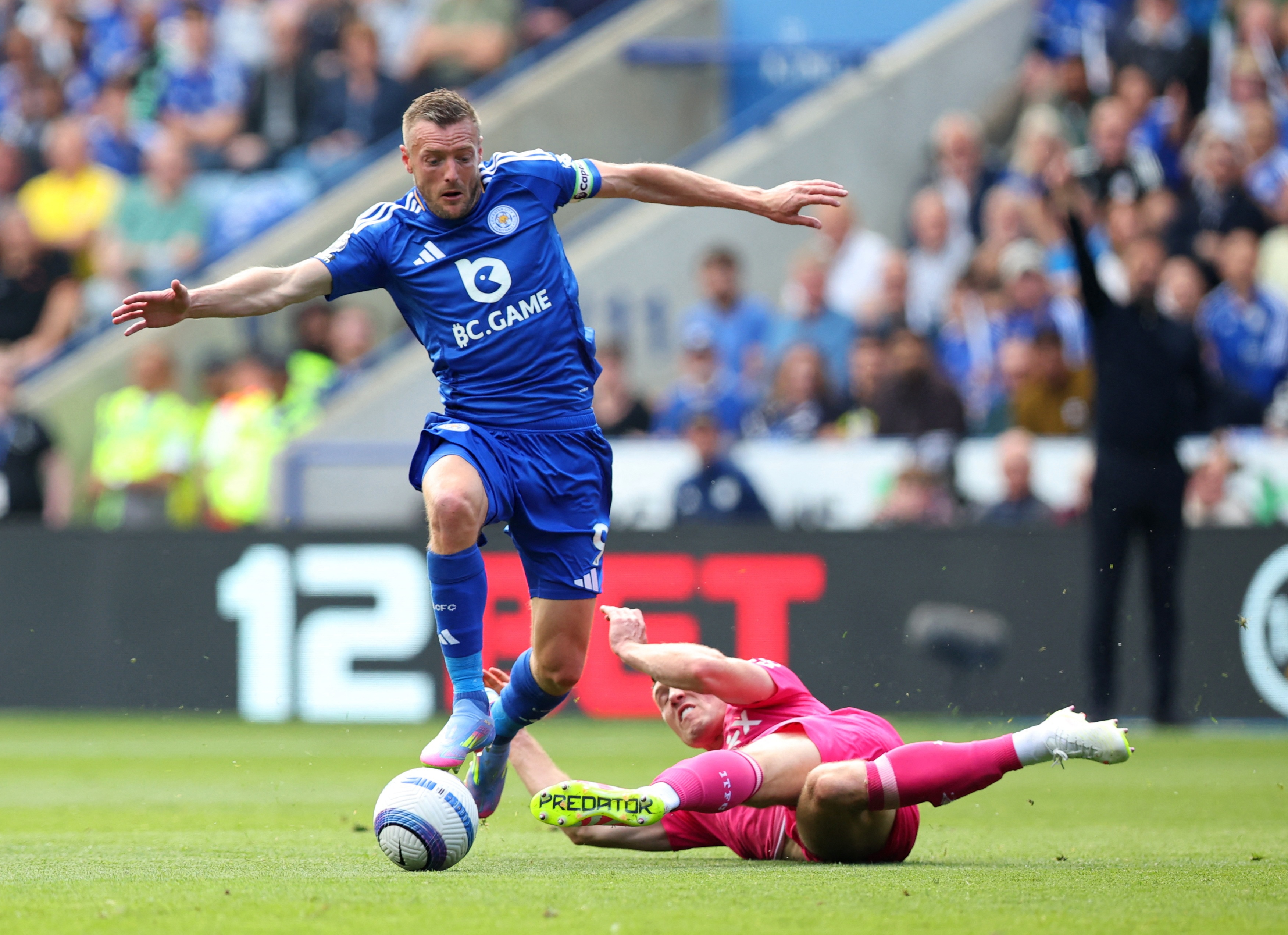 |
Many of the stars no longer play for Leicester. |
It's an extremely risky model. When we were in the Premier League, the big cash flow could mask many mistakes. But when we dropped down to the Championship and then League One, that machine immediately ran out of steam.
Television rights revenue in League One is only around £2 million, while existing financial obligations remain unchanged. This is when Leicester realizes the difference between genuine growth and growth achieved through borrowing.
Premier League wage bill among League One
A relegated club often faces the headache of selling players. Leicester faces an even greater headache because many of their players are not easy to sell. Last season, their wage bill was around £150 million. Even if it is drastically reduced to £70 million next season, that is still an unreasonable amount for a League One team.
Look at the overall wage bill in the English third division. The average wage bill is only around £9.5 million. Birmingham's £38.9 million wage bill last season was considered a record. Leicester's could be significantly higher.
It's a deadly paradox. You can't bring the Premier League's spending structure down to League One and expect the system to still function.
Some high-paid players, like Patson Daka and Ricardo Pereira, will have their contracts expire. But many others still have long-term commitments.
Oliver Skipp's contract runs until 2029. Jannik Vestergaard has been given a three-year extension. Harry Winks is reportedly earning £90,000 a week and still has a contract.
 |
Ruud van Nistelrooy was appointed to manage Leicester, but failed to help the club avoid relegation. |
The problem isn't just about cutting salaries. The problem is who will buy them. When a high-paid player plays for a relegated team two years in a row, the market doesn't expand. It contracts.
Leicester once made the whole world believe that football is still fair. They won championships through intelligence, not money. They built their team from underestimated players and turned them into stars.
But success sometimes creates the most dangerous illusion: the belief that one can always manage. After winning the championship, Leicester gradually entered a game of bigger spending, bigger expectations, and bigger risks. When wrong transfer decisions occurred, when the wage bill ballooned, and when revenue was no longer strong enough, the downward spiral began.
It didn't happen loudly. It happened quietly.
By the time fans displayed banners reading "King Power Out," it was too late. King Power Corporation was no longer in its prime after the Covid-19 pandemic. This left the biggest question unanswered: who would continue to pump money to save Leicester?
Without a clear answer, League One may not be the bottom yet. Leicester could still make a comeback. They are a club with a good name, a great stadium, and a huge fan base. But to make a comeback, they must accept the painful truth that the old model has failed.
Sometimes relegation isn't an accident. It's the bill.
Leicester once lived the dream of English football. Now they wake up amidst massive debt and relegation to League One.
Source: https://znews.vn/leicester-mat-tat-ca-post1646067.html





















































































Comment (0)