

 |
The image of the baby Tuam was shared by Khao Kheow Open Zoo on May 18th. |
On May 18th, Khao Kheow Open Zoo in Chon Buri province (Thailand) announced a rare milestone in wildlife conservation. A large adjutant stork (also known as the wolf stork) successfully hatched after artificial incubation and special care.
According to the Bangkok Post , the chick, named Tuam, is now 39 days old. It was hatched artificially and hand-nurtured at a zoo in Chon Buri. This marks the first time the Zoological Parks of Thailand has successfully bred this rare stork species in captivity.
According to Thai media, the giant stork is a species of large stork that used to appear in the wild in Thailand but is believed to have disappeared more than 40 years ago. They are now classified as endangered, with very few remaining in the wild.
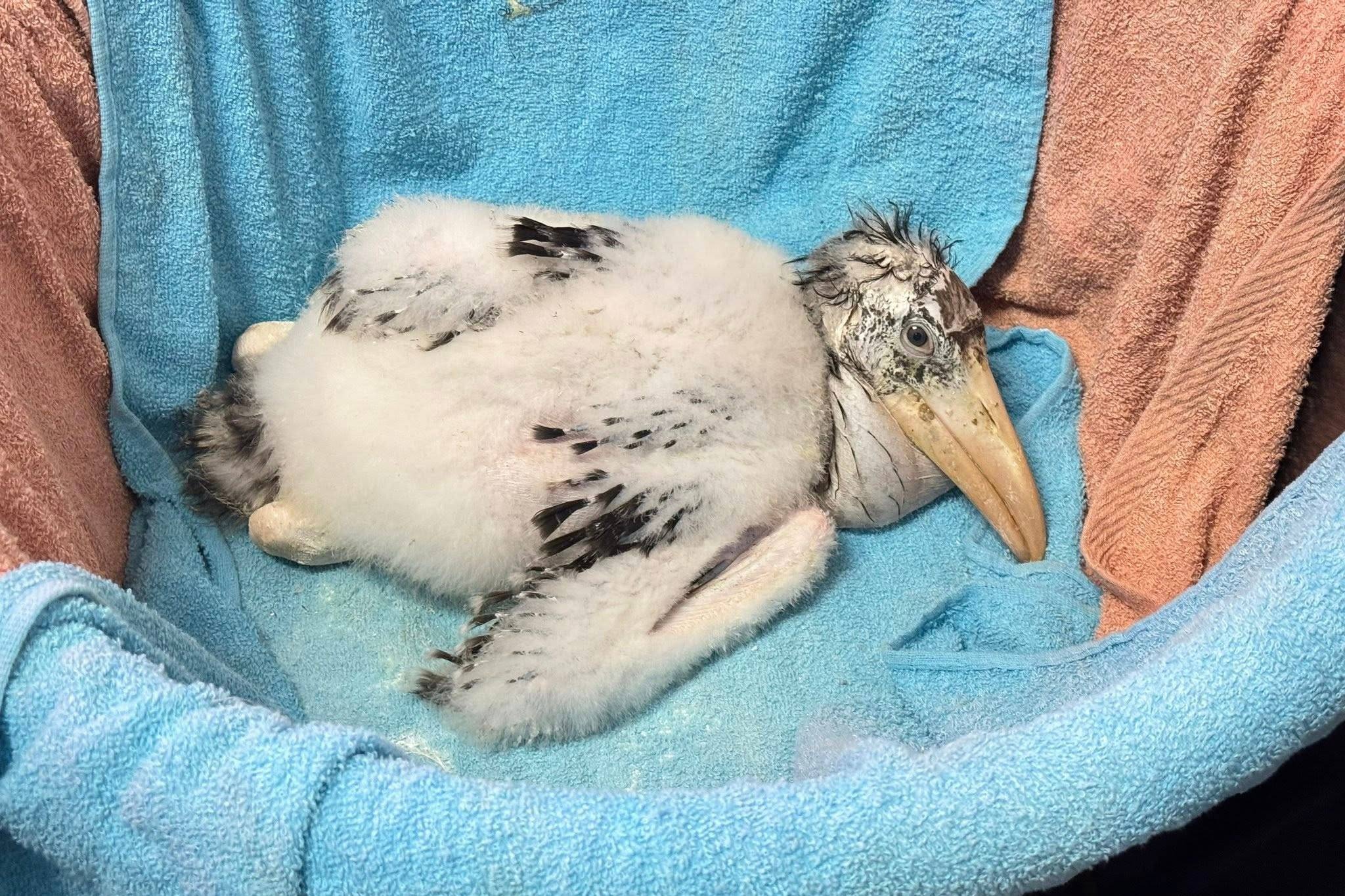 |
Tuam chicks during the period immediately after successfully hatching. |
Narongwit Chotchoy, the zoo director, said Tuam was born from the only breeding pair of storks currently in Thailand. Because this species only lays 1-2 eggs per year and has a low hatching rate, the care team decided to intervene after discovering that the parent birds were not incubating the eggs properly.
The egg was discovered on March 8th and subsequently transferred to an incubator to increase its chances of survival. Due to equipment limitations, staff had to manually rotate the egg continuously for 34 days before the chick hatched on April 10th.
Narongwit called it a "lifesaving effort" that lasted for weeks, requiring staff and veterinarians to closely monitor each stage of the egg's development.
Khao Kheow Open Zoo announced that the public can now follow the growth journey of the young birds through the zoo's media channels. This is also a way for the zoo to spread awareness and promote the conservation of rare wildlife in Thailand.
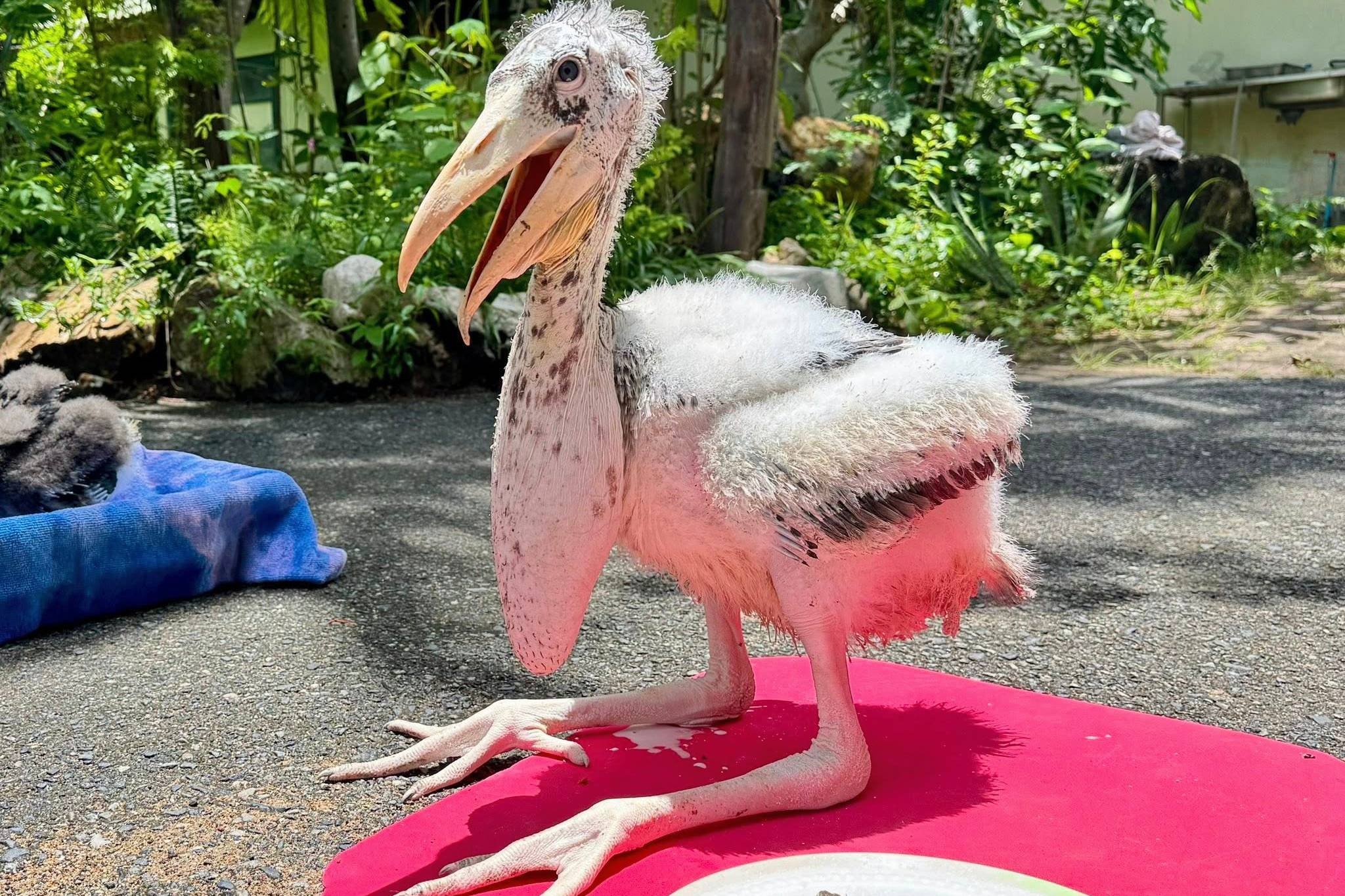 |
The chicks are now 39 days old and have been released into the outside environment. |
This event makes Khao Kheow Open Zoo the fourth facility in the world to successfully breed giant storks in captivity, after three others in Thailand, India, and Cambodia.
Thai Minister of Natural Resources and Environment Suchart Chomklin described this as a significant milestone for the country's wildlife conservation efforts. He praised the team of veterinarians and animal caretakers involved in the project.
In recent days, images of Tuam have appeared on many social media sites in Thailand. Many people are calling the baby stork a "new hope" for the journey to bring this rare bird back to the wild after decades of disappearance.
Source: https://znews.vn/loai-co-hiem-duoc-sinh-ra-o-vuon-thu-thai-lan-post1652484.html
![[Image] Close-up view of the interchange connecting the two expressways and Long Thanh Airport.](https://vphoto.vietnam.vn/thumb/1200x675/vietnam/resource/IMAGE/2026/05/25/1779703378210_ndo_br_z7863716673926-224453a31600126cce10622af6290afd-4549-jpg.webp)




![[Image] Hanoi's urban life under the challenge of a "scorching hot" environment](https://vphoto.vietnam.vn/thumb/1200x675/vietnam/resource/IMAGE/2026/05/25/1779706979265_nang-nong-t5-2026-minh-duy-7-4636-jpg.webp)















































































Comment (0)