

 |
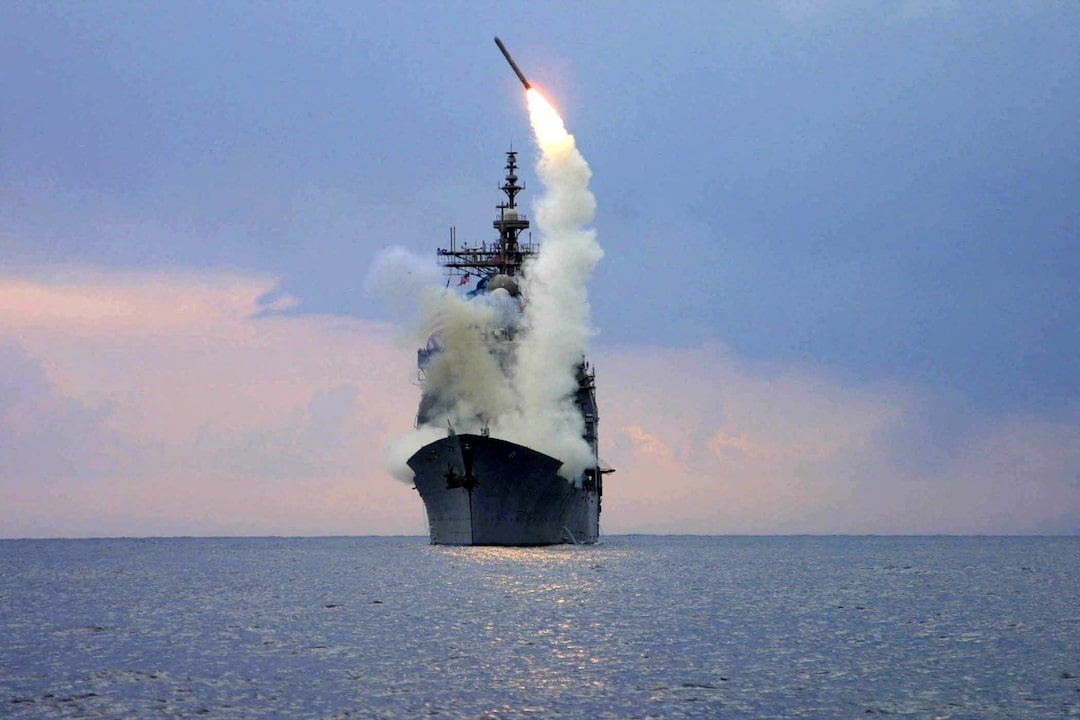
A Tomahawk cruise missile is launched from the US guided-missile cruiser USS Cape St. George. Photo: Reuters . |
US War Secretary Pete Hegseth informed Japanese Defense Minister Shinjiro Koizumi about the delay in the delivery of Tomahawk cruise missiles. According to the Financial Times , Hegseth revealed this information during a phone call with Koizumi earlier this month.
The Japanese government had previously signed a contract with the United States to purchase up to 400 Tomahawk missiles between fiscal years 2025 and 2027.
"Washington has announced that the delay could push the handover schedule back up by two years," the Financial Times quoted a source familiar with the matter as saying.
According to several sources, the US military used a very large number of missiles in the war with Iran. An analysis published in April by the Center for Strategic and International Studies (CSIS) estimated that the US military launched more than 1,000 Tomahawk missiles in the campaign in Iran, equivalent to about 30% of its stockpile of 3,100 missiles.
Currently, meeting the US's own defense industry is already a significant challenge, not to mention fulfilling orders from allies and partners.
Weaknesses of the US defense industry
Within the U.S. government, the shortage of interceptor missiles, coupled with the difficulty in producing weapons quickly enough to meet actual needs, has raised concerns.
America's adversaries may become bolder, while allies must reconsider their positions, fearing that the U.S. may no longer be able to protect them as effectively as before, and even defense orders are being delivered late.
According to US intelligence agencies, the conflict in Iran is damaging the image of the US military capabilities.
 |
U.S. War Secretary Pete Hegseth is seeking to address limitations in the Pentagon's weapons procurement system while simultaneously boosting the U.S. defense budget to $1.5 trillion . (Photo: New York Times) |
Former Secretary of War Robert M. Gates argues that, for the time being, the Pentagon needs to focus on building its weapons manufacturing capabilities.
"Everyone talks about America's defense industry capabilities, from shipbuilding to ammunition, but at what rate are factories expanding or new facilities being built? That's why I think bureaucratic reform is extremely important, because the speed of production is now vital," Gates said.
Gates argued that even with an increase in the U.S. defense budget, the Pentagon will still have to make difficult decisions.
According to him, it is crucial for Pentagon leaders to determine which legacy systems should be retained and production accelerated, and which systems must be definitively phased out.
"There are many people in the Pentagon who could slow down the process, create obstacles, or even oppose decisions like this. Only two people can overcome all those obstacles: the secretary and the deputy secretary of defense," Gates said.
 |
Mr. Hegseth and President Trump are pictured at a military parade in Washington in 2025. Photo: New York Times. |
Winslow T. Wheeler, a former analyst at the U.S. Office of the Government Accountability Office, argues that the problem lies in the Pentagon's investment culture. The agency tends to prioritize expensive weapons systems that are difficult to maintain in practice.
"That's how they create a $1.5 trillion defense budget, but the arsenal is shrinking, becoming outdated, and unsustainable in the long run," Wheeler said.
According to the New York Times , while serving as US Secretary of Defense from 2006 to 2011, Robert M. Gates repeatedly criticized the US military's weapons systems as being too complex and too expensive.
Gates opposes "99% perfect" weapon systems that take years to build, and instead calls for the development of a new generation of weapons that only need to be "75% effective," but can be produced much more cheaply and quickly.
Nearly two decades later, the situation remains virtually unchanged from Gates' time. A US Patriot interceptor missile can take up to 36 months to build completely, costing around $4 million .
During the Iran conflict, the US military launched more than 1,200 Patriot missiles, often just to shoot down Shahed drones, each worth around $35,000 . Iran is capable of producing at least 200 of these drones per month.
The conflict in Iran is causing an alarming rate of depletion of the U.S. arms stockpile. This reality brings back Gates' old criticisms, as his words from nearly two decades ago remain true, exposing the deep limitations of the U.S. defense industry and arms procurement system.
The problem is "we know it already, it's so frustrating, we've talked about it endlessly."
The Pentagon and the U.S. Congress have been trying to resolve the issue for years without success. Currently, Secretary of War Pete Hegseth is continuing this task.
The biggest difference is that while many previous secretaries, including Gates, called for more weapons production with less funding, Hegseth pushed for a defense budget of $1.5 trillion . This is the largest proposed military spending plan in modern American history.
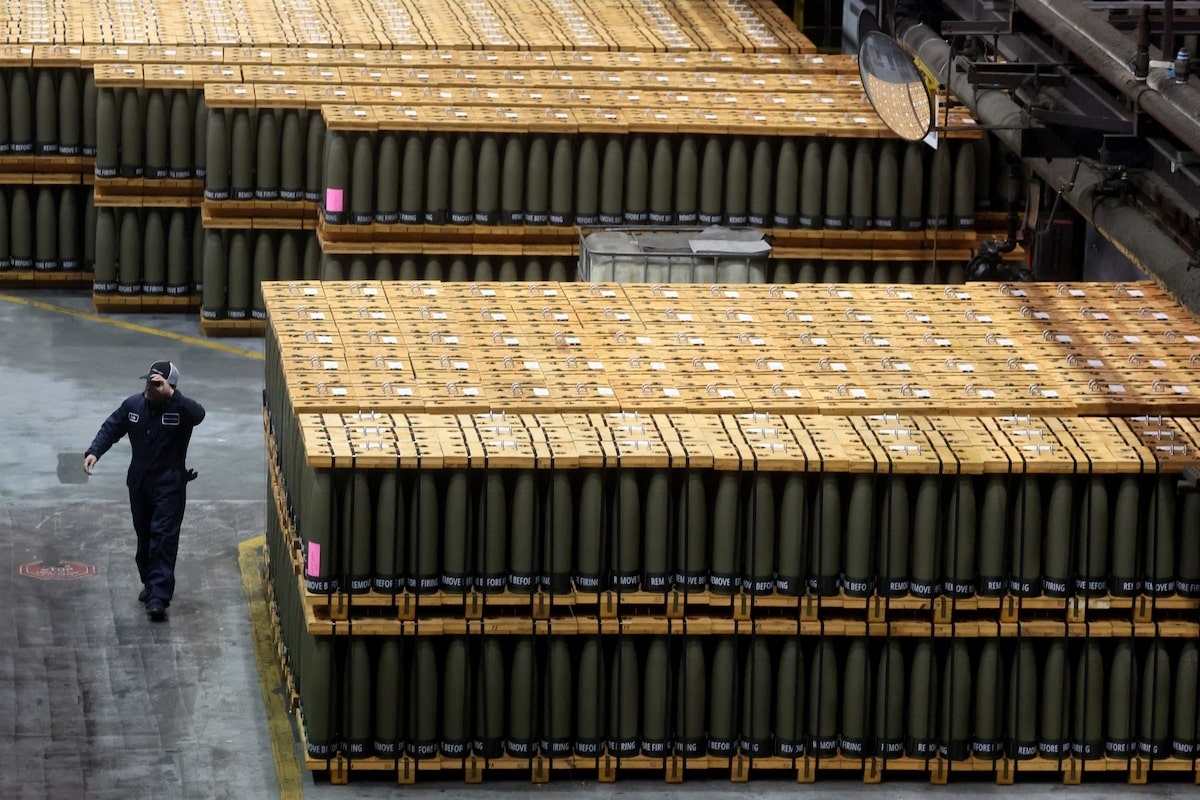 |
155 mm artillery shells are packaged for shipment at the Scranton Army Ammunition Plant in Pennsylvania, USA. Photo: Reuters . |
However, according to experts, the fundamental problems in how the U.S. military designs and manufactures weapons cannot be solved with money alone.
According to Mackenzie Eaglen, a military expert at the American Enterprise Institute, responsibility lies with many parties, but essentially the Pentagon is "an overly demanding customer, often buying in small quantities and therefore never achieving economies of scale."
The military equipment that the U.S. purchases—from warships and aircraft to ammunition—often takes years to produce. When war breaks out, according to Eaglen, there will be no “quick fix” to increase production to meet the demands of the situation.
"The system has no redundancy, and people assume that increasing capacity is only necessary during wartime, but what happens when actual hostilities break out? Reality has shown this to be short-sighted thinking, yet it has persisted for so long," said Ms. Eaglen.
U.S. War Department officials said they were ready to change. Hegseth called for a move toward an “85% solution” in arms procurement to reconcile “99% perfection” and “75% effectiveness.”
With the potential for a significant increase in defense spending, Hegseth's changes focused on boosting domestic production to prioritize commercial sourcing, while also encouraging more new defense technology companies to participate in bidding processes and requiring contractors to enhance their manufacturing capabilities.
To date, the Pentagon has expanded numerous contracts, requiring contractors to triple or quadruple their current ammunition production output and maintain this level of productivity for many years.
“The groundwork for a systemic transformation has emerged. We’re seeing renewed energy from Pentagon leadership, support from Congress, and the real need arising from the Iran conflict. If this doesn’t lead to a modernization of the defense industry, the U.S. will miss a critical juncture,” said Rachel Hoff, director of policy at the Ronald Reagan Institute.
Source: https://znews.vn/cham-ban-giao-ten-lua-tomahawk-cho-dong-minh-my-lo-diem-yeu-post1654052.html
![[Image] Hanoi's urban life under the challenge of a "scorching hot" environment](https://vphoto.vietnam.vn/thumb/1200x675/vietnam/resource/IMAGE/2026/05/25/1779706979265_nang-nong-t5-2026-minh-duy-7-4636-jpg.webp)
![[Image] Close-up view of the interchange connecting the two expressways and Long Thanh Airport.](https://vphoto.vietnam.vn/thumb/1200x675/vietnam/resource/IMAGE/2026/05/25/1779703378210_ndo_br_z7863716673926-224453a31600126cce10622af6290afd-4549-jpg.webp)

























































































Comment (0)