From individual orchards to production linkages
In 2012-2013, Mr. Ngo Manh Truong (Hamlet 1, Mang Yang Commune) began investing in planting 5 hectares of macadamia trees. In the early years, due to a lack of experience in caring for the trees, the orchard grew slowly, and the yield did not meet expectations.
After a period of research, he gradually adjusted the care process, focusing on pruning and fertilizing. From 2020 to the present, the macadamia orchard has maintained a yield of about 3-4 tons of fresh nuts per year, helping his family earn a stable income of over 1 billion VND per year.
Recognizing that individual production makes it difficult to improve competitiveness, Mr. Truong and other households in the area established a Macadamia Club with 30 members and a total area of approximately 45 hectares. "Individual production by each household makes it difficult to build a brand. To increase value, we must focus on nut quality, cultivation processes, and collaboration," Mr. Truong stated.
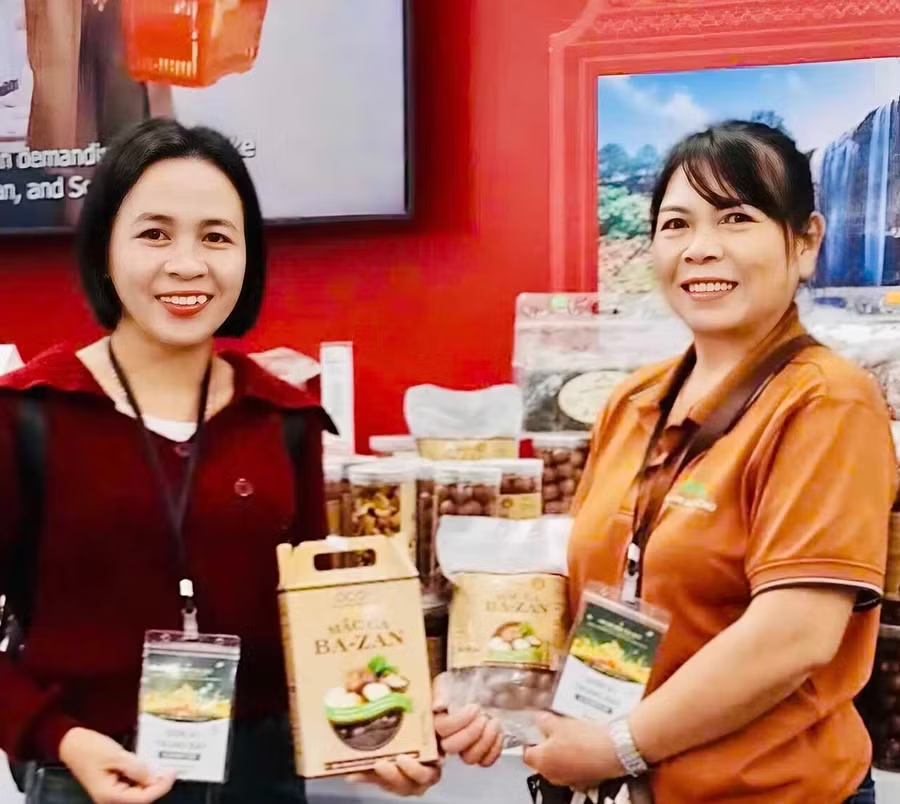
To improve production efficiency, overcome the problem of small-scale farming, and gradually build a supply chain, in 2023, 21 members of the Macadamia Club participated in establishing the Kon Ha Nung Agricultural Cooperative (Kon Lanh village, Dak Rong commune). Currently, the cooperative has 18 members directly growing macadamia nuts on an area of over 50 hectares.
According to Ms. Tran Thi Thanh Tuyen, Chairwoman of the Board of Directors of Kon Ha Nung Agricultural Cooperative, before the establishment of the cooperative, many households were worried about the market for their products. Although macadamia trees are suitable for the local climate, consumption mainly depends on traders, and prices are not stable.
Based on that reality, the cooperative determined that it needed to change its production methods, shifting from selling raw materials to deep processing to increase value. In 2024, the cooperative had two products recognized as OCOP products: Ba-zan macadamia nuts and honey-dried macadamia kernels.
The cooperative purchases, processes, and markets the entire macadamia nut production of its members under a common brand. By 2025, the cooperative aims to supply over 30 tons of processed macadamia products to the market, not only within the province but also expanding to Ho Chi Minh City, Hanoi , and many other locations.

"Fresh macadamia nuts sell for only about 60,000 - 80,000 VND/kg, but after processing, drying, packaging, and branding, the product's value can increase to 180,000 - 200,000 VND/kg. Deep processing helps the product gain a stronger foothold in the market," said Ms. Tuyen.
According to Ms. Tuyen, the cooperative's goal in the coming period is to continue expanding its consumer market, investing in more machinery and processing equipment to meet the increasing market demand. At the same time, the cooperative also hopes to receive support from relevant authorities in trade promotion, product advertising, and the sustainable development of the local macadamia brand.
Establishing raw material zones linked to processing
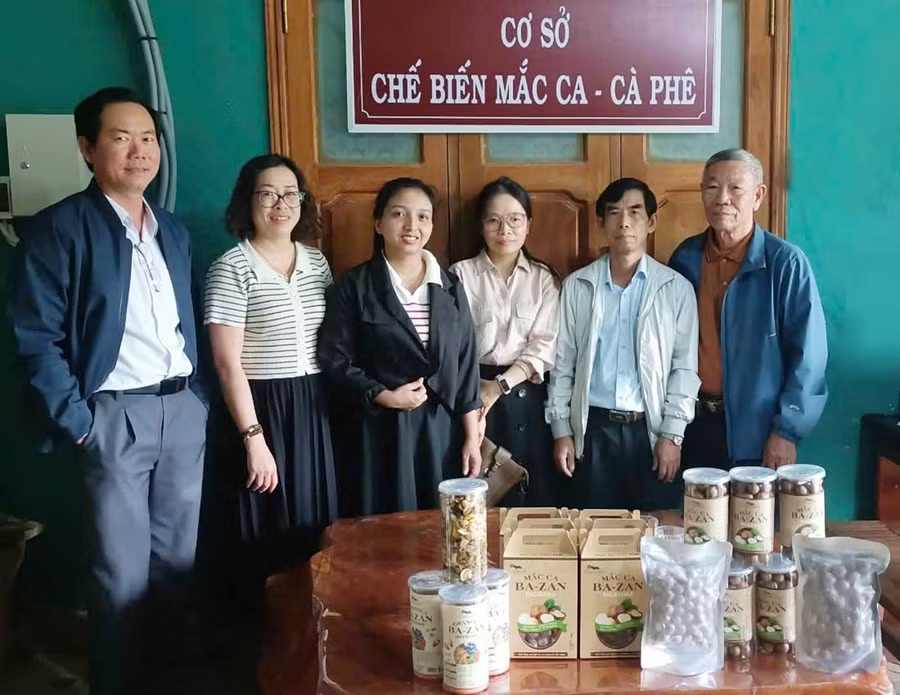
In Son Lang commune, many people are also promoting macadamia development through collaborative efforts. In July 2023, Mr. Thieu Viet Doan (Thong Nhat village) and other members established the Macadamia Farmers' Association.
From an initial 38 members, the Farmers' Association now has 65 members with an area of over 100 hectares. The establishment of the Farmers' Association has made it easier for members to exchange experiences, receive technical support, and find markets for their products.
Mr. Doan's family is one of the first macadamia growers in the area. In 2012, he planted 2.5 hectares of macadamia trees intercropped in his coffee plantation. To date, this area yields an average of 2.5 - 3 tons per hectare.
“Intercropping macadamia with coffee helps utilize the land efficiently, and the two crops can be harvested at different times. Macadamia also acts as a windbreak, supporting coffee growth. My family has invested in drying machines, nut splitting machines, and vacuum packaging machines to process the finished product; currently, we have two OCOP products: dried macadamia nuts and dried macadamia kernels,” Mr. Doan shared.
According to Mr. Le Quy Truyen, Vice Chairman of the People's Committee of Son Lang commune, there are more than 1,000 hectares of macadamia trees in the commune, mostly intercropped with coffee. The locality has also formed a Macadamia Farmers' Association.



"Macadamia trees are well-suited to the local natural conditions, helping people diversify their crops. However, the locality is not aiming to expand the planted area at all costs, but rather focusing on improving quality, building brands, and developing processed products," Mr. Truyen said.
According to the Department of Agriculture and Environment, the province currently has over 4,341 hectares of macadamia trees (370 hectares of pure cultivation and 3,971 hectares of intercropping). Based on a review of the actual situation and the development needs of macadamia trees in localities, Gia Lai province plans to plant approximately 250 hectares of new macadamia trees between now and 2030 (about 23 hectares of pure cultivation and about 227 hectares of intercropping).
Along with expanding the raw material area, the province is focusing on reorganizing production, encouraging the formation of cooperatives and associations, and building a value chain from planting and processing to consumption. This will give Gia Lai macadamia nuts more opportunities to increase their value and gradually become a distinctive agricultural product of the locality.
Source: https://baogialai.com.vn/lien-ket-nang-gia-tri-mac-ca-gia-lai-post589928.html