

DAK NONG: With the advantage of being located right next to the Ta Dung Lake tourist area - a 'Ha Long Bay in the Central Highlands', this organic coffee plantation has become an attractive destination for tourists.
DAK NONG: With the advantage of being located right next to the Ta Dung Lake tourist area - a 'Ha Long Bay in the Central Highlands', this organic coffee plantation has become an attractive destination for tourists.
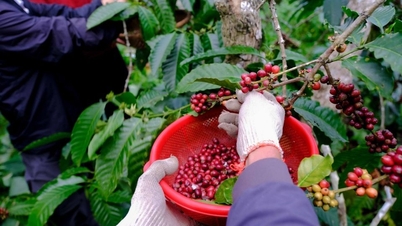
The coffee plantation is located in B'Srê A hamlet, owned by Mr. Nguyen Viet Tien, 58 years old. This is also one of more than a dozen effective agricultural models cultivated organically to serve experiential tourism, in collaboration with Ta Dung Tourism Cooperative (Dak Som commune, Dak Glong district, Dak Nong province).
Ta Dung Lake tourist area (Dak Glong district, Dak Nong province) is a natural masterpiece that has become an attractive destination in the Central Highlands in general and Dak Nong in particular for many years. Furthermore, this area is very suitable for developing high-value economic crops such as durian, mangosteen, macadamia nuts, pepper, and coffee… Recognizing this advantage, the Ta Dung Tourism Cooperative has brought together many local farming models to link and develop tourism. Mr. Tien's coffee plantation is one of them.
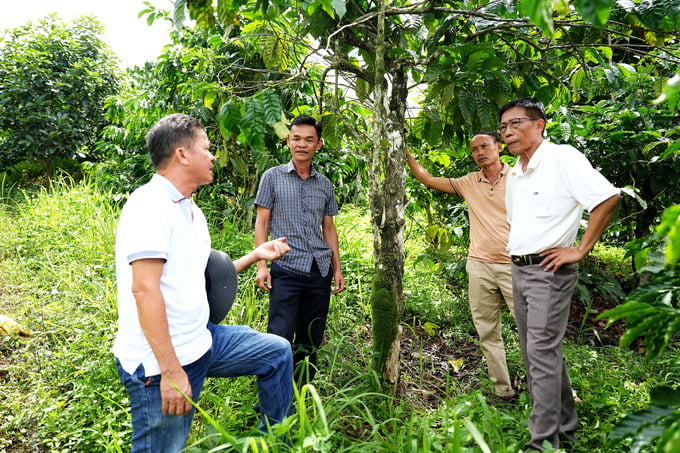
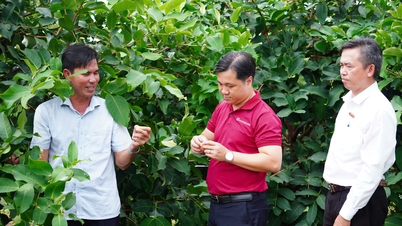
Mr. Nguyen Viet Tien (far left) introduces the organic coffee model to Mr. Ho Gam (far right), Chairman of the Dak Nong Provincial Farmers' Association. Photo: Hong Thuy.
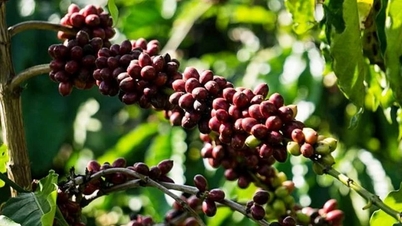
Mr. Tien said that this Robusta coffee plantation has a total area of 6 hectares, is 12 years old, and has been cultivated according to organic farming practices since it was first planted. "Initially, I simply understood it as not using inorganic fertilizers or chemical pesticides, simply because I planted coffee primarily for myself, my family, relatives, and friends to use, and I felt more secure about it."
I understand that exposure to many toxic chemicals from fertilizers and pesticides will affect my health and my family's health. Without health, there is nothing. I don't use fertilizers and pesticides indiscriminately for the sake of productivity and profit because the harm outweighs the benefits, not to mention the rapid degradation and depletion of soil fertility.
"It wasn't until the guys from the Ta Dung Tourism Cooperative came to see me, asking me to collaborate on tourism development and explaining the organic farming process in more detail, that I understood what organic farming really meant. It turns out I had already been applying over 80% of the farming process they talked about all along," Mr. Tien said with a smile.
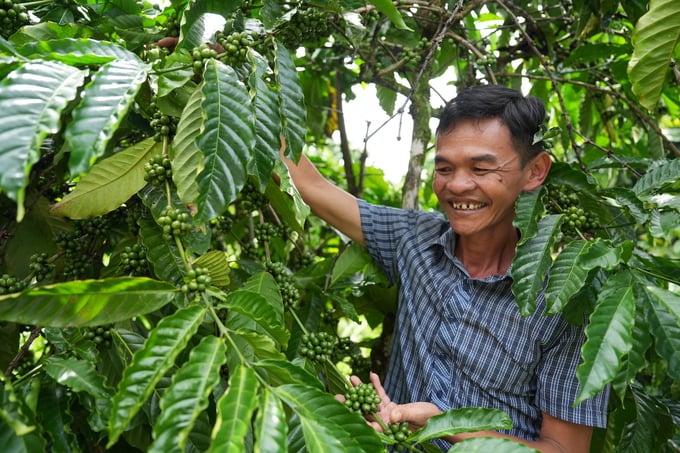
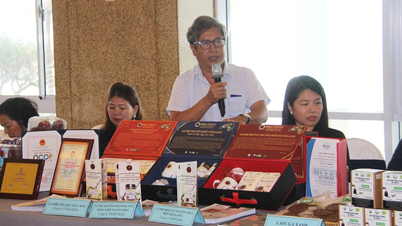
Mr. Vo Duy Quang, Director of Ta Dung Tourism Cooperative (pictured), said that the collaboration with orchard owners to develop tourism has initially proven effective. Photo: Hong Thuy.
Mr. Tien shared that because he also had other jobs, his coffee plantation didn't receive much investment. Initially, he bought organic fertilizer from a company at a rather high price. Meanwhile, because he didn't use inorganic fertilizer, the yield wasn't high, and there was no profit. After researching and learning about the process of composting organic fertilizer using probiotics and consulting with agricultural experts, he bought probiotics to compost cow, chicken, and goat manure to fertilize the plants.
“I only weed around the base of the trees to keep them clean; I absolutely do not use herbicides because this layer of grass retains moisture very well in the soil and is also a favorable environment for insects to thrive. As for pests and diseases, I only occasionally use biological products from the company to spray, and even then, I use them very sparingly. Because the trees are healthy, their resistance is also good, and many beneficial insects grow in the garden, which will eliminate harmful insects,” Mr. Tien said.
Mr. Tien said that before partnering with the Ta Dung Tourism Cooperative, although his coffee was of high quality, he still only sold it to traders like any other traditionally grown coffee.
“Last year, a company from Ho Chi Minh City came here for a tourist visit. They saw my farming process and took samples of my coffee for testing. Shortly after, they approached me with a contract to purchase all the coffee from my farm at a price 1.5 to 2 times higher than the market price. However, they included many clauses, basically requiring me to maintain my farming methods and not use inorganic fertilizers or pesticides to increase yield just because of the higher price. If the quality didn't meet the initial standards, I would have to pay compensation and face heavy penalties. Of course, I accepted everything because even without them, I would still farm the same way. This shows how much people value clean products these days,” Mr. Tien happily recounted.
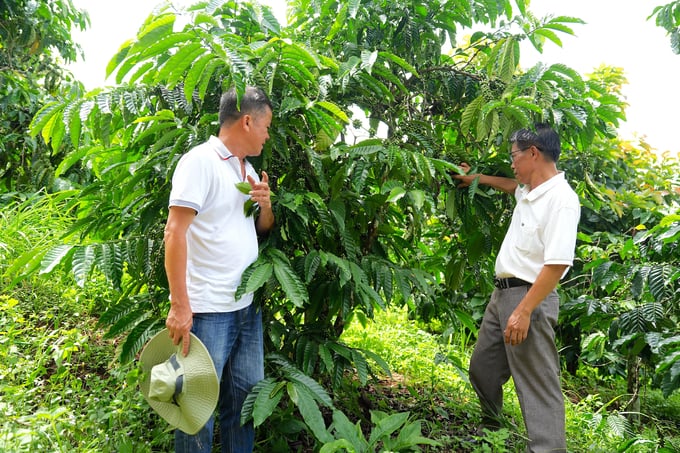
Mr. Ho Gam - Chairman of the Dak Nong Provincial Farmers' Association (right) highly appreciates the model of organic coffee farming and tourism linkage. Photo: Hong Thuy.
What makes Mr. Tien happiest is that he's on the right track in his farming process. Although his coffee plantation hadn't received proper investment and care in previous seasons, the trees were old and showing signs of aging, resulting in low yields—only slightly over 2 tons/ha this season—Mr. Tien is still satisfied. The value of organic farming is evident in the high price guaranteed by the company. Therefore, despite the low yield, his profits haven't decreased.
"Initial results show the effectiveness of the linkage between Ta Dung Tourism Cooperative and the orchards to develop tourism. For a sustainable linkage, the orchards must ensure the cultivation process according to the initial agreement, the orchards must be clean and beautiful, the farming process must be clean and sustainable, and the products in the orchards must ensure high quality as committed. That's the immediate benefit, but in the long term, as Mr. Tien said, organic farming is good for health, for the environment and has a stable market...", said Mr. Vo Duy Quang, Director of Ta Dung Tourism Cooperative.
Source: https://nongsanviet.nongnghiep.vn/lien-ket-trong-ca-phe-huu-co-phat-trien-du-lich-d410730.html






















![OCOP during Tet season: [Article 4] Elevating local products](https://vphoto.vietnam.vn/thumb/402x226/vietnam/resource/IMAGE/2026/01/29/1769652810578_2935-z6982071462129_649e82db06fb2f2ea701388b1f5f5b0b-173322_176-185229-202804_457.jpeg)















































Comment (0)