


Runners need to learn to listen to their bodies.
A series of hospitalizations followed the race.
On April 8th, Cho Ray Hospital ( Ho Chi Minh City) admitted a young man born in 1993 who was in a deep coma after participating in a 42km marathon. Prior to that, on April 6th, Hue Central Hospital treated four patients who had experienced complications while participating in a race; one of them died.
The year 2024 also saw two deaths related to running events. In March, Hoa Binh Provincial General Hospital admitted a 40-year-old man in a coma with multiple organ failure who died after participating in a local race. A month later, Bach Mai Hospital ( Hanoi ) treated a 31-year-old patient who collapsed 100 meters from the finish line and died after several days of intensive care.
According to Dr. Vo Thi Doan Thuc, Specialist Level 2 and Deputy Head of the Intensive Care Unit, Zone D (Cho Ray Hospital - Ho Chi Minh City), all forms of exercise are beneficial, and running is particularly popular among young people. Running is good for cardiovascular health, weight loss, improved mental health, and stress reduction.
However, running can cause injuries ranging from mild to severe, such as blisters from friction with shoes, bone and joint damage, muscle inflammation, muscle wasting, and electrolyte imbalances. In particular, this type of exercise is dangerous for people with cardiovascular conditions who are unaware of them, have not trained before, or who overexert themselves, as excessive exertion can lead to heart failure, cardiac arrest, or stroke.
According to Master's degree holder and doctor Doan Du Manh, a member of the Vietnam Society of Vascular Pathology, athletes who constantly aim to push their limits without understanding their own bodies are acting blindly. Continuing to exercise while experiencing symptoms such as chest pain, fatigue, and dizziness is suicidal.
In reality, many people may appear healthy on the outside but may have underlying medical conditions, such as congenital cardiovascular diseases affecting the heart muscle, heart valves, coronary arteries, or cerebral arteries, without knowing it. If they participate in high-intensity sports for extended periods, it can be very dangerous.
Furthermore, heart attacks and heatstroke while running can damage the central nervous system, respiratory system, circulatory system, liver, kidneys, and hematology, leading to rapid multi-organ failure if not treated promptly. Heatstroke doesn't only occur in sunny weather; long-distance runners who run at high intensity and generate internal heat also experience this phenomenon.
3 solutions to avoid risks
Dr. Nguyen Huy Hoang, from the Vietnam-Russia Hyperbaric Oxygen Center (Ministry of Defense), believes that when organizing running events, units need to establish standards, ensuring medical and security requirements are met and risks are minimized.
First, professional medical support.
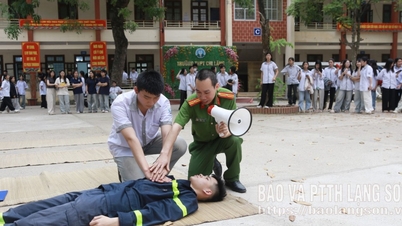
If a runner experiences health problems, the organizers' medical staff will arrive more quickly. If the victim experiences cardiac arrest, cardiopulmonary resuscitation (CPR) should be performed to prevent brain death, and the victim should be transported to a medical facility as quickly as possible.
Secondly, runners must know their limits.
Dr. Thuc advises that safe running requires gradual training, starting with walking and gradually increasing the intensity to suit each individual's health condition. As endurance increases, runners can alternate between running and walking.
Runners should gradually adapt to temperature changes and avoid heat shock. In hot weather, they need time to adjust and recognize the signs of heat shock. When participating in a race, even non-professional athletes should ensure they are adequately hydrated, replenish electrolytes, and drink in small sips, avoiding large amounts at once.
Dr. Hoang advises that everyone should know their limits and assess their own capabilities. People should proactively have echocardiograms, blood pressure checks, and electrocardiograms before participating in running events. Individuals with family members who have experienced sudden death should undergo more thorough examinations with cardiologists.
Thirdly, there are some cases where a health check should be required.
Dr. Hoang believes that for people over 40 participating in the 42km race, a health certificate meeting the standards for high-intensity exercise is necessary to reduce the risk of sudden death.
To prevent heatstroke or cerebral aneurysms that can cause brain hemorrhage, MRI scans are very expensive. Therefore, the organizers should strengthen awareness campaigns about these health risks so that athletes can proactively undergo health checkups.
TH (according to Vietnamnet)
Source: https://baohaiduong.vn/lien-tiep-cac-vu-dot-quy-khi-chay-marathon-409352.html




![[Photo] National Assembly Chairman Tran Thanh Man successfully concludes his participation in IPU-152](https://vphoto.vietnam.vn/thumb/1200x675/vietnam/resource/IMAGE/2026/04/18/1776502638199_vna-potal-chu-tich-quoc-hoi-ket-thuc-tot-dep-chuong-trinh-tham-du-ipu-152-8709975-jpg.webp)


























































































Comment (0)